
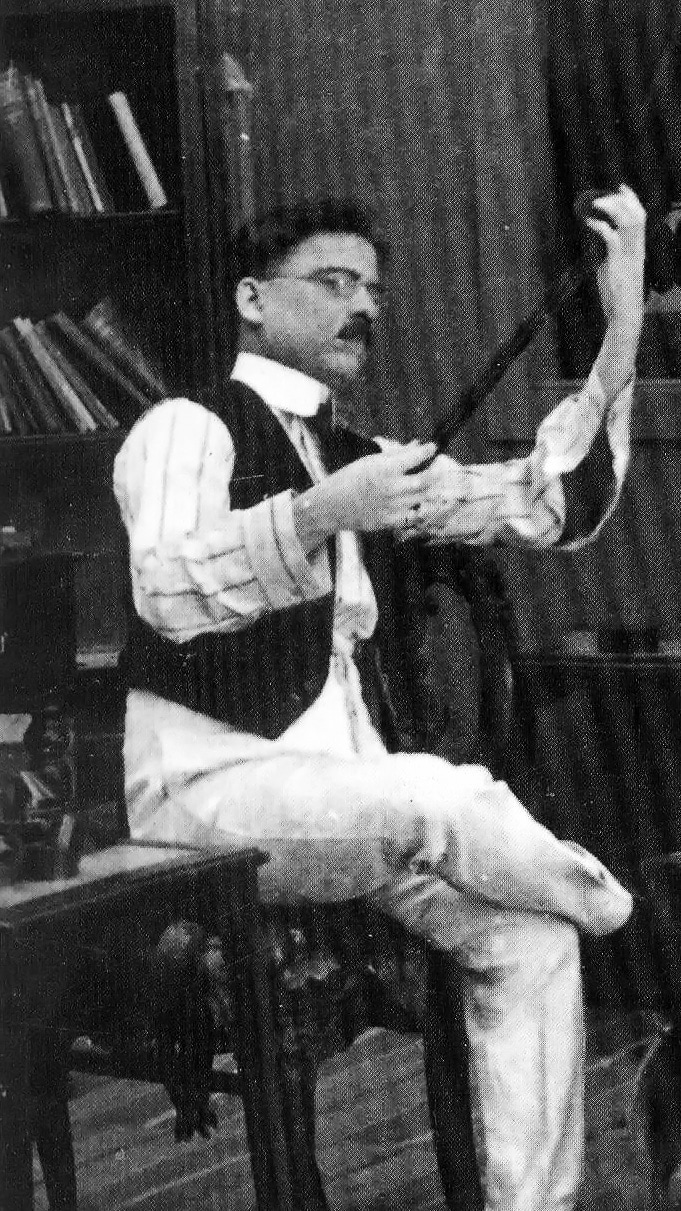
Dadasaheb Phalke was an Indian filmmaker who directed, produced, and wrote Raja Harishchandra (1913), the first full-length Indian feature film. He is widely called the father of Indian cinema because he helped build the country’s film industry from a one-person experiment into a working production practice.
| Field | Details |
|---|---|
| Full name | Dhundiraj Govind Phalke |
| Known as | Dadasaheb Phalke |
| Born | 30 April 1870, Trimbak, Maharashtra |
| Died | 16 February 1944 |
| Known for | Pioneering Indian feature filmmaking |
| Key work | Raja Harishchandra |
Why Phalke matters
Phalke mattered because he proved that Indian audiences could support a locally made narrative film in an era when cinema was still new and imported. He did not only direct; he learned camera work, wrote scenarios, supervised sets, arranged financing, and handled production under difficult technical conditions. That combination of roles shaped early Indian filmmaking, where the filmmaker often had to be inventor, manager, and storyteller at once.
His importance also lies in the way he linked cinema to Indian mythological subjects, stage performance, and popular visual culture. Raja Harishchandra used a familiar story, painted sets, theatrical acting, and silent-film framing. That mix gave early Indian cinema a visual language that could travel beyond elite urban audiences and become broadly legible.
How did he make films?
Phalke began making films at a time when there was no established Indian studio system to support him. He studied film technology, imported equipment, and learned the practical details of exposure, printing, and editing by trial and error. Because film stock, cameras, and lab facilities were scarce, each production required ingenuity and a tolerance for failure.
His method was intensely hands-on. He organized performers, designed costumes, built sets, and created visual tricks for mythological scenes and transformations. In practice, this meant working across both craft and logistics: carpentry for sets, painting for backdrops, chemistry for processing, and performance direction for actors drawn from theatre traditions.
What did his films look like?
Phalke’s films typically drew on gods, kings, legends, and moral tales. The imagery was theatrical rather than naturalistic: frontal poses, expressive gestures, and carefully arranged tableaux. This style suited silent cinema, where the image had to carry narrative information without spoken dialogue.
The look of his work also reflected the limitations of the medium. Lighting was simple, camera movement was minimal, and scenes were staged to read clearly in a single frame. That restraint gave his films a directness that later Indian cinema would expand and complicate, but the basic emphasis on readable story and strong visual symbolism remained influential.
Why is he still remembered?
Phalke’s name survives not only in film history but in public culture. India’s highest film honour, the Dadasaheb Phalke Award, carries his name, and his image appears in posters, statues, murals, and commemorative works. Artists often use him as a symbol of origin: the figure who stands at the beginning of a national cinema.
That memory can simplify a more complicated history. Phalke was not the only early Indian filmmaker, and cinema in India developed through many regional, commercial, and technical contributors. Still, his work remains a key reference point because it marks the moment when filmmaking became a sustained Indian practice rather than a novelty imported from abroad.
Frequently Asked Questions
Why is Dadasaheb Phalke called the father of Indian cinema?
He is called the father of Indian cinema because he made the first full-length Indian feature film and helped establish local production methods. His work showed that Indian stories could be filmed, distributed, and commercially sustained within India. The title is honorary, but it reflects his early and foundational role.
What was Raja Harishchandra?
Raja Harishchandra was a silent mythological feature released in 1913. It is usually cited as the first full-length Indian feature film. The film became important not only for its subject but for proving that Indian cinema could produce a complete narrative work.
What kind of filmmaking did Phalke influence?
He influenced early Indian studio filmmaking, especially the use of mythological and historical subjects. His approach encouraged a style built on strong visual storytelling, theatrical performance, and practical studio craft. Later Indian cinema moved far beyond his methods, but it kept many of the storytelling habits he helped popularize.
Articles mentioning Dadasaheb Phalke
