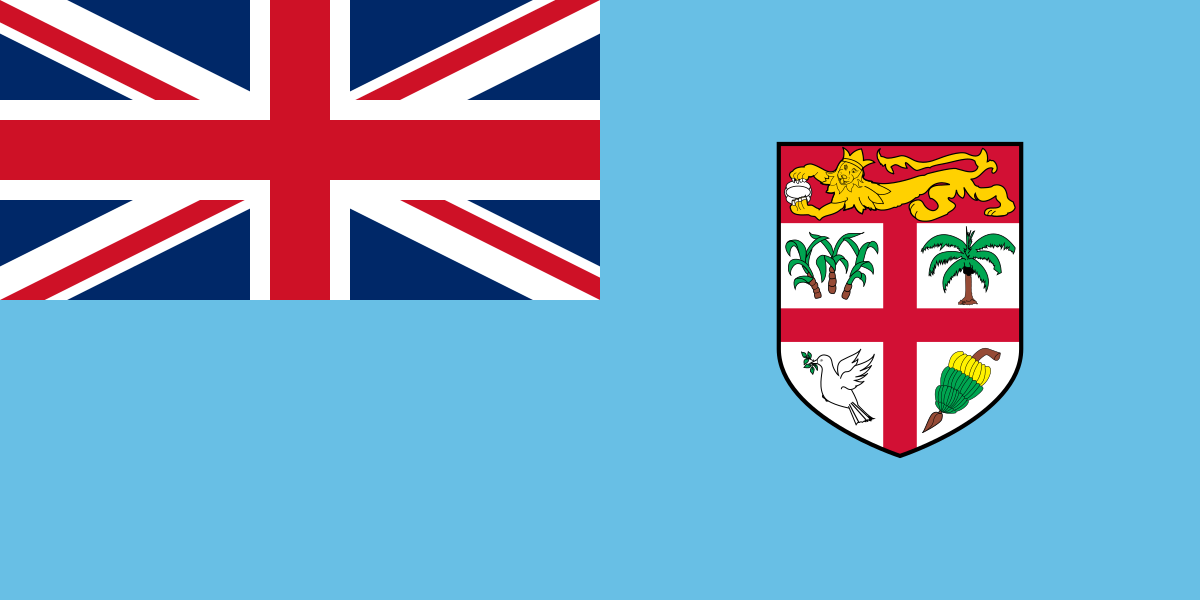
Fiji is an island country in Melanesia, in the South Pacific Ocean. It is made up of more than 300 islands and around 500 smaller islets, with most people, industry, and government concentrated on the larger islands of Viti Levu and Vanua Levu. Its position between Australia, New Zealand, and the wider Pacific has made it a crossroads for Pacific trade, migration, and tourism.
| Official name | Republic of Fiji |
|---|---|
| Region | Melanesia, South Pacific Ocean |
| Capital | Suva |
| Largest island | Viti Levu |
| Languages | English, iTaukei Fijian, Fiji Hindi |
| Currency | Fijian dollar |
| Population centre | Most people live on the main islands and along the coast |
What makes Fiji distinct?
Fiji stands out for its coral reefs, volcanic islands, tropical climate, and a cultural mix shaped by Indigenous iTaukei communities, Indo-Fijian communities, and smaller migrant groups. That mix is visible in daily life, from food and language to religion, ceremony, and public festivals. The built environment also reflects local materials and climate: timber, thatch, concrete, and raised structures help buildings cope with heat, humidity, and cyclones.
The country’s geography matters as much as its culture. Fiji sits on the edge of the Pacific cyclone belt, so weather events often shape housing, agriculture, and transport. Coastal settlement, maritime trade, and tourism have all developed in response to the sea, making ports, beaches, and lagoons central to both the economy and the visual identity of the islands.
How Fiji came into being
People settled Fiji long before European contact, and the islands developed complex chiefdoms, trade networks, and distinctive craft traditions. Later, British colonial rule reshaped land ownership, labor, and administration. Fiji gained independence in 1970, but the colonial period left a lasting imprint on politics, law, and the country’s demographic makeup.
That history is important because Fiji’s modern identity emerges from layered inheritance rather than a single origin story. Indigenous systems of leadership and ceremony remain significant, while Hindu, Muslim, Christian, and other traditions reflect later migration and settlement. In practice, that combination appears in architecture, textiles, ritual objects, and the organization of community life.
What does Fiji look like in practice?
For a visual-culture reader, Fiji often appears through craft, ceremony, and landscape. Traditional masi, or tapa cloth, is made by beating mulberry bark into sheets and decorating them with pattern. Mat weaving, canoe building, wood carving, and shell adornment also remain important forms of making, especially in village contexts and ceremonial exchange.
Contemporary Fiji is not limited to heritage forms. Urban life in Suva and Nadi includes hotels, markets, street food, churches, temples, and government buildings, while tourism has introduced a polished image of white sand, turquoise water, and resort design. Both images are real: one rooted in local making and social practice, the other shaped by the global travel industry.
Why does Fiji matter in art, travel, and culture?
Fiji matters because it is one of the Pacific’s most visible nations and one of the region’s most photographed. Its beaches and reefs attract travel media, but its cultural life also offers strong material for documentary photography and design writing. Festivals, religious processions, village ceremonies, and market scenes show how color, pattern, dress, and built form work together in everyday life.
The country also matters as a case study in how place shapes making. Island geography influences the materials available for craft and construction. Climate influences form. Migration influences cuisine, ceremony, and visual style. Fiji’s significance lies in that interaction: not just as a scenic destination, but as a place where environment, labor, and culture are visibly connected.
Frequently Asked Questions
Is Fiji a single island?
No. Fiji is an archipelago made up of hundreds of islands and islets, though most people live on the two largest islands, Viti Levu and Vanua Levu. The capital, Suva, is on Viti Levu. Many of the smaller islands are sparsely populated and rely on boats, ferries, or air links.
What languages are spoken in Fiji?
Fiji has three official languages: English, iTaukei Fijian, and Fiji Hindi. English is widely used in government, education, and business, while the other languages are central to community life and identity. Public speech often moves between them depending on setting and audience.
What kinds of traditional making are associated with Fiji?
Fiji is known for masi, or tapa cloth, woven mats, carving, canoe making, and other forms of craft made from bark, fiber, timber, and shell. These practices are tied to ceremony, exchange, and daily use rather than only to display. They remain visible in villages, cultural performances, and some contemporary design work.
At a glance
- Address
- Fiji
- Coordinates
- -18.166666, 179
Articles mentioning Fiji