
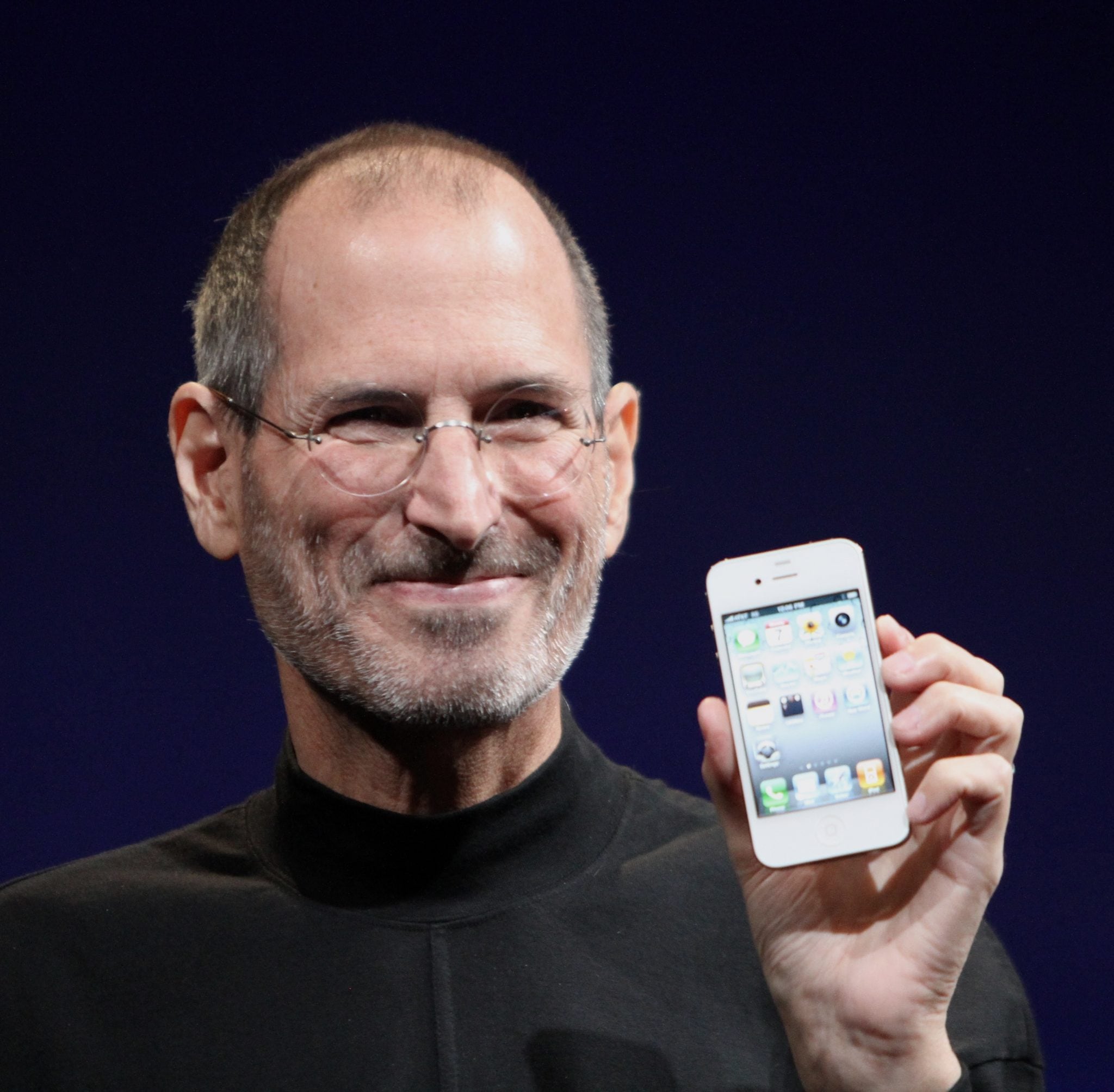
Steve Jobs was an American entrepreneur and product executive who co-founded Apple and helped define the look, feel, and marketing of modern consumer electronics. He became one of the most influential figures in personal computing, then extended that influence into music players, smartphones, tablets, animation, and digital publishing. His importance lies less in a single invention than in a method: combining hardware, software, industrial design, and retail into tightly controlled products that felt polished and immediate.
- Co-founded Apple Computer in 1976 with Steve Wozniak and Ronald Wayne.
- Led the Macintosh team, then returned to Apple in 1997 after being pushed out a decade earlier.
- Turned product presentation into a design practice, using keynotes, demos, and minimalist branding to shape demand.
- Oversaw major launches such as the iMac, iPod, iPhone, and iPad.
- Also shaped Pixar, helping make digital animation a mainstream commercial form.
How did Steve Jobs shape product design?
Jobs treated products as integrated objects rather than collections of parts. He pushed Apple toward a closed system in which the device, operating system, software, packaging, and even the store display worked together. That approach produced machines that were often easier to use and more distinctive to look at, but it also gave Apple tight control over the user experience.
His taste ran toward simplicity, clean surfaces, and a minimum of visible clutter. In practice that meant white plastic early iPods, glass-and-aluminum iPhones, a preference for few buttons, and interfaces built around direct touch or a single pointer. The same logic extended to company culture: he insisted on a small number of projects, aggressive deadlines, and exacting standards for prototypes and final finishes.
Where did he come from?
Jobs was born in 1955 in San Francisco and grew up in the Bay Area, where the electronics and counterculture worlds overlapped. He left Reed College after a short time, but stayed interested in typography, design, and the emerging computer scene. That mix of technical curiosity and aesthetic discipline later became central to Apple’s identity.
He and Steve Wozniak built the Apple I in a garage-era startup context that has become part of Silicon Valley lore, but the real significance was not the garage myth. It was the early pairing of Wozniak’s engineering with Jobs’s instinct for packaging, naming, and market positioning. Apple’s first decade established the pattern Jobs would repeat later: take an existing category, strip it down, and reframe it as a consumer object with emotional appeal.
Why does Steve Jobs matter in design history?
Jobs mattered because he helped make computers feel personal, not merely technical. The original Macintosh, introduced in 1984, made the graphical interface and mouse central to everyday computing. Later products pushed the same idea further, turning digital devices into highly legible, tactile, mass-market objects that could sit on a desk, in a pocket, or in a handbag without looking like office equipment.
He also changed how design work got talked about. Under Jobs, industrial design, interface design, software engineering, and branding were often discussed as one system rather than separate specialties. That approach influenced the wider electronics industry, where competitors increasingly copied Apple’s emphasis on minimalism, polished materials, and launch-event spectacle.
What did his work look like in practice?
Jobs’s influence is visible in specific material choices and forms. The iMac’s translucent plastics in the late 1990s made a home computer look approachable. The iPod’s wheel and compact metal-and-plastic body made digital music feel portable and immediate. The iPhone replaced physical keyboards with a glass touchscreen, and the iPad stretched that same language into a larger slab form.
His presentations mattered almost as much as the objects themselves. Apple keynotes under Jobs used black clothing, stark slides, controlled pacing, and dramatic product reveals to create a repeatable launch format. That performance style became part of the product experience, shaping how technology companies now announce devices and frame innovation.
What is the criticism of Steve Jobs?
Jobs’s reputation rests on real achievements, but it also comes with criticism. He could be abrasive, dismissive, and difficult to work with, and Apple under his leadership has often been criticized for secrecy, labor practices in supply chains, and strict control over its platform. The polished surface of the products sometimes masked the intensity of the production process behind them.
There is also a tendency to inflate his role into that of solitary genius. Apple depended on many designers, engineers, managers, suppliers, and manufacturing partners, and Jobs’s strongest skill was often coordination rather than invention in the narrow sense. His legacy is best understood as a powerful model of product leadership, not a one-person explanation for modern technology.
Frequently Asked Questions
Was Steve Jobs an inventor?
Jobs was not chiefly an inventor in the patent-and-bench sense. His strength lay in selecting ideas, shaping them into coherent products, and demanding that the final result feel inevitable. He mattered because he could see how technology, design, and marketing could be fused into a single commercial object.
Why is Steve Jobs linked to design as well as technology?
Jobs treated design as a core business function, not a decorative layer added at the end. He cared about materials, proportions, packaging, interface behavior, and the experience of unboxing and using a device. That made Apple products feel designed from the inside out.
How did Steve Jobs influence other companies?
He helped establish the modern template for premium consumer tech: minimal interfaces, controlled ecosystems, high-production launch events, and close attention to industrial design. Many companies adopted that model even when they disagreed with Apple’s closed approach. His influence is visible wherever a device is presented as both a tool and a carefully authored object.
Articles mentioning Steve Jobs


