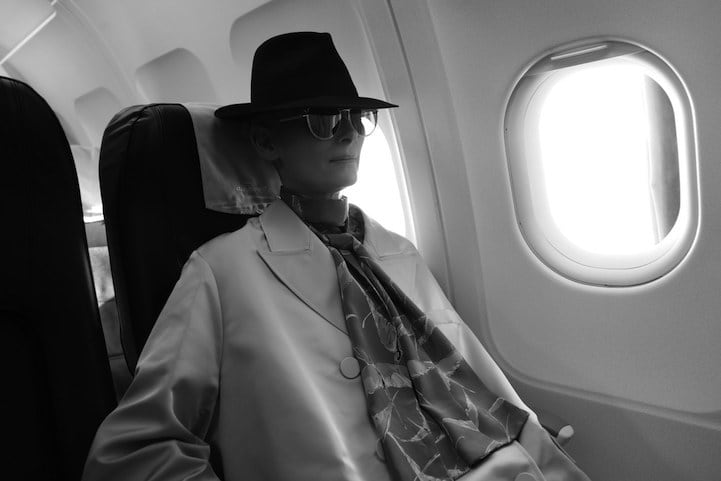
Tilda Swinton is a British actor known for moving between experimental cinema, auteur films, and large-scale studio productions. Born Katherine Mathilda Swinton in 1960, she built a career on roles that use stillness, ambiguity, and physical transformation rather than obvious star performance. That range has made her a frequent presence in visual culture, fashion, and museum-oriented film exhibitions as well as in cinema.
- She is best known for roles in films by directors such as Derek Jarman, Wes Anderson, Luca Guadagnino, and Bong Joon-ho.
- Her screen image often relies on androgyny, restraint, and dramatic costume or makeup changes.
- She won the Academy Award for Best Supporting Actress for Michael Clayton in 2007.
- She has become a recurring figure in fashion photography and gallery-adjacent film culture.
What makes Tilda Swinton distinctive?
Swinton’s reputation rests on her ability to disappear into a role without relying on conventional realism. She can read as aristocratic, severe, uncanny, comic, or almost statuesque, depending on the production, and she often plays characters whose identity is unstable or carefully self-fashioned. That flexibility has made her especially useful to filmmakers interested in style as much as narrative.
Her performances are often built from precise posture, controlled movement, and a face that can seem both highly expressive and deliberately withheld. In practice, that means she can carry a scene through presence alone, whether the part is grounded in domestic drama, fantasy, horror, or satire.
Where did she come from?
Swinton was born in London and educated at Cambridge, where she studied social and political sciences before turning fully to acting. She began in theatre and then became closely associated with British experimental film, especially the work of Derek Jarman. Those early collaborations shaped her public image: not simply as a performer, but as part of a wider artistic scene that treated cinema as material, political, and visual.
Jarman’s films helped establish the qualities that still define her work: pared-back performance, striking costuming, and a willingness to treat the actor’s body as part of the design of the image. That background remains visible even in mainstream projects, where she often brings an art-film edge to polished commercial settings.
Why does she matter in visual culture?
Swinton matters because she sits between the art world and popular cinema without flattening either side. She is often cast in projects where image-making matters as much as plot: films with strong production design, precise color palettes, or stylized costumes. In those settings, her face and body become tools for composition, not just vehicles for dialogue.
She is also a useful figure for photographers and editors because she can make a portrait feel authored rather than merely captured. In fashion and festival photography, she often appears less as a conventional celebrity subject than as a collaborator in pose, styling, and atmosphere. That makes her especially visible in publications that care about how images are constructed.
What does her work look like in practice?
On screen, Swinton often works through understatement. In The Deep End and We Need to Talk About Kevin, tension builds from small shifts in expression and timing rather than overt emotional display. In Michael Clayton, the performance is grounded in crisp control, which helped the film’s legal and corporate spaces feel cold and exact.
She also takes on highly designed roles that use costume as character. In Orlando, The Chronicles of Narnia, and several Wes Anderson films, her appearance is part of the storytelling machinery: hair, makeup, fabric, and silhouette all help define who the character is before a line is spoken. That is one reason her work travels well across film stills, poster design, red-carpet photography, and museum display.
Frequently Asked Questions
Is Tilda Swinton mainly a mainstream actor or an art-house actor?
She is both, and that is central to her reputation. She first became widely associated with experimental and independent cinema, but she later moved into major studio projects without losing her art-film identity. The unusual part is not that she crossed over, but that she kept the same aura in both settings.
What kinds of roles does she usually play?
She often plays characters with sharp self-control, social distance, or unusual authority. Many of her roles are androgynous, ethereal, or hard to pin down, which makes her useful in stories that depend on mystery or transformation. Even in comic parts, she tends to play them with precision rather than broadness.
Why do photographers and fashion magazines feature her so often?
Swinton photographs well because she understands pose, silhouette, and the expressive use of clothing. She can make a still image feel deliberate and slightly strange, which gives editors and photographers room to build a strong visual idea around her. That has made her a reliable presence in festival coverage, portrait series, and fashion editorial work.
Articles mentioning Tilda Swinton