


Yayoi Kusama, a visionary whose art has forever transformed our understanding of infinity and space, passed away at age 97 on August 14, 2026, in Tokyo. Kusama’s prolific career spanned over seven decades, marked by her relentless exploration of dots and mirrors as metaphors for the infinite. Reflecting on Yayoi Kusama’s lifetime, her impact on art is immeasurable, leaving behind a legacy that continues to inspire future generations.

A Journey through Yayoi Kusama Lifetime from Matsumoto to Global Recognition
Born in Matsumoto, Japan in 1929, Kusama began creating art amidst vivid hallucinations that transformed everyday surroundings into immersive visions. These early experiences with patterns and swarming florals inspired her signature use of repetitive dots throughout her lifetime.
In 1958, Kusama made a bold move to New York, where she redefined the mid-century art scene with her groundbreaking “Infinity Nets” and immersive environments. Her avant-garde works, including provocative anti-war performances, foreshadowed the rise of Pop Art and Minimalism. Her lifetime as an artist deeply impacted these movements, capturing the essence of societal changes through her works.

Constructing Worlds Beyond the Canvas
Kusama’s innovative vision reached its apex with her “Infinity Mirror Rooms,” mesmerizing installations that use mirrors, lights, and reflections to envelop viewers in boundless spaces. These rooms offer profound experiences where one’s sense of self is absorbed into a sea of light—a concept Kusama termed “self-obliteration.” Throughout Yayoi Kusama’s lifetime, the Infinity Mirror Rooms became a hallmark of her unique style, attracting audiences from around the world.
Explore how illusion and innovative materials in design can transform perception, like Paola Pivi’s exploration of childhood freedom with her vibrant and whimsical art.
Her commitment to art persisted throughout her life. She held studio sessions daily from her residence at a Tokyo psychiatric hospital, a place she called home for decades, shaping her art into a meditative practice that defined Yayoi Kusama’s lifetime as an artist.

A Legacy of Infinite Exploration
Kusama’s work, from soft sculptures to public installations, has touched audiences far beyond the confines of museums. Her iconic motifs have graced fashion and popular culture, making her art universally accessible yet profound in its commentary on the human condition, marking Yayoi Kusama’s lifetime as a period of profound cultural influence.

Her vision of self-obliteration and infinity endures, described poignantly as, “I felt as if I had begun to self-obliterate, to revolve in the infinity of endless time and the absoluteness of space, and be reduced to nothingness.” Kusama’s unparalleled contributions continue to invite people into a universe where art dissolves the boundaries between individuality and the cosmos, a testament to Yayoi Kusama’s lifetime dedication to her craft.
Dive into the world where creativity meets nature by learning about the world’s largest pop-up book, showcasing intricate art forms that captivate audiences.


Sources & Links
Source: designboom.com
Frequently asked questions
Who was Yayoi Kusama and what is she known for?
Yayoi Kusama was a visionary artist known for transforming our understanding of infinity and space through her prolific career spanning over seven decades. She is particularly famous for her use of dots and mirrors, creating immersive environments that reflect on concepts like infinity and self-obliteration.
When did Yayoi Kusama pass away?
Yayoi Kusama passed away at age 97 on August 14, 2026, in Tokyo.
What inspired Yayoi Kusama’s signature use of repetitive dots?
Kusama’s early experiences with vivid hallucinations that transformed everyday surroundings into immersive visions inspired her signature use of repetitive dots throughout her lifetime.
Where did Kusama live while continuing her art practice?
Kusama lived in a Tokyo psychiatric hospital, which she called home for decades, where she shaped her art into a meditative practice.
More in
Art
All Art


More like this
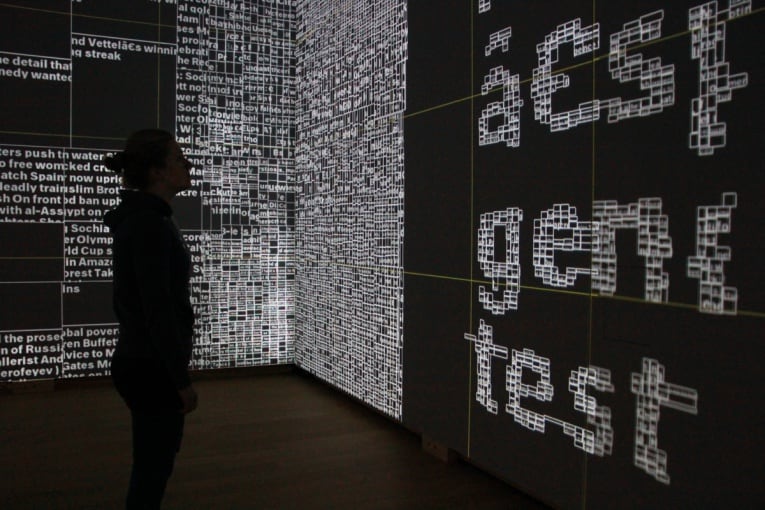
Interactive Installation: Type / Dynamics

Néle Azevedo's "Minimum Monument" Explores the Ephemeral Aspect of Art

Banksy’s New Art Exhibition 'Dismaland' Is A Depressing Version Of Disneyland

An Artist Creates Giant Suspended Sculpture from Thousands of Pieces of Origami

Underwater Surprises and Majestic Skies: Bird Photographer of the Year 2026 Wins Big
