
Bentley is a British luxury car manufacturer known for large, hand-finished grand tourers, performance saloons, and limited-run coachbuilt models. Founded in 1919 by W. O. Bentley, the company grew out of his work on aircraft engines during the First World War and later became one of the best-known names in high-end motoring. Today, Bentley sits under the Volkswagen Group and builds cars that combine heavy performance with elaborate materials, deep paintwork, and an emphasis on comfort, status, and long-distance speed.
Stories from Bentley
16 stories





About Bentley
- Founded in 1919 by W. O. Bentley in Cricklewood, London.
- Built early prestige on racing success, especially at Le Mans in the 1920s.
- Known for the Continental GT, Flying Spur, and Bentayga, plus special coachbuilt commissions.
- Uses a mix of leather, wood veneer, metal trim, and advanced paint and assembly processes.
- Its identity balances British craftsmanship with German-owned industrial production.
Read the full overviewWhere did Bentley come from?, What makes a Bentley different?, How are Bentley cars made?, Why does Bentley matter in design culture?
Where did Bentley come from?
Bentley began as an engineering company founded by Walter Owen Bentley after the war effort that made his aero-engines famous. Before building road cars, W. O. Bentley designed rotary engines such as the BR1, used in aircraft including later versions of the Sopwith Camel. That mechanical background shaped the marque from the start: its cars were meant to be fast, robust, and capable of sustained high-speed travel rather than merely decorative.
The first Bentley road cars appeared in the early 1920s and quickly developed a racing reputation. The so-called Bentley Boys — wealthy private drivers and their circle — helped turn the brand into a symbol of daring, endurance, and money well spent. Victory at Le Mans became central to the company’s image, and that competition history still colours Bentley’s branding and design language.
What makes a Bentley different?
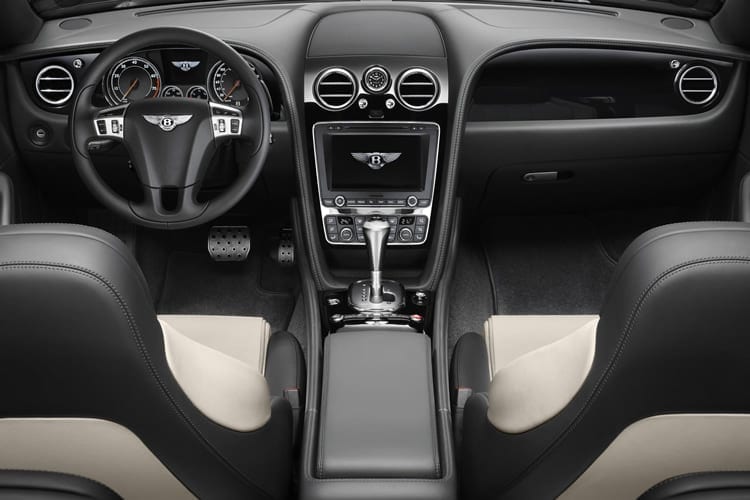
Bentley cars are built to feel substantial. Their proportions are usually long and low, with broad grilles, heavy doors, and cabins that prioritise thick materials over minimalism. Inside, the common vocabulary includes diamond-quilted leather, polished veneers cut from a single matching log, knurled metal controls, and carefully stitched surfaces. The effect is not sparse luxury but abundance, with every touchpoint designed to feel dense and tailored.
That material richness matters because Bentley sells itself as a maker of grand touring cars: machines for covering long distances quickly and quietly. The engineering is therefore tied to comfort. Powerful engines, advanced suspension, sound insulation, and all-wheel-drive systems work alongside the decorative craft of trim and upholstery. A Bentley is not only a car to look at; it is a car whose making depends on upholstery work, woodworking, paint finishing, and final assembly to a notably exact standard.
How are Bentley cars made?
Bentley’s factory processes combine industrial production with a strong emphasis on hand-finishing. Panels are stamped and assembled using modern automotive methods, but much of the interior still relies on skilled craftspeople who cut and fit hides, veneer, and metal detailing. Paintwork is also important: Bentley offers deep gloss finishes and intricate colour combinations that require careful preparation and repeated polishing.
That balance between machine precision and manual labour is central to the brand’s appeal. Some parts are made in shared Volkswagen Group engineering systems, while the final character of the car comes from stitching, trimming, and final inspection. Even performance models and SUV derivatives still carry this finish-led approach, which is why Bentley often appears in stories about interiors, surface treatment, and luxury manufacture rather than only speed.
Why does Bentley matter in design culture?
Bentley matters because it shows how luxury branding can be built through materials and making, not only through price. The company helped define the British idea of the sporting luxury car: powerful enough for competition, refined enough for carriage-like comfort, and lavish enough to signal wealth without flamboyance. That formula has been copied widely, but Bentley remains one of its clearest examples.
It also matters as a case study in corporate transformation. Bentley has moved from independent maker to part of a larger global manufacturing group, yet it still trades on a highly specific image of British craftsmanship. In visual culture, that tension is useful: the cars photograph well because they combine strong silhouettes with dense tactile detail, and they often stand in for notions of taste, privilege, travel, and mechanical prestige.
Frequently Asked Questions
Is Bentley a British or German company?
Bentley is British in origin, but it is owned by the Volkswagen Group, so it is German-owned. Its headquarters and manufacturing identity remain strongly tied to Crewe in England, which helps preserve its British brand character. That split between nationality and ownership is common in modern car manufacturing.
What is Bentley best known for?
Bentley is best known for luxury performance cars such as the Continental GT, Flying Spur, and Bentayga SUV. It is also known for its early racing success, especially at Le Mans, which established the brand as both fast and prestigious. In design terms, its cabins, leatherwork, and polished veneers are just as important as its engines.
Why do Bentley interiors get so much attention?
Bentley interiors use materials that show clearly in photographs and in person: stitched leather, real wood, machined metal, and thick carpet. Those details create an impression of weight and craftsmanship that distinguishes the brand from more austere luxury rivals. For editors, photographers, and designers, the cabin is often where Bentley’s identity is most visible.