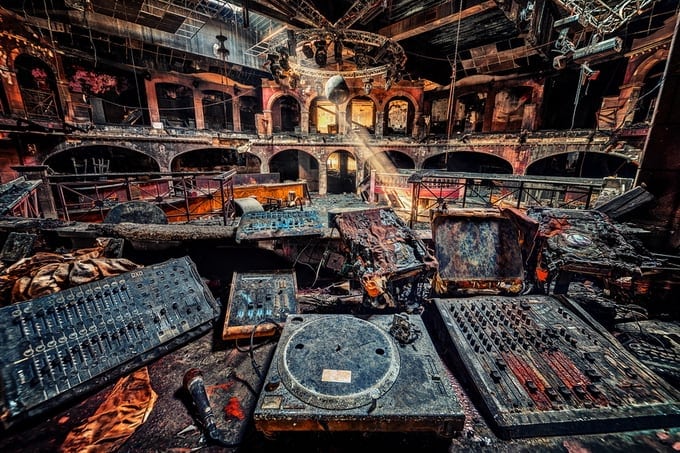
Dresden is a city in eastern Germany, the capital of Saxony, set in the Elbe valley near the Czech border. It became a major royal residence under the Electors and Kings of Saxony, who filled it with palaces, churches, collections, and civic buildings. That patronage gave Dresden a reputation for refined building, porcelain, painting, and courtly display, and its baroque core once earned it the nickname “Jewel Box.”
- Capital of Saxony and one of eastern Germany’s major cultural cities.
- Known for baroque and rococo architecture, especially around the historic centre.
- Shaped by royal patronage, which funded art collections, building campaigns, and crafts.
- Heavily damaged in the Second World War, then rebuilt in stages after 1945.
- Still matters as a place where historic monuments, engineering, and contemporary design meet.
Why Dresden became important
Dresden grew from a river settlement into a court city because Saxon rulers chose it as a seat of power. That decision concentrated wealth, architects, artisans, and imported materials in one place. The city became a showcase for state ambition: facades were dressed in stone and stucco, interiors in gilding, porcelain, painted ceilings, and carved wood. The result was not just a handsome skyline, but a working centre for making and collecting objects of status.
That legacy still shapes how Dresden is understood. Museums hold the remnants of court culture, including painting, decorative arts, and scientific instruments, while the city’s streets preserve a layout tied to dynastic power. For designers, architects, and photographers, Dresden offers a rare mix of grand historic structure and visible repair, where restoration is part of the city’s identity rather than a hidden task.
What does Dresden look like?
The historic image of Dresden is baroque: domes, arcades, axial streets, and pale stone facades set against the river. Buildings such as the Zwinger, the Frauenkirche, and the Semperoper show how ornament and structure often worked together. The city’s older centres use the language of symmetry, courtyards, pilasters, and sculpted detail, but the experience of Dresden is not only theatrical. The Elbe and its banks give the city open views, long promenades, and a sense of space uncommon in older German cores.
Modern Dresden also contains a visible second layer. War damage and later reconstruction changed the city fabric, so intact historic buildings stand beside careful replicas, postwar civic blocks, and contemporary additions. That contrast matters in practice: the city is read through materials as much as through form. Sandstone, plaster, copper roofs, new concrete, and restored masonry each signal a different period of building and a different attitude toward preservation.
How was Dresden rebuilt after the war?
Dresden was devastated by Allied bombing in February 1945, which destroyed much of the historic centre and killed thousands of residents. After the war, the city became a site of political and architectural debate. Some landmarks were left in ruins for years as memorials; others were rebuilt gradually, sometimes from surviving fragments, drawings, and photographs. Restoration required close work in stone carving, conservation, structural engineering, and archival research.
The rebuilt city does not simply reproduce the past. Some projects, like the Frauenkirche, reconstruct an older appearance while preserving visible traces of damage. Others replace what was lost with more restrained modern forms. This creates a city that teaches how architecture carries memory: the repaired parts, the surviving stones, and the new insertions all remain legible. Dresden matters because it makes restoration visible as an active design process, not a neutral return to an original state.
Why does Dresden matter to makers and designers?
Dresden matters because it shows how a city can be defined by making. Courtly Dresden depended on builders, plasterers, sculptors, cabinetmakers, metalworkers, porcelain producers, and painters. The city’s prestige was built through specific techniques and materials, from Saxon sandstone to Meissen porcelain, which became one of Europe’s most influential ceramic traditions. That emphasis on craft extended beyond luxury into urban identity: façades, interiors, and public rooms all announced skill.
For contemporary designers, Dresden is a case study in continuity and repair. The city demonstrates how historic form can be conserved without freezing it, and how modern additions can coexist with heavily symbolic older buildings. It also shows how a place can carry beauty and rupture at once. That combination gives Dresden its force in photographs, films, and design references: it is both a historic model and a record of loss, rebuilding, and adaptation.
Frequently Asked Questions
Is Dresden mainly known for Baroque architecture?
Yes, but that is only part of the city’s identity. Dresden is strongly associated with Baroque and Rococo building because of its court history, yet its current appearance also reflects wartime destruction and later reconstruction. The city’s character comes from the tension between those layers.
Why is Dresden called the “Jewel Box”?
The nickname refers to the richness and compactness of its historic centre. Before the war, Dresden was admired for its concentration of ornate palaces, churches, and civic buildings, many finished with refined stonework and decorative detail. The phrase captured both luxury and enclosure, as if the city were a decorated container for court culture.
What should be noticed in Dresden’s built environment?
Material change is the most revealing feature. Restored sandstone, patched masonry, new rooflines, and modern infill all tell part of the city’s story. In Dresden, repair is not hidden; it is one of the main ways the city communicates its past.
</analysis പരിശോധിച്ച് final 北京赛车女郎}]}}
At a glance
- Address
- Dresden Directorate District, Germany
- Coordinates
- 51.033333, 13.733334
Articles mentioning Dresden