The Iberian Peninsula is a large peninsula in southwestern Europe, bounded by the Atlantic Ocean and the Mediterranean Sea and occupied mainly by Spain and Portugal. It also includes Andorra, Gibraltar, and the small share of land across the border with France at the peninsula’s northeastern edge. The term matters because it names a distinct geographic and cultural region whose climate, trade routes, politics, and craft traditions have long been shaped by its isolation from the rest of Europe by the Pyrenees.
- It is one of Europe’s three major southern peninsulas, alongside Italy and the Balkans.
- Spain and Portugal make up most of its land area and population.
- The Pyrenees form the main land barrier between the peninsula and France.
- Its coastal position encouraged maritime trade, colonization, and exchange with North Africa and the wider Atlantic world.
- Its regional identities have been shaped by many languages, kingdoms, and artistic traditions over centuries.
Where is the Iberian Peninsula?
The peninsula occupies Europe’s southwest corner, projecting between two seas. The Atlantic defines its western and southern coasts, while the Mediterranean shapes its eastern edge. The Pyrenees mountain range separates most of it from the rest of continental Europe, which has made the region feel both connected to and apart from the mainland.
Geographically, the peninsula is not a single state but a landmass that contains several political entities. Spain covers the largest part, Portugal the western strip, Andorra sits in the mountains, Gibraltar sits at the southern tip, and France extends slightly into the northeastern fringe. That mix of borders gives the term a geographic meaning rather than a political one.
How did the name Iberia come about?
The name Iberia is ancient. Greek and Roman writers used it for lands associated with the river Ebro and, more broadly, for the territory now known as Spain and Portugal. Over time, the name shifted from a classical geographic label to a modern regional term used in history, archaeology, and cultural studies.
That older name matters because it carries the memory of a long, layered past: Roman rule, Visigothic kingdoms, Islamic polities in al-Andalus, Christian reconquest, and early modern imperial expansion. The peninsula has never been culturally uniform. Its art and material culture reflect that mix, from Moorish tilework and stucco to Portuguese azulejo, Spanish silverwork, and regional vernacular building in stone, wood, and clay.
Why does the Iberian Peninsula matter in art and craft?
The peninsula’s position between the Atlantic, the Mediterranean, and North Africa made it a zone of exchange. Goods, metals, pigments, fabrics, ceramics, and techniques moved through ports and overland routes, leaving visible traces in architecture and decorative arts. Sun-dried brick, glazed tile, carved plaster, and wrought iron all gained local forms that responded to climate and to available materials.
For makers, the Iberian Peninsula is important less as a border on a map than as a shared working environment. Iberian craft traditions often use clay, lime, cork, wool, olive wood, and copper, materials tied to local landscapes and trade networks. In practice, that means pottery from Andalusia, basketry from rural Portugal, carved religious imagery from Castile, and contemporary design that still draws on inherited regional methods.
What does it look like in practice?
In visual culture, the peninsula appears through distinctive regional surfaces and forms. Whitewashed villages, terracotta roofs, tiled courtyards, stone churches, and fortified towns all come from responses to heat, defense, and available materials. In cities, the legacy of Islamic, Roman, Gothic, Renaissance, and modernist building can sit side by side, especially in places such as Toledo, Seville, Porto, Lisbon, and Barcelona.
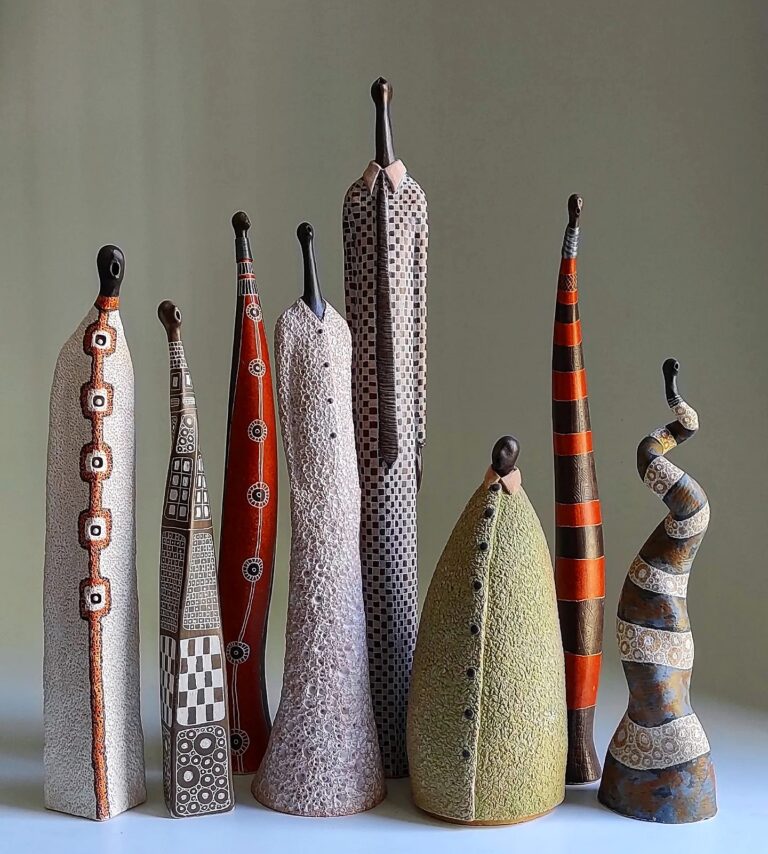
That layered environment also shapes contemporary work. Artists and designers across Iberia often use traditional craft as a starting point rather than a fixed heritage to preserve. A ceramicist may combine local firing methods with new forms, while a furniture maker may adapt cork, chestnut, or pine into modern products. The peninsula remains a place where history is visible in materials, not just in monuments.
Frequently Asked Questions
Is the Iberian Peninsula the same as Spain?
No. Spain occupies most of the Iberian Peninsula, but the peninsula also includes Portugal, Andorra, Gibraltar, and a small part of France. The term refers to the landmass, not to a single country. Using it avoids collapsing several distinct histories into one national frame.
Why is the peninsula important historically?
Its location made it a meeting point between Europe, Africa, and the Atlantic world. That produced layered histories of conquest, trade, religious coexistence and conflict, and imperial expansion. Those histories shaped language, architecture, craft, and material culture across the region.
What kinds of materials are associated with Iberian craft?
Clay, ceramic glaze, plaster, stone, iron, cork, wood, wool, and leather all have deep roots in the peninsula’s craft traditions. Many of these materials reflect local availability and climate, especially in building and domestic objects. Their use continues in contemporary design, where older techniques are often reworked into new forms.
At a glance
- Address
- Spain
- Coordinates
- 43, -4
Articles mentioning Iberian Peninsula