Mick Jagger is an English singer, songwriter, actor, and cultural figure best known as the lead vocalist and co-founder of the Rolling Stones. Since the early 1960s, he has remained one of the most recognisable performers in rock music, with a career shaped by live performance, sharp public image, and a long partnership with guitarist Keith Richards.
| Born | 26 July 1943, Dartford, Kent, England |
|---|---|
| Full name | Michael Philip Jagger |
| Known for | Lead vocals and songwriting for the Rolling Stones |
| Other work | Solo music, film acting, producing |
| Notable public role | One of rock’s most durable and imitated frontmen |
How did Mick Jagger become so influential?
Jagger became influential because he helped define what a rock frontman could be. His singing mixed blues phrasing, rhythm, and a deliberate sneer; his stage movement turned performance into something physical and theatrical. The combination gave the Rolling Stones a public identity that felt loose, dangerous, and controlled at the same time.
His influence extends beyond music into fashion, celebrity culture, and portraiture. Photographers and artists have returned to Jagger for decades because his face, posture, and clothes carry strong visual signals: narrow tailoring, scarves, jewellery, sequins, and an expressive, often mocking smile. He is not only a musician but a recurring image of modern fame.
What does a Mick Jagger performance look like?
Jagger performs with movement at the centre. He uses the microphone stand as a prop, strides the stage, leans forward into phrases, and punctuates lines with hand gestures and sudden turns. Even in a large stadium, the performance often feels intimate because he constantly frames himself to the audience, as if directing attention in real time.
That style helped create a template copied by later rock singers. It also made his image easy to translate into photography, illustration, and fashion editorials. A Jagger portrait often emphasises angularity, long limbs, and a sense of restless motion rather than stillness.
Why does he keep appearing in art and fashion?
Jagger appears in art and fashion because he sits at the point where music, style, and celebrity meet. His look has shifted across decades without losing recognisability, which makes him useful to artists who want a subject that reads instantly. He can stand for 1960s rebellion, 1970s glamour, 1980s excess, or the broader idea of rock stardom itself.
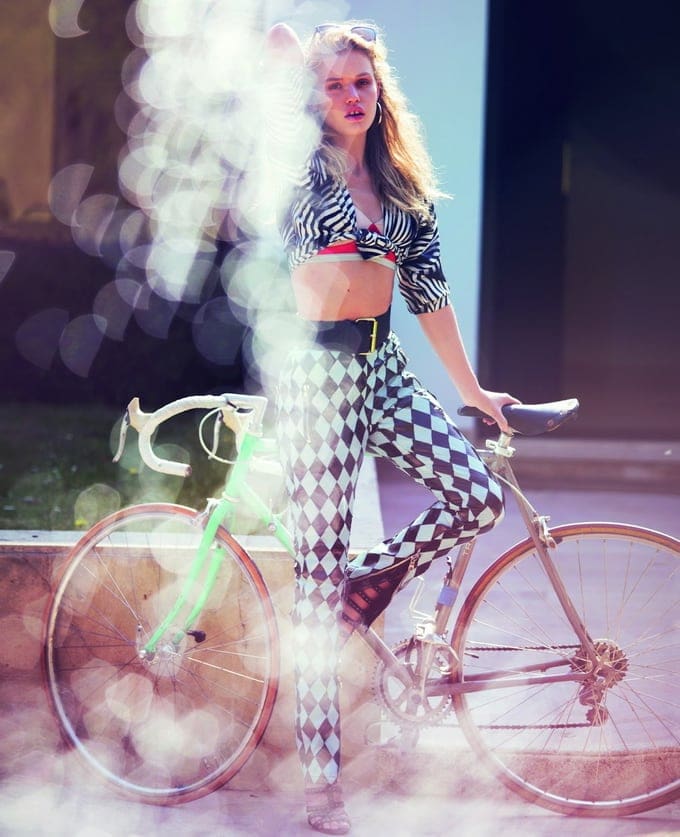
Fashion photographers often treat him as a reference point for attitude rather than clothing alone. The same is true in editorial work featuring his family, where his name carries a built-in vocabulary of fame, performance, and inherited style. In visual culture, Jagger is less a static icon than a set of signals: movement, charisma, and public self-invention.
What is his wider legacy?
Jagger’s legacy rests on longevity and control of image. Many performers have borrowed elements of his stage persona, but few have matched his ability to remain visible across generations without becoming purely nostalgic. The Rolling Stones’ continued touring, archive releases, and media presence have kept that image in circulation.
He also helped make the rock star a total media figure: singer, celebrity, subject, and brand. That matters to FreeYork’s interest in how things are made because his fame is not accidental. It was built through performance, tailoring, publicity, photography, and the repeated refinement of a public character.
Frequently Asked Questions
Is Mick Jagger just the Rolling Stones’ singer?
No. He is the band’s lead vocalist and one of its principal songwriters, but he has also acted, recorded solo material, and shaped the group’s public identity for decades. His contribution is as much visual and performative as it is musical.
Why do designers and photographers use him as a reference?
Jagger offers a recognisable shorthand for rock glamour, urban cool, and performance energy. His face and body language read well in still images, which makes him useful in portraiture, fashion spreads, and commentary on celebrity. He can suggest a whole era with a single pose.
What makes him different from other rock frontmen?
His combination of movement, voice, and self-presentation set a high bar for later performers. He did not rely on stillness or pure vocal force; he used the whole body, costume, and facial expression as part of the act. That made his persona durable across changing musical styles and fashion cycles.
Articles mentioning Mick Jagger