
The National Geographic Society is a Washington, D.C.-based nonprofit organization that funds science, exploration, education, and visual storytelling. Founded in 1888, it became one of the most influential institutions for popular geography, field photography, and natural history, and its yellow-bordered magazine made its name familiar far beyond academic circles.
Stories from National Geographic Society
26 stories






About National Geographic Society
- Founded in 1888 in Washington, D.C.
- Created to promote geographic knowledge, then expanded into science, conservation, and education.
- Best known for National Geographic magazine and for commissioning photographs, maps, expeditions, and documentaries.
- Has shaped public ideas about landscape, archaeology, wildlife, and cultures worldwide.
- Works through grants, research support, publication, and educational programs rather than as a commercial media company.
Read the full overviewWhere did the Society come from?, What does the National Geographic Society do?, Why does it matter in visual culture?, How does its work appear in practice?
Where did the Society come from?
The Society began as a club for scientists, explorers, cartographers, and patrons who wanted a more active public institution for geographic research. In the late 19th century, geography meant much more than maps. It included exploration, geology, anthropology, climate, and the study of distant places at a time when rail, steamship, and photography were changing how information traveled. The Society gave those interests a formal home and, soon after, a publication to reach a wider audience.
Its early growth came from an unusual mix of scholarship and spectacle. Articles were written for educated readers, but they were often paired with images that made remote places feel immediate: expedition portraits, landscape studies, wildlife scenes, and ethnographic photographs. That combination helped define a style of visual nonfiction that remains tied to the organization.
What does the National Geographic Society do?
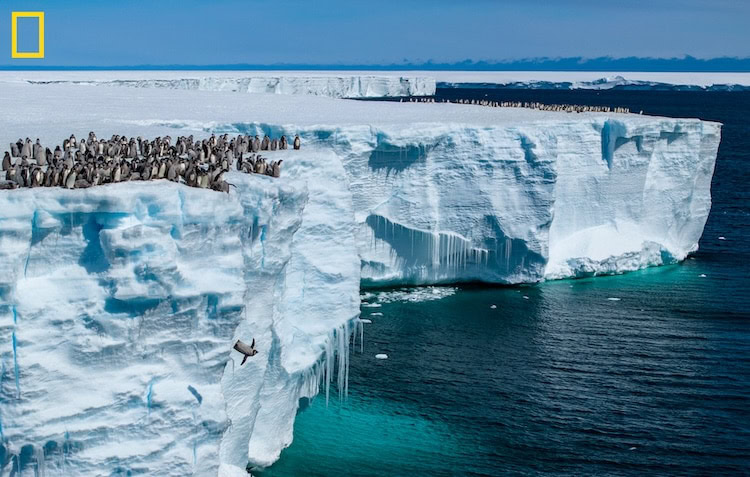
The Society supports research, expeditions, conservation projects, and education programs. It funds scientists, archaeologists, explorers, and storytellers through grants and fellowships, then uses publication and public programming to share the results. Its work spans field science and communication: mapping coral reefs, documenting endangered species, studying human migration, and publishing stories that reach a broad audience.
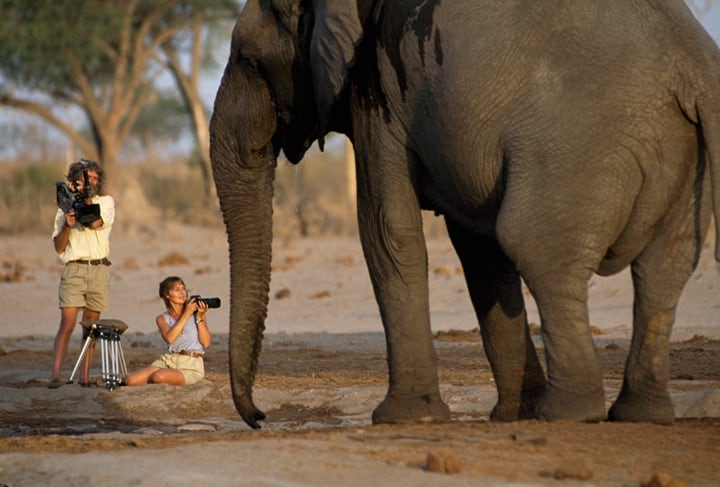
Photography sits at the center of that mission. The Society has long treated the camera as a scientific and narrative tool, not just illustration. Its photographers work in harsh, remote, and sometimes politically sensitive conditions, producing images that are both documentary evidence and designed pictures. That approach influenced magazine photography far beyond the organization itself.
Why does it matter in visual culture?
National Geographic helped establish a recognizable modern style for factual imagery. That style often combines close detail with geographic breadth: faces, artifacts, animals, and environments framed to suggest both specificity and context. The result is a visual language of discovery that shaped how audiences learned to imagine “the world” in the 20th century.
The Society also played a major role in making visual ethnography mainstream for general readers, although that history is complicated. Its archives include important documentary work, but they also reflect older assumptions about who gets observed and how cultures are framed. For that reason, the Society matters not only as a maker of celebrated images but also as a case study in how institutions shape public knowledge through photography.
How does its work appear in practice?
In practice, the Society appears through magazine features, contest juries, grants, expeditions, and educational content. A National Geographic assignment might involve a photographer living with a community, traveling with researchers, or documenting a natural phenomenon over months or years. The final image set often has strong color, careful composition, and a documentary tone that makes the subject feel both dramatic and legible.
Its influence also shows up in competitions and public calls for photography, including nature and travel contests that circulate work to large audiences. Those contests reinforce a house style: technically polished images, strong narrative cues, and subjects that can stand for broader environmental or cultural conditions. In design terms, the Society’s brand has become inseparable from image-making as a form of public education.
Frequently Asked Questions
Is the National Geographic Society the same as National Geographic magazine?
No. The Society is the nonprofit organization that funds research, education, and exploration. National Geographic magazine is one of its best-known publications and has historically been a major way the Society presents its work to the public.
Why is National Geographic so associated with photography?
From early in its history, the Society used photographs to make geography and science more vivid to readers. Its editorial approach treated photography as evidence, atmosphere, and storytelling at once. That made it a major patron of documentary and expedition photography.
What kinds of projects does the Society support?
The Society supports projects in science, conservation, archaeology, education, and storytelling. That can include field research, documentary film, mapping, wildlife studies, and cultural documentation. The common thread is public knowledge built from firsthand investigation and visual communication.