Michael Jackson was an American singer, dancer, and recording artist whose videos, stagecraft, and pop persona reshaped mainstream music in the late 20th century. Born in 1958 and active from childhood until his death in 2009, he built a career around tightly produced pop songs, highly controlled choreography, and a visual style that made him one of the most imitated performers in the world.
- He began performing as a child in the Jackson 5, then became a solo star in the 1970s and 1980s.
- His albums Off the Wall, Thriller, and Bad set standards for pop production and music marketing.
- He treated the music video as a major art form, using narrative, dance, costume, and set design to extend a song’s impact.
- His image was built through signature clothing, makeup, movement, and stage lighting as much as through his voice.
- He remains a central reference point in pop culture, celebrity portraiture, and visual parody.
How did Michael Jackson become such a visible figure?
Jackson first became famous as the lead singer of the Jackson 5, a Motown group formed with his brothers in Gary, Indiana. Their polished performances, tight harmonies, and child-star appeal made him a familiar face before he reached adulthood. As a solo artist, he shifted from teen idol to global pop star by combining radio-ready songs with meticulous vocal phrasing and a performance style built for television and stadiums.
His ascent depended on more than chart success. Jackson and his collaborators used album packaging, touring, styling, and video to create a unified public image. He was photographed, costumed, and lit with unusual care, which made his silhouette instantly recognizable: cropped black jacket, sequins, glove, fedora, white socks, and black loafers.
What made his performances so influential?
Jackson treated choreography as part of the song, not decoration added afterward. Steps such as the moonwalk, the anti-gravity lean from “Smooth Criminal,” and his sharply timed pivots gave his performances a mechanical precision that matched the studio polish of his records. He absorbed influences from tap, street dance, mime, and musical theatre, then simplified them into gestures that could be repeated by fans, imitators, and advertisers.
That physical vocabulary mattered because it translated well across media. On stage, it created a sense of control and tension; on screen, it became a graphic language of poses, shadows, and movement cues. Many later pop performers copied not only the dance moves but also the idea that a live show should feel like a total design project, with costumes, lighting, and camera angles working together.
Why do designers and image-makers keep returning to him?
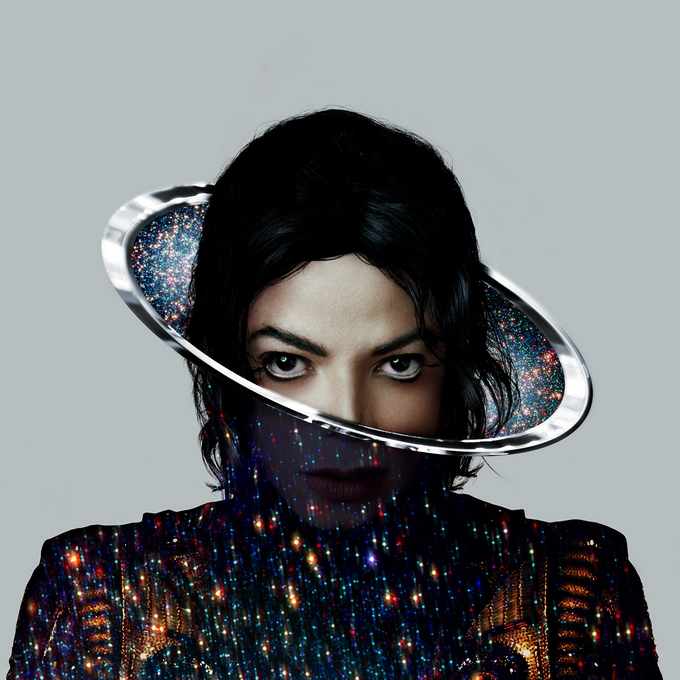
Jackson’s face and body became a standard reference in contemporary visual culture because they are both highly specific and highly legible. Artists have used his portrait as a subject for collage, paper cutting, illustration, and satire because his features, hairstyles, and outfits are immediately identifiable even when reduced to simple shapes or unexpected materials. His image can be rendered as glamour, nostalgia, irony, or critique without losing recognition.
He also sits at the intersection of celebrity and manufactured identity. Changes in his appearance over time, his careful self-presentation, and his constant relationship with cameras made him a useful subject for artists exploring fame, youth, race, performance, and transformation. In portraiture, he often stands for more than a person: he can signal pop excess, perfectionism, fragility, or the instability of public image.
What does his legacy look like in practice?
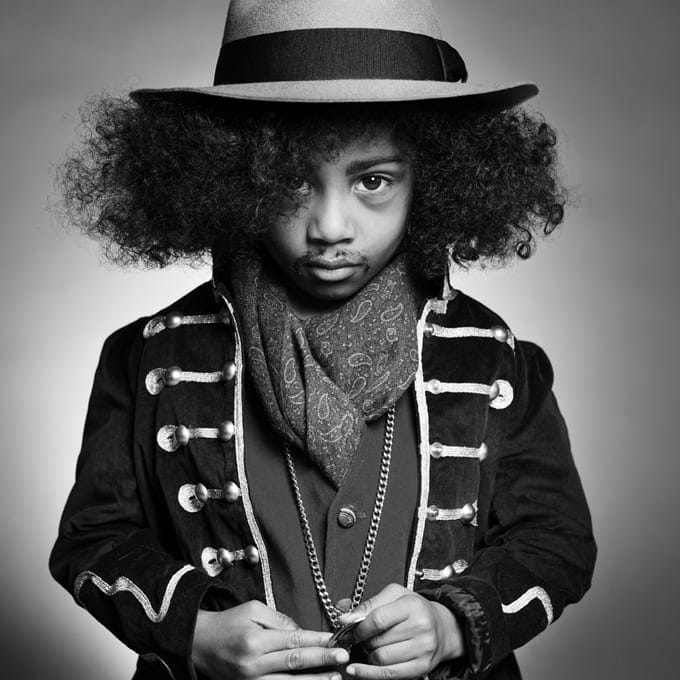
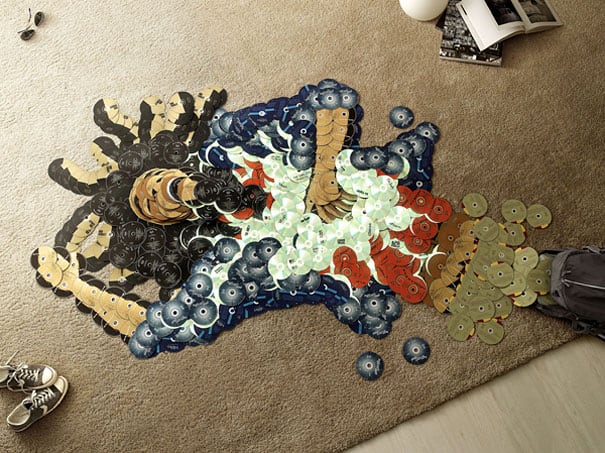
In music production, Jackson’s records helped establish the modern blockbuster album: expensive, tightly edited, and engineered for multiple hit singles. In visual culture, his influence shows up in fashion editorials, tribute photography, dance films, album artwork, and playful object-based portraits made from materials such as paper, CDs, or hair. These works often rely on his silhouette, glove, or jacket rather than a literal likeness.
His legacy is complicated, and any account of it has to acknowledge both his artistic impact and the controversies that shaped later views of him. Still, his contribution to pop design remains unusually durable. He showed how a recording artist could operate as a complete visual system, with sound, movement, costume, and editing all built to reinforce one another.
Frequently Asked Questions
Why is Michael Jackson called the King of Pop?
The title became attached to him because of his extraordinary commercial success, cross-generational fame, and dominance of the music video era. It reflected not only sales figures but also the scale of his cultural visibility. Few performers reached audiences through so many channels at once: radio, television, film, fashion, and live spectacle.
What is Michael Jackson’s most important visual contribution?
His most important visual contribution was the integration of choreography, costume, and camera-ready image into pop music. He made the music video central to an artist’s identity rather than a promotional afterthought. That approach influenced how record labels, directors, and stylists built pop careers after him.
Why do artists keep making portraits of him?
Artists return to him because his image is both famous and symbolically loaded. His face, glove, and clothing can be simplified into strong visual cues, which makes him useful in collage, cut paper, print, and illustration. He also carries enough cultural history to support work about celebrity, memory, transformation, and performance.
Articles mentioning Michael Jackson