
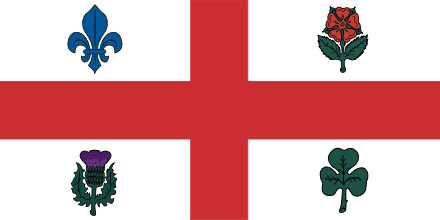
Montreal is Canada’s second-largest city and the largest city in Quebec, built on an island in the Saint Lawrence River and anchored by Mount Royal, the hill that gave the city its name. It began as Ville-Marie, a French colonial settlement founded in 1642, and it remains one of North America’s major centres for French-language culture, design, publishing, and art.
- Founded as Ville-Marie in 1642, later taking the name Montreal from Mount Royal.
- French and English shape the city’s public life, with French dominant in daily use and institutions.
- Montreal has a strong legacy in architecture, industrial design, graphic culture, and public art.
- The city’s built form ranges from nineteenth-century stone streets to modernist landmarks and adaptive reuse projects.
- Its climate, island setting, and layered history have made it a city of interiors, passages, and dense neighbourhoods.
Where did Montreal come from?
Montreal grew from a missionary settlement on the island of Hochelaga, first mapped by French explorers in the sixteenth century and later colonised by the French crown. The settlement of Ville-Marie was founded by the Société Notre-Dame de Montréal in 1642 as a religious mission and trading post. Over time, the name of the nearby hill, Mount Royal, was adapted into Montreal through older French spellings such as Mont Réal.
The city changed hands in the mid-eighteenth century, when Britain took control of New France, but French language and Catholic institutions remained central to civic life. That dual history still shapes Montreal’s streets, neighbourhood names, and public culture. It also explains why the city often feels both European and North American at once: orderly stone facades, dense blocks, and bilingual signage sit beside expressways, towers, and industrial corridors.
Why does Montreal matter in design and visual culture?
Montreal matters because it has acted as a testing ground for modern Canadian culture. It produced major examples of twentieth-century architecture, from Expo 67’s experimental pavilions to the Olympic complex, and it has supported strong traditions in graphic design, publishing, and exhibition making. The city’s institutions and festivals have also given space to photography, illustration, installation, and large-scale public art.
That visual culture is not limited to museums. Montreal’s street grids, duplexes with exterior staircases, laneways, brick warehouses, and converted church interiors all form part of its image. Designers and artists often work with that existing fabric rather than replacing it, using old masonry, concrete shells, stained glass, timber framing, and metal structures as material starting points.
What does Montreal look like on the ground?
The city is built from clear layers. Old Montreal preserves seventeenth- and eighteenth-century street patterns and nineteenth-century commercial buildings in stone and brick. Downtown rises into a modern office core, while the Plateau, Mile End, Little Burgundy, and other districts mix row houses, cafés, studios, ateliers, and small manufacturing spaces. Mount Royal sits above all of it, giving the city a fixed reference point and a strong topographic identity.
Montreal’s architecture often reflects repair, reuse, and adaptation. Church buildings become performance venues or dining spaces; former industrial sites become studios or galleries; and transit, roof structures, and public works are treated as visible civic projects rather than hidden infrastructure. The city’s winter also shapes form: porches, steep staircases, enclosed passages, and underground connections all respond to climate as much as style.
How is the city made visible in practice?
Montreal appears in the way it handles surfaces and systems. Brutalist concrete, red brick, local limestone, painted metal, and glass curtain walls sit close together, often within the same block. Signage and lettering matter too: French typography, neighbourhood storefront graphics, and bilingual civic marks give the city a particular visual rhythm. Even in contemporary interiors, Montreal design often leans into material clarity rather than decorative excess.
The city’s creative output tends to be collaborative and cross-disciplinary. Architects work with engineers on large roofs and transport systems; artists collaborate with fabricators, printers, and machinists; and designers often draw on craft traditions from upholstery, carpentry, metalwork, and textile production. That mix makes Montreal more than a backdrop. It is a working environment where material decisions remain legible in the finished object.
Frequently Asked Questions
Is Montreal the same as Montréal?
Yes. “Montréal” is the French spelling used officially in Quebec, while “Montreal” is the anglicised form common in English texts. Both refer to the same city.
Why is Mount Royal important to the city?
Mount Royal is the hill at the centre of the island and the source of the city’s name. It gives Montreal its most recognisable landform and helps organise views, parks, and neighbourhood orientation. The mountain also marks a physical boundary in the city’s growth and identity.
Why do so many Montreal projects use churches, warehouses, and old industrial buildings?
Montreal has a large stock of sturdy older buildings, especially in stone, brick, and concrete, left from periods of industrial and religious expansion. Reuse is often practical, since these structures can be adapted for galleries, dining, studios, or housing without losing their character. The result is a city where history is often visible as a working surface rather than a preserved relic.