Yohji Yamamoto is a Japanese fashion designer known for severe silhouettes, dark palettes, and clothing that treats drape, volume, and imbalance as design tools. Born in Tokyo in 1943, he built a career between Tokyo and Paris and became one of the key figures in the rise of avant-garde fashion in the late twentieth century.
| Born | 1943, Tokyo, Japan |
|---|---|
| Field | Fashion design |
| Base of work | Tokyo and Paris |
| Known for | Oversized tailoring, black clothing, asymmetry, deconstruction, and a restrained, architectural approach to dress |
| Notable recognition | Japanese Medal of Honor, Ordre national du Mérite, Royal Designer for Industry, Master of Design award from Fashion Group International |
What makes Yamamoto’s work distinctive?
Yamamoto’s clothes are often cut loose from the body rather than fitted to it. He uses long lines, dropped shoulders, wide trousers, heavy wool, cotton, and layered fabric to create garments that move with the wearer and change shape in motion. Black appears again and again in his work, not as absence but as a way to intensify texture, seam, and shadow.
His design language refuses easy glamour. Seams may sit visibly outside the expected line, hems can be uneven, and proportions are frequently enlarged or displaced. The effect is disciplined rather than chaotic. His garments look as if they were built to question the usual assumptions of Western tailoring: symmetry, polish, and the idea that clothes should simply flatter the body.
Where did his approach come from?
Yamamoto came of age in postwar Japan, where dress carried strong signals of modernity, class, and Western influence. He trained in law before turning to fashion and later studied at Bunka Fashion College, a school known for technical rigor and a strong tailoring tradition. That background gave him the ability to work against convention without abandoning construction.
His work emerged alongside other Japanese designers who changed fashion’s center of gravity in the 1980s, especially Rei Kawakubo and Issey Miyake. Together they challenged the assumption that Parisian couture defined the only serious fashion language. Yamamoto’s version was less about ornament than about restraint, repetition, and the emotional force of clothes that look worn, armored, or in tension with the body.
How is Yohji Yamamoto made in practice?
In practice, Yamamoto’s fashion depends on cutting and fabric behavior. A coat may begin with a tailoring block, then be widened, elongated, or skewed so that the garment hangs with deliberate instability. He often works with wool suiting, dense cottons, gabardine, and other fabrics that hold structure while still allowing gravity to shape the silhouette. The result is clothing that reads through pattern-making as much as through styling.
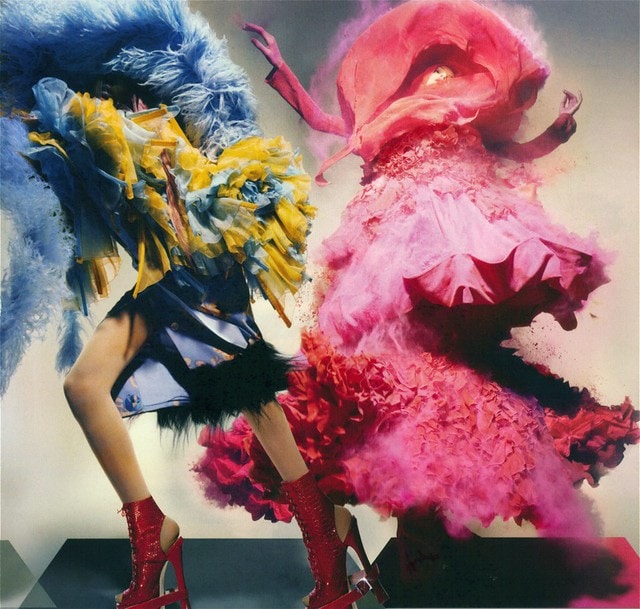
His approach has also influenced how fashion is photographed, styled, and edited. A Yamamoto piece can look severe in a studio and more fluid in motion, which is why it frequently appears in editorial work that values gesture and atmosphere. Photographers and stylists use his clothes to create strong contrasts: black against skin, volume against emptiness, and shape against light.
Why does he matter in fashion history?
Yamamoto helped broaden the definition of luxury fashion. Instead of relying on visible refinement, embellishment, or body-conscious elegance, he made a case for intelligence, restraint, and imperfection as high design values. That shift opened space for later designers who work with deconstruction, anti-fashion, and minimal but highly technical construction.
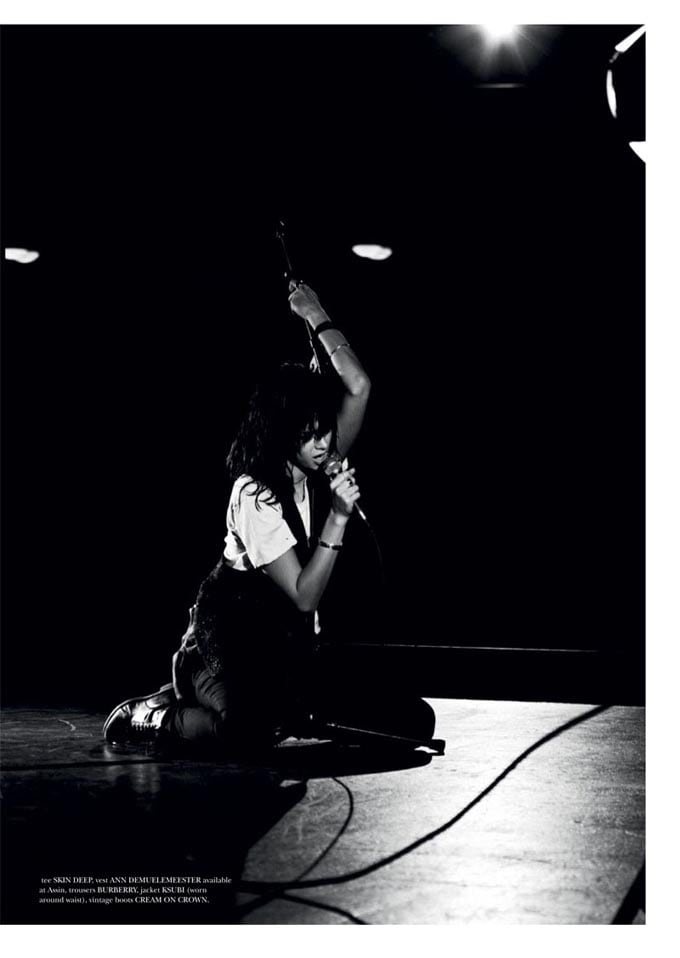
His impact reaches beyond runway history. In photography, performance, music culture, and editorial portraiture, Yamamoto’s clothing supplies a visual grammar for seriousness, rebellion, and authored identity. It is why his work keeps returning in images of artists such as Patti Smith and in fashion stories that want clothes to communicate mood, discipline, and refusal rather than mere trend.
Frequently Asked Questions
Is Yohji Yamamoto considered a minimalist?
Sometimes, but the label only partly fits. His work often uses a limited palette and pared-back decoration, yet the garments are rarely simple in construction. The deeper concern is not reduction for its own sake, but control over shape, space, and the body’s outline.
Why is black so important in his clothes?
Black lets texture, seam, and silhouette take priority. On Yamamoto garments, the color flattens surface detail and makes small changes in volume easier to see. It also gives his work a formal severity that suits his interest in distance, mystery, and discipline.
What should be looked for in a Yamamoto garment?
Look for cut, proportion, and how the piece hangs rather than for decoration. Sleeves may sit low, jackets may wrap instead of buttoning conventionally, and trousers may balloon or taper unexpectedly. These details are not eccentric extras; they are the structure of the design.
Articles mentioning Yohji Yamamoto