
A New Architectural Landmark Unveiled
The Bjarke Ingels Group (BIG), in collaboration with ARTS Group, SHUISHI, and VIA.inc, proudly opens the Suzhou Museum of Contemporary Art on Jinji Lake’s shoreline in Suzhou, China. This art space, covering 60,000 square meters, is BIG’s first completed art museum. The complex boasts twelve dynamic pavilions unified under a flowing, ribbon-like roof, echoing the tranquil logic of Suzhou’s storied gardens.

Integrating Tradition with Modern Design
Central to this masterpiece is the reinterpretation of ‘lang’ 廊, the traditional Chinese garden corridor. The architects constructed a continuous circulation route that links all twelve pavilions. Visitors navigate through a labyrinth of galleries and gardens, ensuring each step offers a unique discovery in this cultural venue.
Bridges and tunnels weave the above and below-ground spaces together, crafting an immersive journey rather than a series of isolated rooms. This setup provides flexibility for changing exhibitions and programs, allowing the museum to evolve seamlessly.
‘By blending the museum into a garden of interconnected galleries, we create a seamless bond between Suzhou’s cityscape and Jinji Lake,’ explains Bjarke Ingels of @big_builds. This design underlines the concept of urban porosity, inviting both city dwellers and lake visitors into a shared cultural experience within the exhibition space.
For more on modern architectural marvels, check out Sydney’s Powerhouse Parramatta unveiling which showcases bold structural design and cultural innovation.

Exploring the Garden-Inspired Art Museum
Viewed from above, the museum’s twisting roof resembles an infinity knot, cleverly echoing traditional papercut patterns and adapting to the adjacent Ferris wheel that peers over the site. According to Catherine Huang, a partner at BIG, while the roof’s design offers a precise aerial composition, it also unfolds an engaging ground-level journey through art and nature.
The design pushes against the notion of museums as static, isolated spaces. With its continuous roof and interlinked paths, this institution invites fluid movement, fostering a dynamic interplay between architecture and environment.
Learn how design can transform urban areas by reading about Luca Pronzato’s villa transformation in Arles, blending art, design, and cuisine.

A Hub for Diverse Artistic Exhibitions
The Suzhou Museum of Contemporary Art begins its journey with an impressive lineup. Notable is BIG’s ‘Materialism‘, which uses large-scale models to explore materials from stone to recyclate. Alongside are exhibitions featuring modern and contemporary art, including pieces by Picasso and an extensive showcase of Chinese contemporary art.


Future-Proofed Flexibility and Public Engagement
The museum’s thoughtful layout ensures adaptability, with its spaces designed to support evolving exhibitions and programs. Visitors meander through covered pathways and gardens, creating a fluid experience deeply entrenched in exploration within this unique setting.

As this cultural beacon continues to develop, its ability to seamlessly integrate city life with waterfront serenity will determine its lasting impact.


Project Details
- Name: Suzhou Museum of Contemporary Art
- Architect: Bjarke Ingels Group (BIG) | @big_builds
- Location: Suzhou, China
- Area: 60,000 sqm (646,000 sqft)
- Client: Suzhou Harmony Development Group Co. Ltd
- Collaborators: ARTS Group Co. Ltd, Front Inc., Shanghai Shuishi Landscape Design Co. Ltd, Rdesign International Lighting
- Photographers: Ye Jianyuan, Studio SZ Photo | @studiosz_photo, Yongwon Jo | @yong1jo
Sources & Links
Source: designboom.com
Frequently asked questions
What design inspiration influenced the Suzhou art museum?
The Suzhou Museum of Contemporary Art’s design is inspired by Suzhou’s storied gardens, featuring a ribbon-like roof and a reinterpretation of ‘lang,’ the traditional Chinese garden corridor. These elements create a continuous path linking pavilions, integrating tradition with modern design.
What is the significance of the museum’s roof design?
The museum’s twisting roof resembles an infinity knot, echoing traditional papercut patterns and adapting to the Ferris wheel nearby. This design offers an engaging ground-level journey and a seamless bond with the city’s cultural landscape.
What exhibitions are featured at the Suzhou Museum of Contemporary Art?
The museum features exhibitions such as BIG’s ‘Materialism,’ which uses large-scale models to explore materials, and showcases of both modern and contemporary art, including works by Picasso and Chinese contemporary artists.
More in
Architecture
All Architecture


More like this
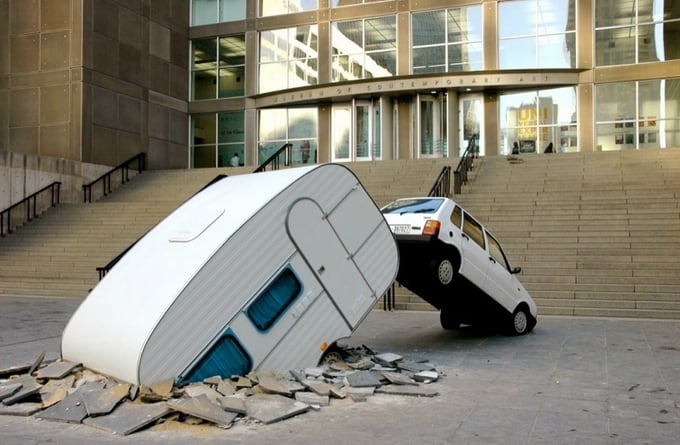
Contemporary artists Elmgreen and Dragset

Faig Ahmed Transforms Traditional Azerbaijani Carpets into Mesmerizing 3D Installations

Bjarke Ingels Group Transforms Athens' Skyline with Innovative Park Rise Tower

Revolutionary Helix Pot Grows With Your Plant Using Foldable Origami Geometry

Robin F. Williams Merges Tech Dystopia and Art History at London Exhibition