
Harry Potter is a fantasy book series by J. K. Rowling about a young wizard, his friends, and their years at Hogwarts School of Witchcraft and Wizardry. It began as a set of novels for children and grew into a global franchise spanning films, stage work, games, merchandise, theme-park attractions, and a visual language that is now instantly recognizable: round glasses, house scarves, floating candles, wand duels, and the black-on-cream spine of the books themselves.
Stories from Harry Potter
18 stories


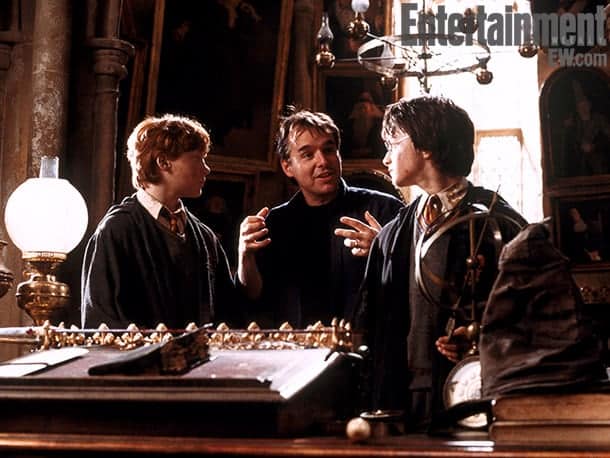


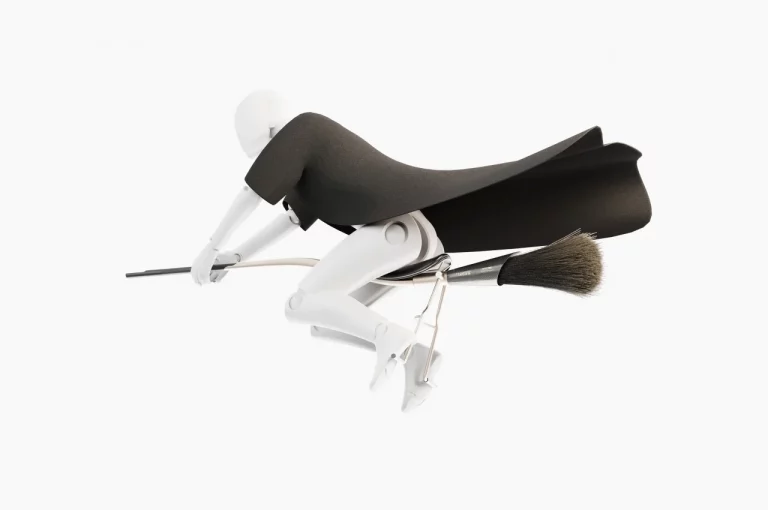


About Harry Potter
- Started as a seven-book series published between 1997 and 2007.
- Built around recurring settings and objects: Hogwarts, wands, brooms, house crests, and magical creatures.
- Became a major cross-media brand through films, toys, games, and licensed products.
- Its imagery strongly shapes contemporary fantasy design, from packaging to exhibition graphics.
Read the full overviewWhere did Harry Potter come from?, Why does Harry Potter matter in visual culture?, What does Harry Potter look like in practice?, How the franchise shaped merchandise and adaptation
Where did Harry Potter come from?
J. K. Rowling developed the idea in the 1990s and published Harry Potter and the Philosopher’s Stone in 1997. The books follow Harry, Hermione Granger, and Ron Weasley as they move through the school years at Hogwarts and into a wider conflict with the dark wizard Voldemort. The series draws on British boarding-school fiction, fairy tales, and classical fantasy, but it packages those traditions in a modern, highly legible world of spells, classrooms, uniforms, maps, and moving portraits.
The setting matters as much as the plot. Hogwarts gives the series a stable architecture: four houses, named rooms, staircases that shift, and a library, great hall, and dormitories that recur from book to book. That consistency made the series easy to imagine, illustrate, adapt, and merchandise, because its symbols are simple enough to repeat but rich enough to vary.
Why does Harry Potter matter in visual culture?
Harry Potter became one of the most influential fictional worlds of the late 20th and early 21st centuries. The novels sold in enormous numbers, but the visual power of the franchise came from how clearly its world could be translated into objects and spaces. Film designers, illustrators, toy makers, and exhibition teams all worked with a shared set of motifs: parchment, brass, stone corridors, house colours, owls, wands, and leather-bound books.
That visual system has proven useful far beyond entertainment. It has informed retail displays, special-edition publishing, event design, and collector products that borrow the franchise’s sense of ritual and wonder. A product like a self-moving chess set framed with Harry Potter branding depends on that recognition; the story’s objects are already loaded with design cues that make them feel tactile, premium, and theatrical.
What does Harry Potter look like in practice?
In practice, the franchise appears as a coordinated set of materials and forms. Book covers use serif type, deep colour palettes, and emblematic icons. The films and their tie-ins lean on wood grain, wrought iron, candlelight, velvet, and aged paper to suggest a world that is old but still active. Wands, cauldrons, and spellbooks become repeatable products because they are both narrative props and strong design objects.
At the same time, the franchise relies on contrast. It pairs the ordinary with the magical: school robes over sweaters, train travel beside levitation, handwritten notes beside elaborate spells. That mixture gives designers a clear brief. Everything should feel slightly antique, but also functional; fantastical, but never so abstract that the objects lose their everyday use.
How the franchise shaped merchandise and adaptation
The franchise’s success encouraged a dense market of licensed goods, from toys and board games to apparel, props, and display pieces. Licensed products usually emphasise house identity, the Hogwarts crest, the lightning bolt motif, or signature artifacts such as the Sorting Hat and Golden Snitch. These marks work because they are compact, readable, and easy to reproduce across print, plastic, metal, fabric, and digital interfaces.
Adaptations also sharpened the franchise’s material identity. The films gave the books a more fixed look, especially in costume, architecture, and creature design. Once those visual decisions settled into public memory, they became the reference point for later products and exhibitions, even when the original novels left more room for the imagination.
Frequently Asked Questions
Is Harry Potter a book series or a larger franchise?
It began as a book series, but it is now a much larger franchise. The novels remain the core text, yet films, stage productions, games, theme-park environments, and licensed goods have expanded the world into many formats. For design and visual culture, that expansion matters because the franchise has a stable set of icons that travel well across media.
Why is Hogwarts so important to the series?
Hogwarts is the main setting for most of the story and the place where the series’ visual identity is most clearly established. Its moving staircases, house system, portraits, classrooms, and great hall give the fiction a strong spatial logic. That makes the world easier to remember and easier to design for.
What kinds of objects are most associated with Harry Potter?
Wands, house scarves, robes, broomsticks, owls, books, and chess pieces are among the most recognizable. These objects matter because they are both symbolic and usable: they can be worn, carried, displayed, or built into games and collectibles. That is one reason the franchise adapts so well to product design.
</s