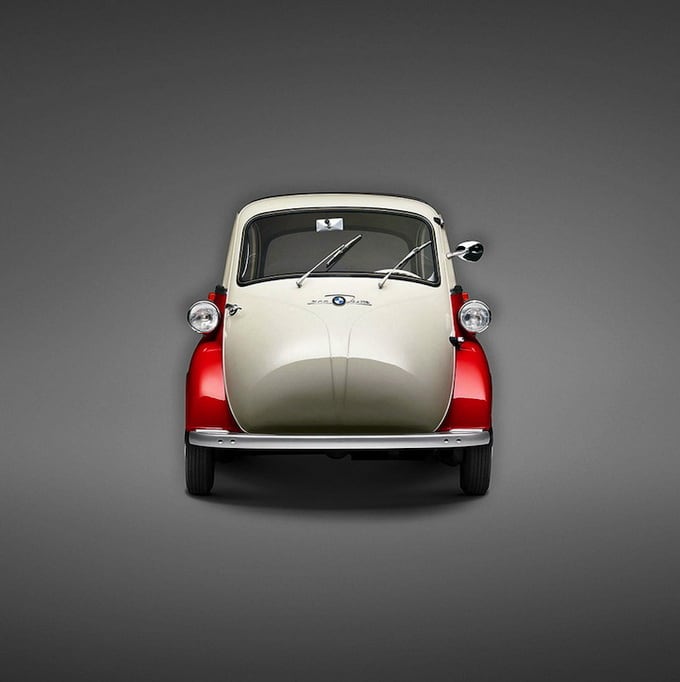
BMW is a German manufacturer of automobiles, motorcycles, and engines, founded in 1917 and headquartered in Munich. It began as an aircraft-engine company and later became one of the most recognisable names in premium cars and performance motorcycles. The group also owns Mini and Rolls-Royce Motor Cars, and it makes motorcycles under BMW Motorrad.
- Founded in Munich in 1917, with roots in engine production before moving into cars and motorcycles.
- Best known for premium passenger cars, performance models, and the BMW M division.
- Owns Mini and Rolls-Royce Motor Cars, giving it a wider reach than a single-brand car maker.
- BMW Motorrad builds the company’s motorcycles, which have their own design and engineering culture.
- BMW often appears in design and material conversations because of its concept cars, special editions, and interiors.
Where BMW came from
BMW began as a maker of aircraft engines in the final years of the First World War. The company’s name, Bayerische Motoren Werke, or Bavarian Motor Works, still reflects that origin in engine manufacture rather than car styling. As aircraft production was restricted after the war, BMW shifted into motorcycles and then passenger cars, building a reputation around technical precision and mechanical performance.
Munich remained the company’s base, and Bavaria became central to its identity. That regional link is not just marketing language: BMW has long used German engineering, industrial design, and a controlled premium image as part of its brand language. Over time, the company grew from a maker of machines into a broad automotive group with multiple marques and specialist divisions.
What does BMW make?
BMW produces luxury and performance cars, motorcycles, engines, and related mobility products. Its car range spans compact hatchbacks, executive sedans, SUVs, electric vehicles, and high-performance M models. BMW Motorrad covers touring bikes, sport bikes, adventure models, and concept motorcycles, often using the same emphasis on engine character and chassis balance that shapes the car side.
The group’s structure matters because BMW is not only a badge on a grille. It owns Mini, which gives it a distinct small-car brand with its own visual identity, and Rolls-Royce Motor Cars, which occupies the top end of ultra-luxury motoring. That portfolio lets BMW operate across very different ideas of mobility, from playful urban design to hand-finished luxury coachwork.
Why does BMW matter in design and car culture?
BMW matters because it has turned technical engineering into a visual identity. The twin-kidney grille, the Hofmeister kink in the side window line, and the focus on proportions, stance, and surface tension all make BMW products immediately readable. Even when the company changes powertrains or expands into electrification, it tends to preserve a recognisable family look.
It also matters because BMW often treats cars as design objects and brand platforms, not only transport. Concept cars, limited editions, collaborations, and interior experiments let the company test materials, colour, lighting, digital interfaces, and branding language. Articles about restored classics, concept cars, or in-car advertising often use BMW as a case study because the company sits at the point where industrial design, marketing, and consumer expectation meet.
What does BMW look like in practice?
In practice, BMW’s work often combines precise body surfacing with high-contrast materials and driver-focused cabins. A modern BMW might use aluminium, high-strength steel, carbon-fibre-reinforced plastic, stitched leather, brushed metal trim, and illuminated controls to signal both technology and luxury. In performance models, that formula becomes more aggressive through larger intakes, wider tracks, deeper seats, and firmer suspension tuning.
The company’s concept vehicles and special editions show how flexible that language can be. Electric concepts may use simplified grilles, closed-off front ends, and lighting signatures instead of the traditional engine-led face. Classic restorations and heritage reissues, by contrast, often lean on paint colours, period upholstery, wheel designs, and badge placement to connect older mechanical forms with current taste.
Frequently Asked Questions
Is BMW just a car company?
No. BMW builds cars, motorcycles, and engines, and it operates as a group with several brands under its control. Mini and Rolls-Royce Motor Cars sit within that group, while BMW Motorrad handles the motorcycle business. That makes BMW broader than a single marque, even though the BMW badge is the most visible part of the company.
Why do designers talk about BMW so often?
BMW appears often because its products are highly designed objects, not plain utility machines. The company uses form, proportion, material choice, and brand symbols very deliberately, so its cars and bikes become reference points in discussions of industrial design. BMW also releases many concepts, special editions, and technology showcases, which give writers concrete examples to analyse.
What is BMW M?
BMW M is the company’s performance division, responsible for high-output versions of BMW cars and for some motorsport-linked engineering and branding. M models usually feature stronger engines, upgraded suspension and brakes, and more aggressive styling than standard versions. In visual terms, they often use larger air openings, distinct wheels, and colour-coded M branding to show their role at a glance.
At a glance
- Founded
- 1927
- Address
- Munich, Germany
Articles mentioning BMW