
Estonia is a country in Northern Europe on the eastern shore of the Baltic Sea, known for its mix of medieval towns, Soviet-era layers, dense forests, islands, and a highly digital public culture. It sits between Latvia and Russia, with the Gulf of Finland to the north, and its capital, Tallinn, anchors much of its cultural and design life.
Stories from Estonia
9 stories


About Estonia
- Location: Northern Europe, on the Baltic Sea, south of Finland
- Capital: Tallinn
- Language: Estonian, a Finno-Ugric language related to Finnish, not to Latvian or Russian
- Landscape: Forests, wetlands, limestone cliffs, islands, and a long, varied coastline
- Design context: Strong reputation for digital infrastructure, contemporary architecture, and nature-led building
Read the full overviewWhere Estonia came from, What does Estonia look like in practice?, Why Estonia matters in design and culture, How is Estonia represented in contemporary work?
Where Estonia came from
Estonia became an independent republic in 1918, lost that independence during the Second World War and the Soviet period, and restored it in 1991. That political history still shapes how the country is read: as a small state that had to rebuild institutions, identity, and international visibility very quickly. Its modern public culture often combines a clear-eyed practicality with a strong interest in national memory.
Before the 20th century, the region passed through long periods of Danish, Swedish, German, and Russian rule. As a result, Tallinn’s old town preserves Hanseatic merchant architecture, while later buildings reflect imperial, modernist, and Soviet ambitions. Estonia’s built environment often shows these eras side by side rather than in neat sequence.
What does Estonia look like in practice?
Estonia’s landscape is low-lying and heavily wooded, with bogs, lakes, peninsulas, and more than 2,000 islands. That geography matters to design and building. Many contemporary projects work with timber, stone, and compact forms that sit lightly in the landscape rather than dominating it. Cabins, visitor centres, and rural houses often use dark cladding, simple geometries, and large windows to frame forests, water, and seasonal light.
That same attention to place shows up in public art and cultural projects. An installation or building in Estonia often carries a direct relationship to land, weather, or history: a climbing wall can refer to wartime ruins, a museum can be set into a former industrial or rural site, and a villa can be designed as a retreat from noise and speed. The material palette tends to stay restrained, letting texture, shadow, and context do much of the work.
Why Estonia matters in design and culture
Estonia matters because it offers a rare combination of technical modernity and deep attachment to landscape. The country is widely known for e-governance and digital systems, but in visual culture it is just as interesting for how new work responds to old ground. Architects, artists, and designers there often treat memory as a material: not something to illustrate, but something to build with.
That approach appears in projects such as the Arvo Pärt Centre, where architecture and landscape are used to support a contemplative musical legacy, and in nature villas that treat woodland and silence as design elements. Estonian visual culture often values restraint, clarity, and atmosphere over spectacle. The result is work that feels precise rather than flashy, and rooted without being nostalgic.
How is Estonia represented in contemporary work?
Contemporary Estonian work often uses clean lines, muted finishes, and natural materials like wood, glass, concrete, and steel. Designers and architects tend to emphasize craft in junctions, surfaces, and proportions rather than ornament. Even in projects that are conceptually bold, the execution usually stays disciplined.
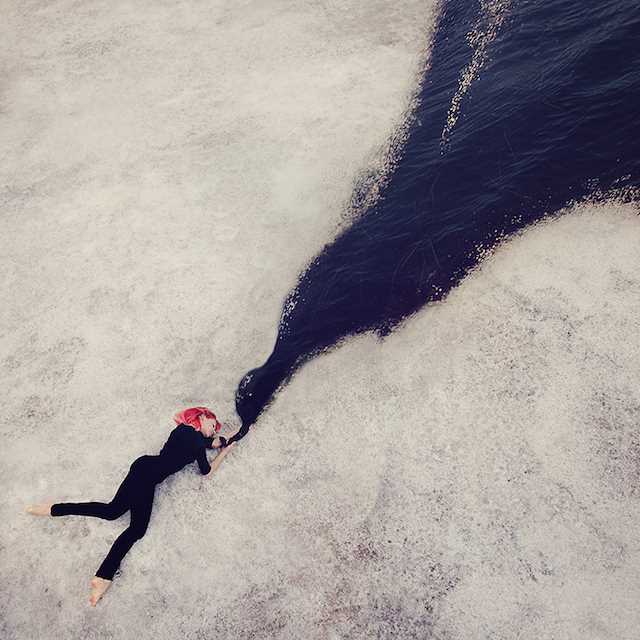
Photography and illustration from Estonia often lean toward quietness too. Snow, pine forests, marshland, bare branches, and pale summer light create a visual language that can feel cinematic without becoming decorative. That mood has made Estonia attractive to artists and image-makers who work with solitude, stillness, and subtle narrative.
Frequently Asked Questions
Is Estonia part of Scandinavia?
No. Estonia is in the Baltic region of Northern Europe, not Scandinavia. It is often grouped with its Baltic neighbours Latvia and Lithuania, though its language and historical ties also connect it to Finland across the Gulf of Finland. The cultural overlap with the Nordic countries is real, but the classification is different.
Why is Estonia often associated with digital innovation?
Estonia built a strong digital public infrastructure after restoring independence, and that made many government services faster and more integrated than in larger countries. The digital reputation has become part of the nation’s identity, especially in discussions of startups and administration. That reputation sits alongside, rather than replaces, a strong interest in architecture, landscape, and historical memory.
What materials and forms are common in Estonian architecture?
Wood is especially common, often paired with glass, concrete, blackened cladding, or local stone. Many buildings use simple forms, pitched or low-slung roofs, and careful siting in relation to forest, coast, or countryside. The most successful projects often make the material weathering visible rather than hiding it.