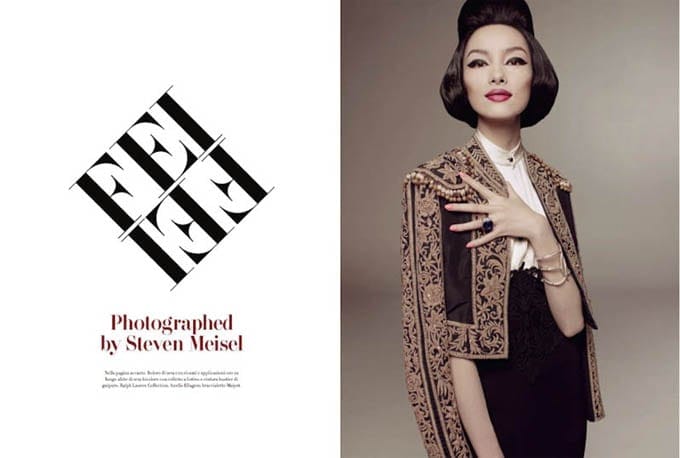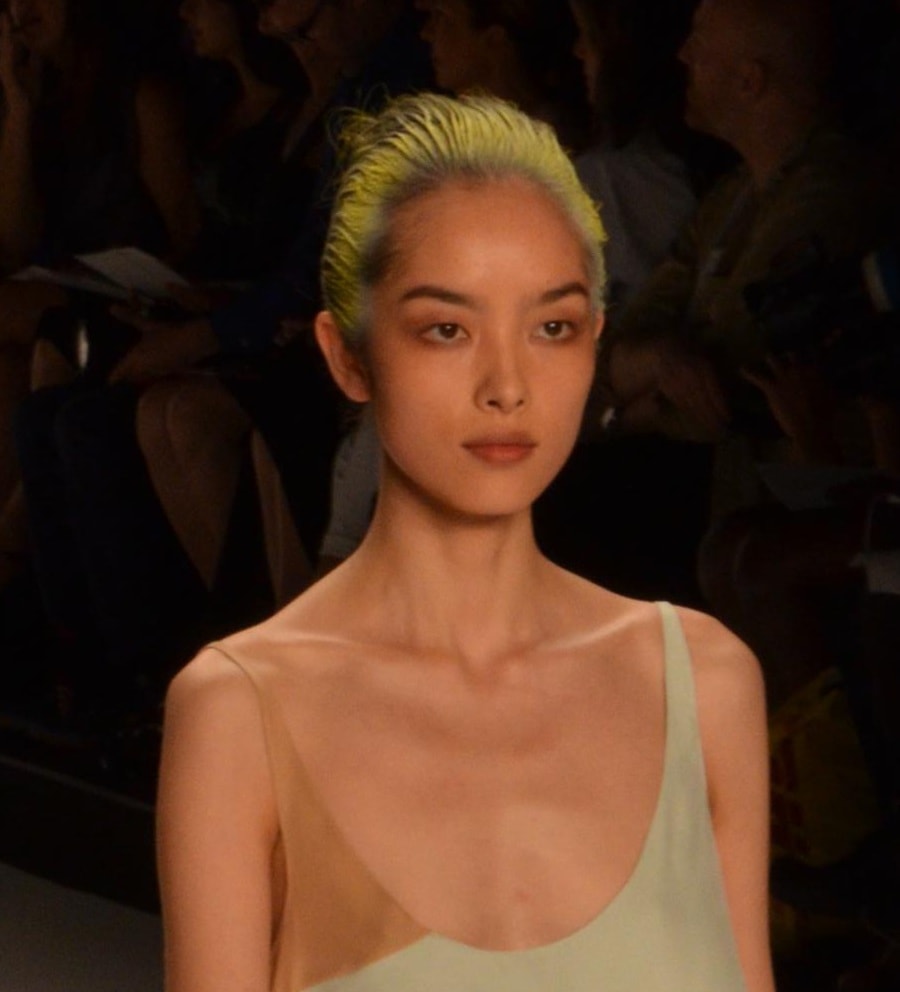
Fei Fei Sun is a Chinese fashion model known for her work on international runways, in major advertising campaigns, and in editorial fashion photography. She became one of the most visible Chinese models to gain sustained recognition in Western fashion media, appearing in high-profile magazines and walking for many of the industry’s most influential houses.
| Born | February 20, 1989 |
|---|---|
| Nationality | Chinese |
| Occupation | Fashion model |
| Known for | Runway work, editorial modeling, luxury campaigns |
How did Fei Fei Sun become known?
Fei Fei Sun entered fashion modeling at a time when East Asian models were still underrepresented in much of the European and American luxury market. Her rise came through the usual routes of the industry: runway casting, editorial test shoots, and magazine work that led to larger bookings. As her profile grew, she became associated with a cooler, more severe type of beauty that suited both avant-garde editors and commercial luxury brands.
Her career matters because it reflects a broader change in fashion’s image-making. Major publications and brands increasingly looked beyond a narrow set of faces, and Sun’s visibility helped normalize a wider range of looks on the runway and on the page. She is not a designer or stylist, but a model whose face, posture, and movement have shaped the way clothes are presented.
What does her work look like in practice?
Fashion modeling depends on control rather than self-expression in the ordinary sense. Sun’s work often involves precise posing, careful walking on the runway, and the ability to adapt her expression and body language to a photographer’s or designer’s brief. In editorial photography, this can mean holding a strong line through the neck and shoulders, turning a garment into a silhouette, or giving a still image a harder, more graphic feel.
In practice, a model like Sun works across very different formats: runway shows, look books, advertising campaigns, and magazine editorials. Each setting asks for a different kind of performance. On the runway, the body carries the garment in motion; in a campaign, the face and pose sell the collection; in editorial work, the model helps build a visual mood, often alongside stylists, hair artists, and photographers who define the final image.
Why does she matter in fashion history?
Fei Fei Sun’s significance lies partly in representation and partly in the way she fits fashion’s visual language. She became a familiar name in a sector that has long shaped global ideas of beauty while often excluding many of the people it images. Her success shows how modeling careers can alter the composition of fashion magazines, runway casts, and advertising campaigns without changing the structure of the industry overnight.
She also matters because fashion models are often overlooked as mere surfaces, when in fact their presence can change the tone of a whole campaign. A model’s facial structure, posture, and manner of moving affect how a garment reads. Sun’s work has been valued for carrying both elegance and severity, qualities that designers and photographers use to give clothes a sharp, contemporary edge.
Frequently Asked Questions
What kind of model is Fei Fei Sun?
Fei Fei Sun is a fashion model, which means her work centers on clothing, accessories, and the visual presentation of designer collections. She has worked in runway, editorial, and campaign contexts rather than in the more standardized format of commercial modeling alone. That mix is typical of models who reach top-tier fashion visibility.
Why did she become notable internationally?
Her international profile grew through work with influential magazines, photographers, and brands that circulate widely across the fashion industry. Once a model appears repeatedly in major editorial and luxury contexts, recognition compounds quickly. That is especially true in fashion, where a strong visual identity can make a model memorable across many different projects.
Is Fei Fei Sun associated with a particular fashion movement?
She is not usually linked to a single movement in the way a designer or photographer might be. Her importance comes from professional modeling work within mainstream and high-fashion systems. Still, her prominence is part of a larger shift toward more varied representation in luxury fashion imagery.
Articles mentioning Fei Fei Sun