
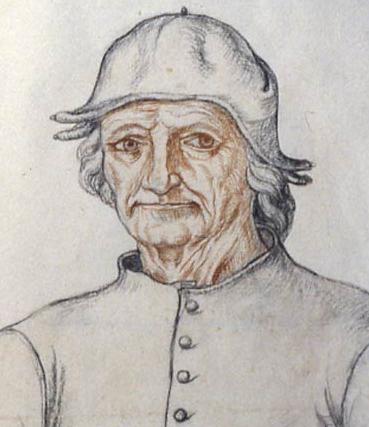
Hieronymus Bosch was a Netherlandish painter active in the late 15th and early 16th centuries, known for dense, fantastical scenes that turn Christian moral teaching into vivid visual spectacle. He painted altarpieces, devotional panels, and didactic images filled with demons, hybrids, monsters, tormented bodies, and uncanny landscapes.
| Born | c. 1450, ’s-Hertogenbosch, Duchy of Brabant |
|---|---|
| Died | 1516, ’s-Hertogenbosch |
| Medium | Oil paint on panel |
| Known for | Allegorical and religious paintings with surreal imagery |
| Historical setting | Late medieval Netherlands, amid Catholic devotional culture and moral reform |
Why Bosch looks so strange
Bosch’s paintings combine familiar religious subjects with inventions that seem drawn from dreams, jokes, and nightmares. He used ordinary things – instruments, kitchen tools, shells, birds, fruit, armor, pots, ladders – as raw material for moral allegory, then pushed them into absurd or disturbing forms. The result is not fantasy for its own sake, but imagery made to warn, ridicule, and unsettle.
That strangeness is closely tied to how his work functions. A scene of temptation or damnation becomes memorable when a sinner is crushed under a lute, devoured by a fish, or trapped in a machine-like punishment. Bosch’s paintings do not explain themselves politely; they stage moral confusion as an overload of detail.
What did Bosch actually paint?
Bosch painted religious panels, triptychs, and narrative scenes, often on oak with oil paint. His best-known works include The Garden of Earthly Delights, The Hay Wain, and The Temptation of St. Anthony. These works often open and close like altarpieces, with wings that reveal successive scenes of creation, sin, punishment, or redemption.
His figures are typically small, wiry, and animated rather than heroic. He fills the surface with packed episodes, so the eye keeps moving from one incident to the next. That crowded composition matters as much as the individual creatures: Bosch builds meaning through accumulation, not through a single focal point.
Where did his imagery come from?
Bosch worked in a late medieval Christian culture shaped by sermons, morality texts, visual emblem books, and local religious practice. His imagery draws on the language of sin, temptation, hell, and pilgrimage, but also on popular performance, folklore, and the visual habits of manuscript illumination and panel painting. He did not invent every monster from scratch; he recombined existing motifs into sharper, more concentrated forms.
His place of work, ’s-Hertogenbosch, was a prosperous town in the Duchy of Brabant, and Bosch belonged to a family of painters. He also worked for patrons who wanted serious devotional art, not eccentric novelty. That matters because Bosch’s originality lies in how far he could stretch accepted religious painting before it stopped looking conventional.
Why does Bosch still matter?
Bosch matters because he made image-making feel psychologically and visually unstable centuries before modern surrealism. Artists, writers, and designers continue to return to him because his paintings are full of usable forms: hybrid bodies, fragmented landscapes, grotesque tools, and moralized allegory. He offers a toolkit for making desire, fear, and excess visible.
His influence shows up far beyond art history. Album covers, editorial illustration, fantasy art, tattoos, animation, and game design all borrow from Bosch’s crowded surfaces and bizarre anatomy. Even when his name is used loosely as shorthand for anything weird, the underlying appeal is specific: he turns a painted surface into a world where temptation, damage, and invention occupy the same space.
Frequently Asked Questions
Was Hieronymus Bosch a surrealist?
No. Bosch lived about four centuries before Surrealism, and he worked within late medieval Catholic painting traditions. The comparison survives because his images feel dreamlike and irrational to modern viewers, but his purpose was moral and devotional rather than psychoanalytic or avant-garde.
Why is The Garden of Earthly Delights so famous?
It condenses Bosch’s method into one striking triptych: a world of pleasure, excess, and punishment rendered with extraordinary detail. The painting invites close looking because every section contains new figures and symbols, many of them hard to decode. Its fame comes from that combination of visual richness and interpretive mystery.
Did Bosch paint alone?
Like most painters of his period, Bosch likely worked with assistants or workshop support on some projects, especially larger commissions. The surviving works attributed to him are now studied as products of both individual invention and workshop culture. Attribution remains complicated, and not every painting with a Bosch-like monster came from his hand.
Articles mentioning Hieronymus Bosch


