
Palm Springs is a desert resort city in Riverside County, California, known for mid-century architecture, leisure culture, and a long association with film, design, and celebrity escape. It sits in the Coachella Valley at the base of the San Jacinto Mountains, where dry heat, bright light, and mountain-shadowed evenings have shaped both its image and its built environment. As a place, it matters less for one single monument than for the way architecture, landscape, and hospitality have been fused into a distinct modern American style.
Stories from Palm Springs, California
10 stories

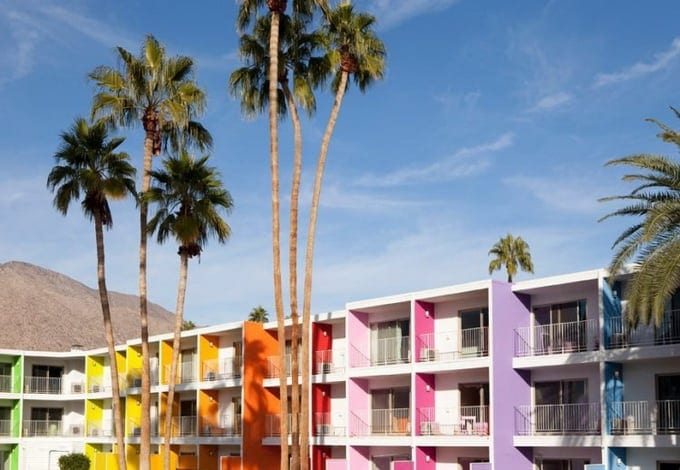


About Palm Springs, California
- Desert resort city in Southern California’s Coachella Valley.
- Best known for mid-century modern houses, hotels, and civic buildings.
- Its climate and mountain setting made it a retreat for Los Angeles visitors and Hollywood figures.
- Design in Palm Springs often emphasizes open plans, glass walls, shade structures, pools, and indoor-outdoor living.
- The city remains a reference point for architecture, interiors, pattern, and lifestyle branding.
Read the full overviewWhy Palm Springs became a design reference, What does Palm Springs architecture look like?, Why does Palm Springs matter in visual culture?, How the city is used in contemporary design projects
Why Palm Springs became a design reference
Palm Springs grew into a resort destination in the early and mid-20th century, when rail travel, car culture, and then air travel made desert leisure practical for Southern California residents. The city offered dry warmth in winter, a sense of distance from Los Angeles, and enough space for low-slung homes, hotels, and country clubs. That combination made it attractive to architects and developers working in modern styles that favored openness, simplicity, and clean geometric forms.
The place became especially important in the postwar decades, when Palm Springs architecture helped popularize a relaxed version of modernism. Houses and hotels used flat roofs, clerestory windows, exposed structure, breeze blocks, shaded patios, and large expanses of glass. These features were not just stylistic. They responded to the desert by filtering sun, encouraging cross-ventilation, and blurring the line between inside and out.
What does Palm Springs architecture look like?
Palm Springs is closely associated with mid-century modern design, but the city also contains Spanish Colonial Revival, ranch, brutalist, and contemporary architecture. The most recognizable buildings are the low, horizontal ones: glass-walled living rooms opening to swimming pools, carports instead of garages, screen walls that cast patterned shadows, and roofs that seem to float above the structure. Color often appears as an accent rather than a dominant field, used in doors, trim, signage, and furnishings.
Interior and object design in Palm Springs tends to follow the same logic. Materials are durable and climate-aware: stone, concrete, stucco, steel, plywood, terrazzo, and tile. Fabrics and graphics often lean into bold geometry, sunburst motifs, atomic shapes, palm fronds, and resort colors. The city’s visual identity has been strengthened by preservation efforts and by hospitality projects that reuse or echo its classic forms.
Why does Palm Springs matter in visual culture?
Palm Springs matters because it gave modern design a setting that was both glamorous and legible. The city’s houses and hotels became a shorthand for leisure, optimism, and postwar California life. Photographers, stylists, filmmakers, and brand designers return to it because its architecture reads clearly in images: long shadows, strong silhouettes, reflective water, and crisp color against sand and sky.
That clarity has made Palm Springs a recurring backdrop for fashion editorials, product launches, and hospitality branding. It also helps explain the city’s influence on current interiors and pattern design. When a project borrows from Palm Springs, it often borrows more than a style; it borrows a whole method of organizing space around climate, light, and public-facing ease.
How the city is used in contemporary design projects
Recent work tied to Palm Springs often treats the city as both source material and stage set. Designers adapt its palette of terra-cotta, aqua, pink, sand, and white; they also borrow the compositional habits of the place, such as framing a view, repeating a module, or using shade to create rhythm. Hotels, rental houses, rugs, prints, and campaigns frequently use Palm Springs as a shorthand for polished but playful modernism.
That use can be affectionate, nostalgic, or critical. Some projects carefully restore authentic details from the city’s modernist period. Others exaggerate them into a cleaner, more commercial image of desert chic. In both cases, Palm Springs functions as a design archive: not a single look, but a set of decisions about form, material, and atmosphere that continue to circulate through visual culture.
Frequently Asked Questions
Is Palm Springs the same thing as mid-century modern?
No. Palm Springs is a place, while mid-century modern is a design and architectural style. The city became one of the best-known settings for that style, which is why the two are often linked. Palm Springs also contains other architectural languages, including Spanish Revival and later contemporary work.
Why are so many Palm Springs buildings low and horizontal?
Low, horizontal buildings suit the desert climate and the site. They reduce heat gain, sit comfortably in the landscape, and make it easier to build shaded outdoor spaces beside pools and patios. The shape also matches the era’s modernist taste for simple lines and open planning.
Why do designers keep returning to Palm Springs?
Palm Springs offers a clear visual formula: bright light, sharp shadow, strong geometry, and a mix of luxury and ease. That makes it easy to adapt for photography, branding, interiors, and fashion. Its buildings and landscapes also carry a recognizable story about California modernism, leisure, and image-making.