Sardinia is a large Mediterranean island and an autonomous region of Italy, known for its rugged interior, long coastline, and distinct material culture. It sits west of the Italian mainland, south of Corsica, and east of the Balearic Islands and Tunisia.
- Second-largest island in the Mediterranean Sea.
- Autonomous region of Italy with its own administrative powers.
- Known for granite hills, limestone cliffs, sandy coves, and inland pastoral landscapes.
- Has a long craft tradition in textiles, basketry, ceramics, metalwork, and food production.
- Its visual identity often combines archaic forms, rural dress, and bright coastal light.
What makes Sardinia distinct?
Sardinia has a stronger sense of separation from mainland Italy than many Italian regions because of its geography, history, and language. The island’s position in the middle of the western Mediterranean made it a crossing point for Phoenician, Roman, Byzantine, Spanish, and Italian rule, but none of those powers erased local practices entirely. Sardinian culture therefore feels layered: coastal towns, shepherding villages, and archaeological sites from the Nuragic period sit close together, each carrying a different visual register.
That combination matters in design and photography because Sardinia offers contrasts that are easy to read in a frame: stone against sea, white limewash against dark basalt, embroidered cloth against sun-bleached landscape. The island is not a single style, but a set of recurring materials and forms shaped by climate, isolation, and trade.
How is Sardinia seen in visual culture?
Photographers and designers often use Sardinia for its strong textures and direct light. The island’s beaches and resorts are widely known, but its more interesting visual language comes from inland settings: handwoven garments, metal filigree, wooden furniture, carved domestic objects, and village festivals with masks and heavy textiles. These details give Sardinia a look that is both ceremonial and everyday, with objects made for use rather than display still carrying decorative force.
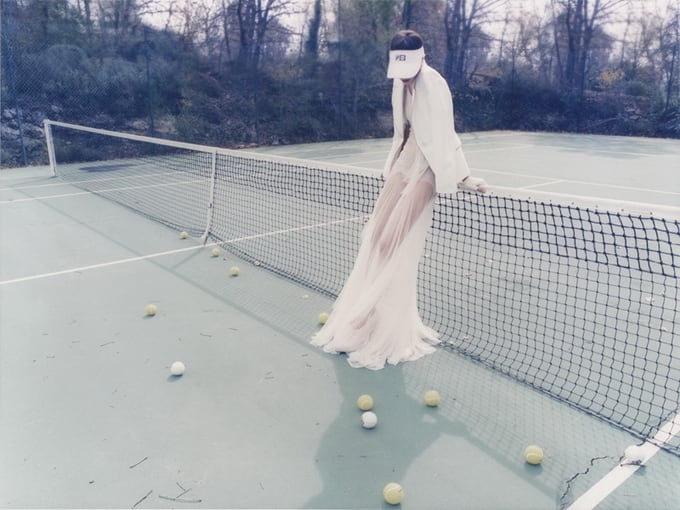
In fashion photography, Sardinia can serve as a backdrop that sharpens contrasts of silhouette, fabric weight, and colour. A linen dress can look almost architectural against stone streets or dry scrub; heavy wool, leather, and silver jewelry read differently in the island’s bright weather than they would in a northern setting. The place does not simply act as scenery. It shapes how materials appear.
What materials and traditions are associated with Sardinia?
Sardinia has a strong craft economy rooted in local materials. Wool has long been important because pastoral life shaped much of the island’s interior, and woven rugs, blankets, and garments remain central to Sardinian identity. Straw, reed, cork, clay, and stone also appear frequently in domestic objects and building traditions, while silver and coral have been used in jewelry and ceremonial dress.
The island’s making traditions often favour durability and repetition over novelty. Embroidery patterns, loom work, ceramic forms, and wood carving preserve regional differences from town to town. Even where tourism has changed the market, the underlying vocabulary of materials remains legible: coarse and fine yarns, matte and polished surfaces, hand-shaped and machine-finished objects.
Why does Sardinia matter?
Sardinia matters because it shows how place can remain visibly specific even after centuries of external influence. Its culture is not an isolated relic, but a living system in which local craft, language, food, dress, and landscape continue to inform one another. For artists and editors, that makes it useful not just as a destination, but as a reference point for texture, restraint, and regional distinction.
It also matters as a reminder that islands are not uniform. Sardinia contains multiple visual worlds inside one border: tourist coastlines, industrial ports, agricultural plains, and mountain villages. Any serious account of the place has to hold those differences together rather than flattening them into a postcard image.
Frequently Asked Questions
Is Sardinia part of Italy?
Yes. Sardinia is one of Italy’s autonomous regions, which gives it a degree of self-government within the Italian state. It is geographically separate from the mainland and has a distinct history, but it remains politically part of Italy.
Why does Sardinia appear in fashion photography?
Sardinia offers strong natural light, clear textures, and a visual mix of stone, sea, and rural craft. Those conditions make garments, accessories, and bodies read sharply in a photograph. The island also carries cultural associations with tradition and regional identity, which some photographers use deliberately.
What is Sardinia known for besides beaches?
It is known for inland shepherding culture, textiles, ceramics, basketry, jewelry, and archaeological sites from the Nuragic civilisation. Traditional festivals and regional dress also remain important markers of local identity. These elements give the island a visual life far beyond tourism.
}json
At a glance
- Address
- Italy
- Coordinates
- 40, 9
Articles mentioning Sardinia