Egypt is a transcontinental country in northeast Africa and the southwest corner of Asia, linked by the Sinai Peninsula and shaped by the Nile Valley, the Mediterranean coast, the Red Sea, and the Sahara. It is one of the world’s oldest continuously named places, known today both as a modern nation-state and as the setting of some of the most studied ancient architecture, craft, and urban history in the world.
- Egypt sits at a strategic crossroads between Africa, Asia, and the Mediterranean.
- The Nile river system has concentrated settlement, agriculture, and building activity for millennia.
- Its material heritage ranges from stone temples and tombs to Islamic mosques, markets, and modern urban fabric.
- Egypt remains important to art, design, and archaeology because its monuments are among the most recognisable in global visual culture.
- Contemporary practice in Egypt includes restoration, architecture, public art, film, photography, and craft traditions rooted in long local histories.
Where is Egypt, and what makes its geography distinctive?
Egypt occupies a large area of more than one million square kilometres, most of it in North Africa. The country borders Libya to the west, Sudan to the south, Israel and the Gaza Strip to the northeast, the Mediterranean Sea to the north, and the Red Sea to the east. The Sinai Peninsula forms the land bridge to Asia, making Egypt one of the few countries that spans two continents.
Its geography is defined less by uniform land than by sharp contrasts. The Nile Valley and Delta support dense settlement and farming, while wide desert regions dominate the rest of the country. That imbalance has shaped building materials, transport routes, and patterns of urban life. Cities, ports, and monuments cluster where water, trade, and labour have been easiest to sustain.
Why does Egypt matter in visual culture?
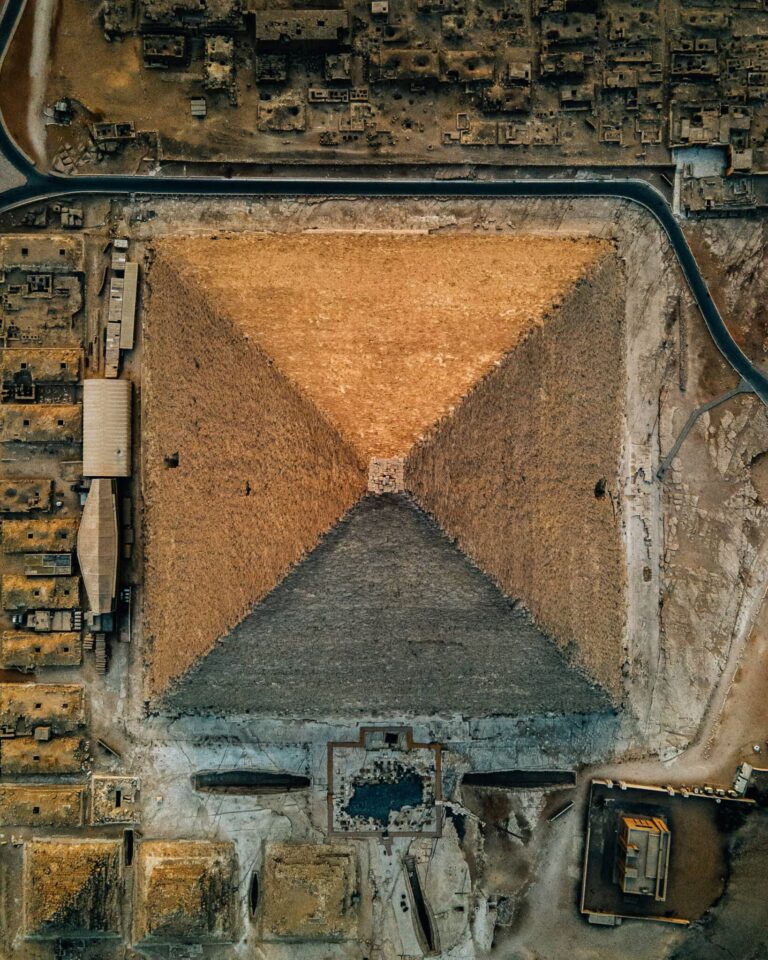
Egypt matters because its ancient and medieval buildings, objects, and images have been copied, studied, and reinterpreted for centuries. Pyramids, tomb paintings, temples, mosques, and carved reliefs have become visual shorthand in global design, film, advertising, and fine art. At the same time, Egypt is not only an archive of the past; it is a living place where restoration, street art, photography, and contemporary sculpture continue to shape the image of the country.
The country’s heritage also carries a technical dimension. Ancient Egyptian builders worked in limestone, sandstone, granite, mud brick, timber, plaster, paint, and gold; later Islamic and modern builders added baked brick, carved stone, wood latticework, tile, iron, concrete, and glass. Those material choices still matter to conservation today, especially in Cairo, Luxor, Alexandria, and the Giza Plateau, where preservation requires close knowledge of historic craft as well as modern engineering.
What does Egyptian architecture and design look like in practice?
Egyptian visual culture is not limited to pharaonic monuments. In practice, it includes the mud-brick villages of the Nile, the monumental stone language of ancient temples, the geometry of Coptic churches, the ornament of Fatimid and Mamluk mosques, and the dense layered streets of modern Cairo. The result is a built environment where multiple eras remain visible at once, often on the same block.
Restoration is a major part of contemporary Egyptian design work. Conservation teams repair stone surfaces, repaint murals, rebuild facades, and stabilise historic structures that have suffered from humidity, pollution, flood risk, or urban pressure. That work can be highly visible, from the restoration of major monuments to digital reconstructions and animated studies that show how buildings once looked. In all these cases, Egypt functions as both subject and workshop: a place where the history of making remains active.
How has Egypt been represented in contemporary art and media?
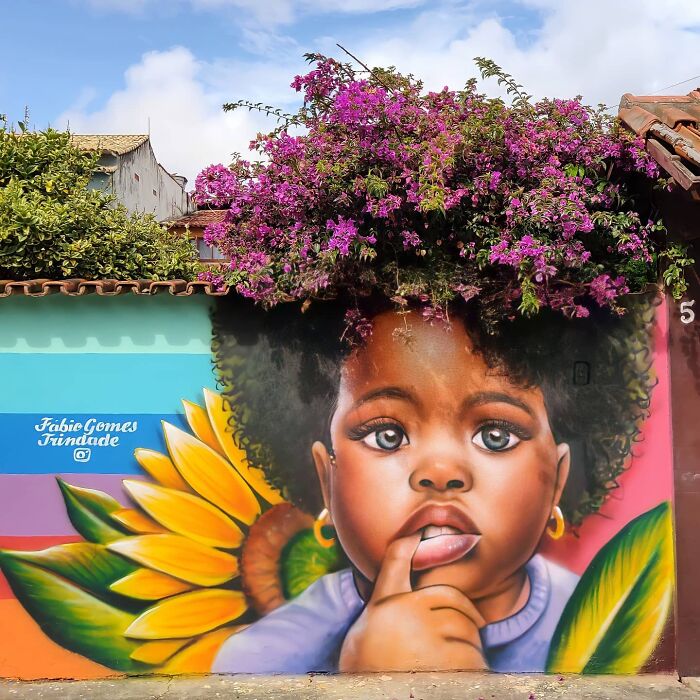
Modern artists and photographers often use Egypt as both setting and symbol. The Giza Plateau and the Sinai desert appear in site-specific sculpture, documentary photography, and experimental image-making because they offer landscapes that are instantly legible yet difficult to reduce to a single meaning. Artists also turn to Egyptian history to test ideas about time, ruin, survival, and scale.
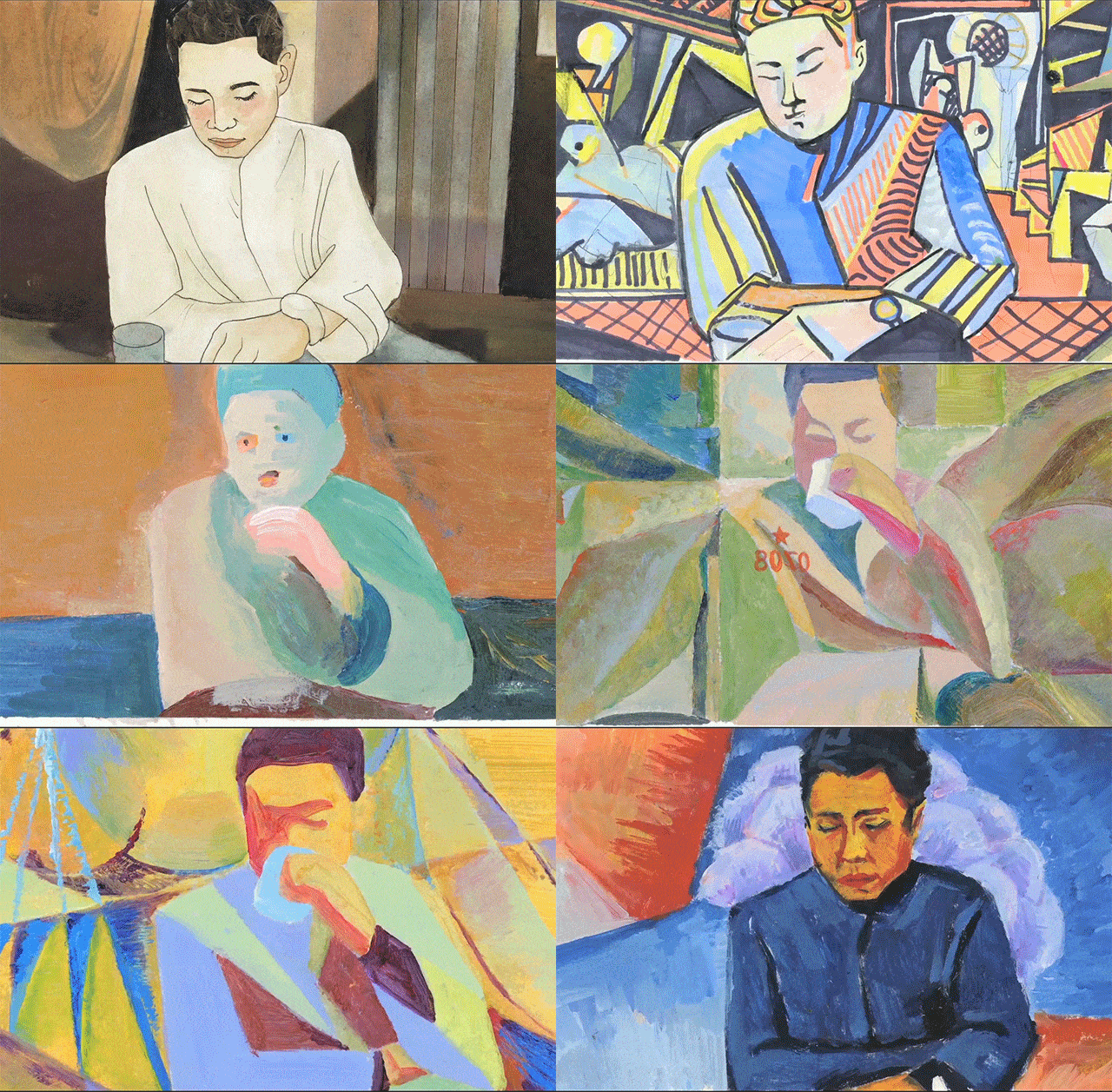
Recent projects have included restored historical buildings rendered in GIFs, street art that uses local material and weathering as part of the image, illustrated Arabic language projects, and film or video works that place contemporary figures inside recognisably Egyptian landscapes. These works show that Egypt is not just a backdrop for heritage tourism. It is also a place where designers and artists work with sand, stone, light, heat, text, and memory as active materials.
Frequently Asked Questions
Is Egypt part of Africa or Asia?
Egypt is part of both, but most of its land lies in North Africa. The Sinai Peninsula lies in Asia, which is why Egypt is called a transcontinental country. That geography has helped make it a bridge for trade, migration, and military movement across the region.
Why is the Nile so important to Egypt?
The Nile shaped where people could live, farm, travel, and build. Its floodplain created fertile land in an otherwise arid country, concentrating population along a narrow corridor. That concentration explains why so much of Egypt’s architecture and urban life sits close to the river.
What kind of heritage is Egypt best known for?
Egypt is best known for ancient monumental architecture, especially pyramids, temples, tombs, and large stone complexes. It is also known for later Islamic, Coptic, and modern urban heritage, which includes mosques, churches, markets, apartment blocks, and restored historic buildings. The country’s visual identity comes from the layering of all these periods, not from one era alone.
}
At a glance
- Address
- Egypt
- Coordinates
- 30.033333, 31.216667
Articles mentioning Egypt