Indonesia is a country in Southeast Asia and Oceania made up of more than 17,000 islands, stretching between the Indian and Pacific oceans. It is a republic with its capital in Jakarta and a population that makes it the world’s fourth most populous country. Its size, volcanic landscape, and long history of trade and migration have produced a strikingly varied culture, built from many languages, religions, regional craft traditions, and forms of everyday making.
- An archipelago state: Indonesia spans thousands of inhabited and uninhabited islands rather than one continuous landmass.
- Its geography shapes daily life: volcanoes, forests, coastlines, rice fields, and marine routes all influence how people build, work, and travel.
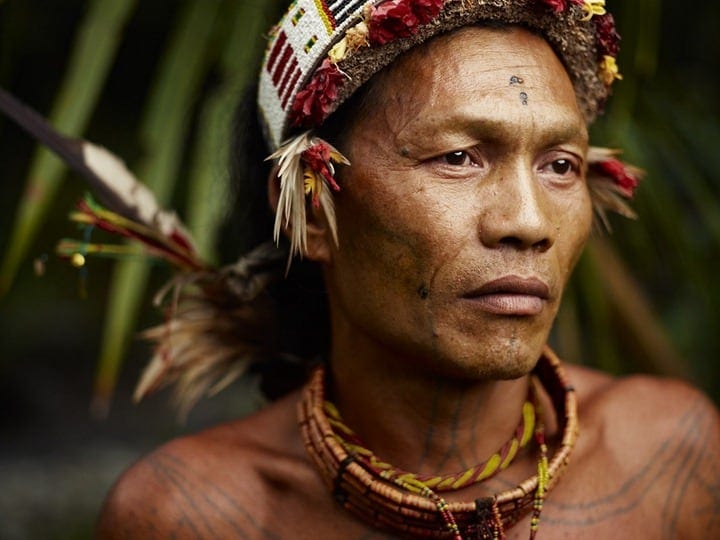
- It is culturally diverse: no single visual style defines the country, and local traditions differ sharply from Java to Sumatra to Bali to Papua.
- Indonesia matters in visual culture because its artists, photographers, designers, and makers often work with labor, landscape, material scarcity, and vernacular building.
- Major materials and processes in Indonesian craft include wood carving, textile dyeing, weaving, metalwork, ceramics, and bamboo construction.
Why Indonesia looks so different from one place to another
Indonesia’s geography is the first thing to understand. The country sits on a chain of islands shaped by tectonic movement, so volcanoes, earthquakes, fertile soils, and steep coastal settlements are part of everyday life. Java is densely populated and highly urbanized; Bali has a strong visual identity shaped by Hindu ritual, temple architecture, and tourism; Sumatra, Kalimantan, Sulawesi, Maluku, and Papua each hold distinct ecologies and local traditions. As a result, “Indonesian” is best understood as a national frame that contains many regional cultures rather than one uniform style.
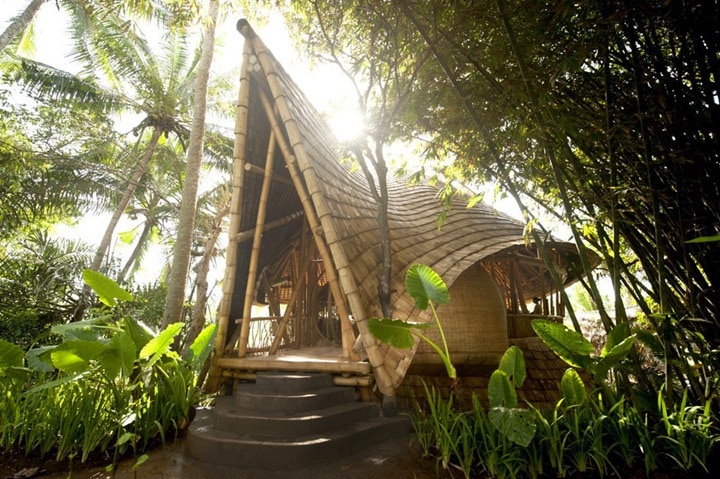
This diversity appears in the built environment. In cities, concrete apartments, shopfronts, and infrastructure sit beside older houses, mosques, and colonial remnants. In villages and island communities, bamboo, timber, thatch, and raised floors remain common, especially where climate and material availability reward lighter construction. Architecture often responds directly to heat, humidity, rainfall, and seismic risk, so ventilation, roof pitch, and structural flexibility are practical design concerns rather than decorative choices.
What is Indonesian craft and design known for?
Indonesia has long traditions of making that combine utility, skill, and symbolic meaning. Batik, the wax-resist dyeing technique, is one of the best-known examples: artisans draw or stamp wax onto cloth before dyeing it, building up layered patterns with repeated rounds of wax and color. Ikat weaving, wood carving, silverwork, pottery, and rattan or bamboo work are also widely practiced. Many of these traditions are regional, with motifs, fibers, dyes, and tools varying from island to island.
Contemporary Indonesian designers often work between inherited craft and modern production. Some adapt bamboo and hardwood into furniture and interiors; others use local textiles, hand processes, or recycled materials in fashion and product design. The country’s large population and wide spread of small workshops, markets, and home-based production create a design culture where handwork, repair, and practical adaptation remain visible. In that sense, Indonesian design is not only about finished objects but also about systems of labor and material knowledge.
How does geography shape Indonesian visual culture?
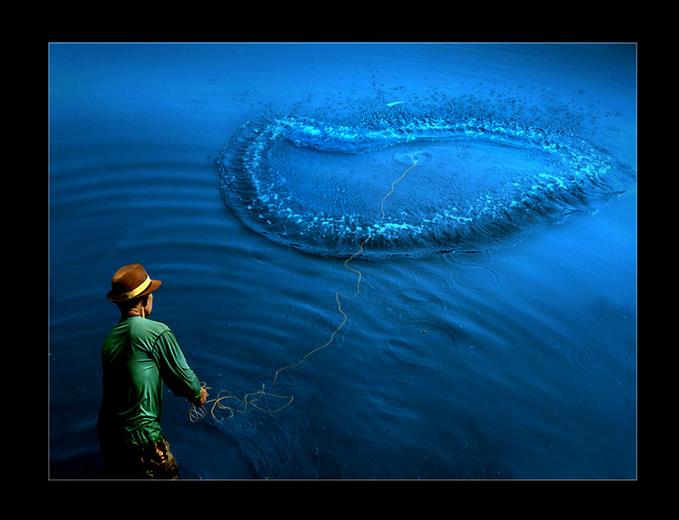
Indonesia’s visual culture is closely tied to land and weather. The archipelago’s coastline, fishing economies, volcanic slopes, and humid forests all generate strong visual subjects for photographers and painters, from sulfur miners at Kawah Ijen to erupting Mount Merapi to daily work in villages and markets. Artists often return to labor, smoke, rain, water, and dense vegetation because these conditions are part of ordinary life, not just dramatic scenery.
That same geography affects how images are made. Photographers working in Indonesia often deal with difficult terrain, extreme light, ash, heat, and weather. Painters and illustrators may draw on dark skies, wet surfaces, rice fields, or crowded interiors to describe place. The result is a visual field where environment and social life cannot easily be separated: roads, boats, fields, houses, and factories all show the pressures of climate and distance.
Why Indonesia matters in contemporary culture
Indonesia matters because it is both demographically large and culturally productive. Its artists, architects, filmmakers, photographers, and designers work across a country that includes major urban centers and remote islands, so their work often addresses unequal access, mobility, migration, and regional identity. At the same time, Indonesia has a strong presence in global art and design through textiles, craft revivals, documentary photography, and architecture shaped by local materials.
For a publication focused on how things are made, Indonesia offers a clear example of making under complex conditions. Materials must often travel by boat or road; crafts survive through apprenticeship and market demand; buildings respond to climate and land use; and visual culture repeatedly returns to labor, nature, and domestic life. The country’s scale and diversity make it impossible to reduce to a single style, which is precisely why it remains such a rich source of forms, processes, and images.
Frequently Asked Questions
Is Indonesia a country or a region?
Indonesia is a sovereign country. It is also an archipelago, meaning it is composed of many islands rather than one continuous territory. The national frame unites regions with very different histories, languages, and cultural practices.
What materials are most associated with Indonesian craft?
Textiles, wood, bamboo, rattan, metal, ceramics, and natural dyes are all important. Batik is especially well known because the wax-resist method creates detailed patterned cloth through repeated dyeing and drawing. In many places, these materials are chosen because they suit the climate, local plants, and available labor.
Why do Indonesian artists and photographers often focus on labor and landscape?
Labor and landscape are inseparable from daily life across the archipelago. Volcanic terrain, agriculture, fishing, mining, and dense urban growth all shape how people work and move. Visual artists often turn to these subjects because they show how place affects bodies, tools, and built form.
At a glance
- Address
- Indonesia
- Coordinates
- -6.175, 106.82833
Articles mentioning Indonesia