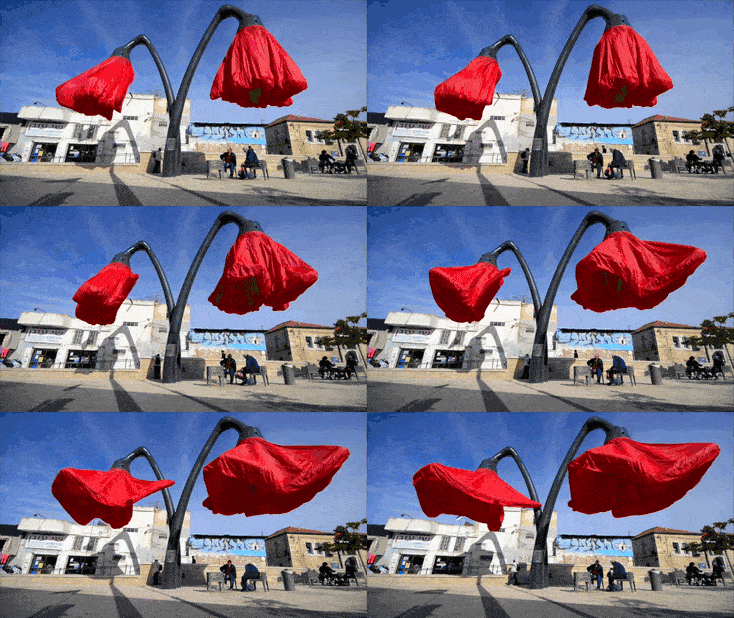
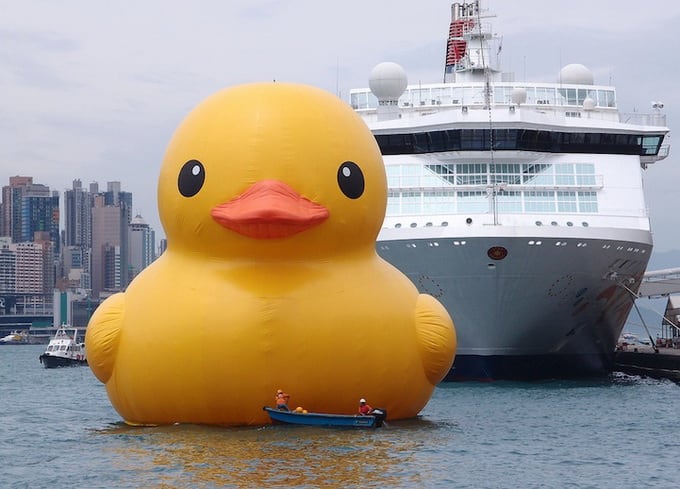
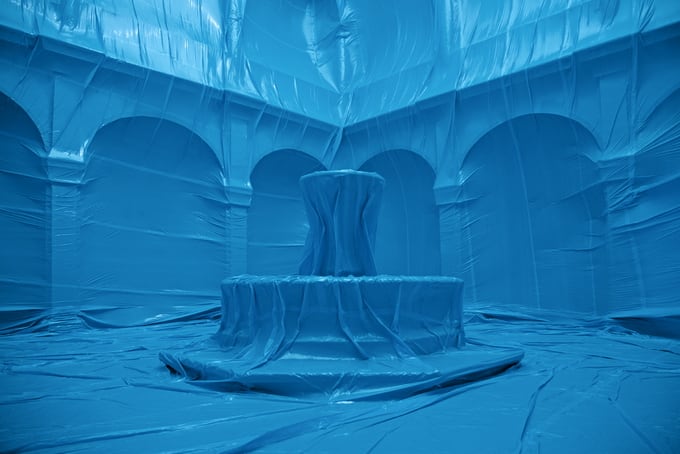
An inflatable is a hollow object designed to expand when filled with a gas, usually air, and to keep its shape only while pressurised. That simple principle makes inflatables light, packable and often inexpensive to transport. They range from everyday products like beach toys and air mattresses to architecture, lighting, advertising structures and stage props.

- Core principle: a flexible skin or membrane holds gas pressure to create structure.
- Common gases: air is standard; helium, nitrogen and hydrogen are also used in specific cases.
- Main advantage: large volume with low weight and compact storage when deflated.
- Typical materials: PVC, polyurethane, rubber, coated fabrics and woven textiles.
- Key limitation: punctures, leaks and pressure loss can quickly collapse the form.
How inflatables work
An inflatable depends on a sealed shell and internal pressure. The gas does not act as the material itself; it acts as a structural support. Once the gas escapes, the object loses form. That makes inflatables different from rigid objects, which keep their shape through solid matter, and from foam or fibrous fills, which keep some volume without constant pressure.
In practice, the skin has to resist stretching, tearing and abrasion while remaining light enough to fold or roll away. Makers choose materials and seam construction to match the pressure and use case. Welded PVC is common in mass-produced products, while coated textiles and technical fabrics appear in larger or more durable installations.
Where did inflatables come from?
Inflatable forms developed alongside advances in rubber processing and airtight joining methods in the 19th and 20th centuries. Early versions appeared in balloons, life-saving equipment and medical devices, then spread into consumer goods. As synthetic polymers improved, inflatables became cheaper to manufacture and easier to shape into large, thin-walled forms.
Their design history matters because inflatables sit at the meeting point of material science and visual culture. The same properties that make them useful in rescue gear and camping equipment also make them attractive to artists, advertisers and designers: they can appear suddenly, occupy a lot of space, and disappear just as quickly.
Why are inflatables useful in design and branding?
Inflatables matter because they convert a small package into a large visible object with minimal material mass. That efficiency makes them practical for temporary architecture, exhibition design, product launches and event marketing. A branded inflatable can be erected quickly, photographed easily and removed without permanent installation work.
Visual impact is a major part of the appeal. Large rounded volumes, bright coatings and internal lighting can make an inflatable read as playful, futuristic or attention-grabbing. In lighting design, translucent membranes can diffuse light evenly, turning the inflated shell itself into a glowing object rather than a container for a separate fixture.

What do inflatables look like in practice?
Inflatables range from simple sealed forms to complex engineered structures. A promotional balloon may be little more than printed film with a valve, while an architectural inflatable may use multiple chambers, tethering points, fans, pressure regulators and reinforced seams. Some are static once inflated; others rely on continuous airflow to stay upright.
Designers often use colour, translucency and seam placement to shape how an inflatable is read at distance. A glossy surface can resemble plastic or vinyl, while matte coated fabric looks more technical and subdued. In daylight, inflatables can look temporary and playful; at night, with internal illumination, they can become landmarks or signs.
Frequently Asked Questions
Are inflatables always filled with air?
No. Air is the most common gas because it is cheap, safe and easy to supply, but other gases are used for specific effects. Helium is used when lift is needed, such as in balloons, while nitrogen may be chosen where inert conditions matter. Hydrogen can provide lift too, but its flammability makes it far less common.
What materials are inflatables usually made from?
Many inflatables use PVC, polyurethane, rubber or coated textiles. The choice depends on whether the object needs flexibility, airtightness, outdoor durability or a particular surface finish. Seams are as important as the base material, because weak joins often fail before the membrane itself.
Why do designers and advertisers use inflatables so often?
They offer high visual impact for relatively low material use. A large inflatable can be packed small, transported easily and installed quickly, which suits temporary campaigns and events. Their oversized scale also makes them read well in photographs, on streets and in exhibition spaces.
Articles mentioning Inflatable