
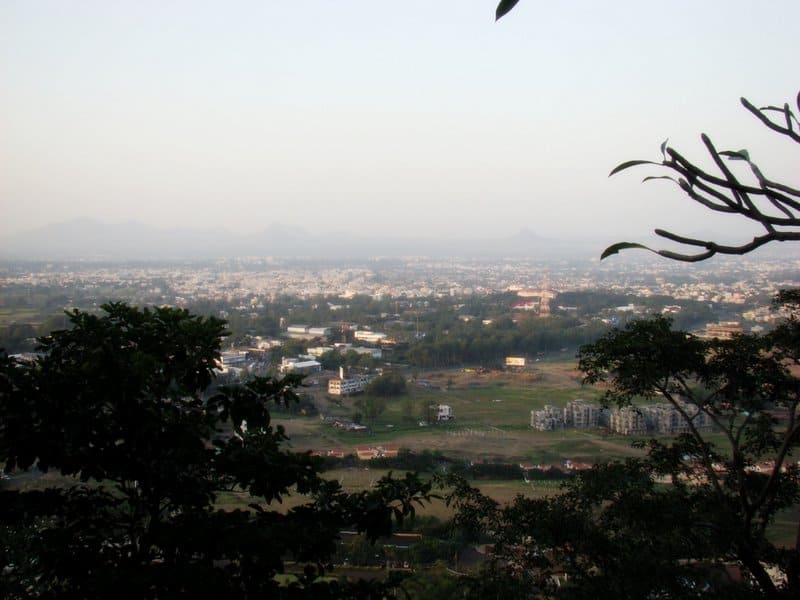
Nashik is a city in Maharashtra, India, known for its riverfront temples, its role in Hindu pilgrimage, and its major agricultural markets. It sits on the Godavari River in the northwest of the state, about 171 km from Mumbai, and serves as the administrative headquarters of Nashik district and Nashik Division. Nashik is also one of India’s largest producers of grapes and onions, which gives the city a strong commercial life alongside its religious importance.
| Fact | Detail |
|---|---|
| Country | India |
| State | Maharashtra |
| River | Godavari River |
| Region | Western Ghats / western edge of the Deccan plateau |
| Administrative role | Headquarters of Nashik district and Nashik Division |
| Notable industries | Grapes, onions, and related agriculture |
Why does Nashik matter?
Nashik matters because it combines sacred geography with everyday production. The city is one of the places associated with the Kumbh Mela, when millions of pilgrims gather at the Godavari for ritual bathing. That religious role has shaped the city’s public spaces, temple precincts, and seasonal rhythms.
At the same time, Nashik is a working city with farms, markets, and transport links tied to western India. Its vineyards and onion trade connect it to national food supply chains, while its location between Mumbai and Pune makes it important for movement across the region. This mix of pilgrimage and production gives Nashik a profile that is both ceremonial and practical.
What does Nashik look like on the ground?
The city spreads along the Godavari and across a landscape that shifts from urban streets to riverbanks, temple clusters, and surrounding agricultural land. In the older parts of Nashik, narrow streets and shrines sit close to the river, especially in areas used for bathing and ritual processions. During major festivals, these spaces become densely organized and temporarily transformed by crowds, tents, police barriers, and temporary services.
Outside the sacred core, Nashik contains the ordinary infrastructure of a regional center: markets, bus routes, warehouses, offices, and residential neighborhoods. The wider district includes fertile land suited to grape cultivation, and the presence of orchards and packing facilities is part of the city’s visual identity. This is a place where the river, the market, and the pilgrimage route remain closely linked.
How is Nashik connected to Kumbh Mela?
Nashik is one of the four Indian cities that host the Kumbh Mela, the large Hindu pilgrimage cycle associated with ritual bathing in sacred rivers. In Nashik, the gathering is tied to the Godavari and to a network of temples, ghats, and religious institutions that organize worship and movement. The event brings together ascetics, priests, pilgrims, vendors, security forces, and municipal workers in a highly managed public landscape.
This festival role has had lasting effects on the city. Roads, river access, sanitation systems, and crowd-control planning often reflect the demands of mass pilgrimage. For designers, photographers, and researchers, Nashik offers a clear example of how sacred events reshape urban form.
What is Nashik known for besides religion?
Outside its ritual reputation, Nashik is known for agriculture, especially grapes and onions. The district’s grape production supports fresh fruit exports, juice and wine production, and a chain of sorting, packaging, and transport work. Onion cultivation gives the region a second major agricultural identity, with wholesale markets and storage facilities playing a key role.
The city’s economic life also includes administration, education, and local manufacturing, but agriculture remains unusually visible in its identity. That matters because it affects land use, labor, and seasonal movement between city and countryside. Nashik is not only a pilgrimage city; it is also a regional hub where food production and distribution are everyday forms of making.
Frequently Asked Questions
Is Nashik a holy city?
Yes, Nashik is widely treated as a holy city in Hindu practice because of its connection to the Godavari River, temple sites, and the Kumbh Mela cycle. The city’s sanctity is not abstract; it is attached to specific bathing places, ritual routes, and institutions. That religious status shapes the city’s identity in a very visible way.
Why is Nashik important economically?
Nashik is important because it produces large quantities of grapes and onions, two crops that feed wider markets across India and beyond. The city also functions as an administrative center, which brings public services, offices, and transport activity. Its economy therefore rests on both agriculture and governance.
Where is Nashik located?
Nashik is in northwest Maharashtra, on the banks of the Godavari River, near the western edge of the Deccan plateau and within the broader Western Ghats region. It lies about 171 km from Mumbai and around 210 km from Pune. That position makes it a major regional center rather than an isolated pilgrimage site.
At a glance
- Address
- Nashik district, India
- Coordinates
- 20, 73.78
Articles mentioning Nashik
