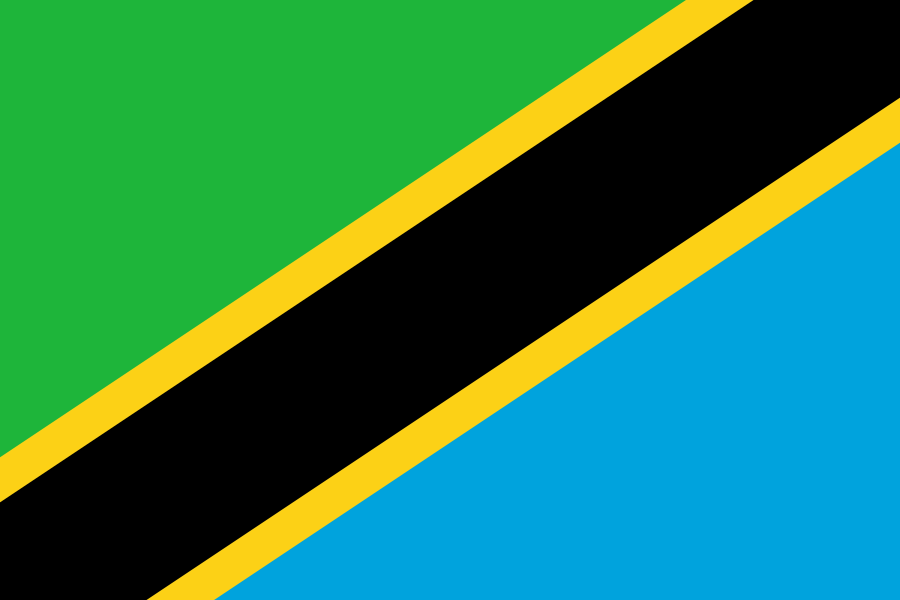
Tanzania is a country in East Africa, bordered by Kenya and Uganda to the north, Rwanda, Burundi and the Democratic Republic of the Congo to the west, and Zambia, Malawi and Mozambique to the south. Its eastern edge meets the Indian Ocean. The country’s official name is the United Republic of Tanzania, and its largest city is Dar es Salaam, while Dodoma serves as the capital.
- Formed in 1964 from the union of Tanganyika and Zanzibar.
- Spans a wide range of landscapes, from coast and islands to highland, savanna, lakes and volcanic peaks.
- Contains Mount Kilimanjaro, the highest mountain in Africa.
- Uses Swahili and English widely in public life, alongside many regional languages.
- Appears often in wildlife, travel and documentary photography because of its national parks and coastline.
What makes Tanzania distinct?
Tanzania’s scale is one of its defining features. It includes mainland territory with major inland lakes and mountain ranges, plus the Zanzibar archipelago off the coast. That geography gives it a strong visual range: coral sand and ocean light in the east, dense bush and baobab country in the interior, and the snow line of Kilimanjaro far to the north. Few countries in Africa offer such compressed variety in a single frame.
For image-makers, Tanzania also matters because it contains some of the continent’s most photographed natural settings. The Serengeti, Ngorongoro Crater, Lake Victoria, and the islands of Zanzibar have become shorthand for East African landscape and wildlife imagery. In practice, that means Tanzania often appears in work that depends on long views, animal movement, seasonal change, and the contrast between remote habitats and inhabited places.
How did Tanzania become a country?
The modern state emerged in 1964, when mainland Tanganyika joined with Zanzibar after both had ended colonial rule. Tanganyika had been a German colony before the First World War and then a British-administered territory. Zanzibar, ruled for centuries through trade networks linking East Africa, Arabia and India, also came under British influence before independence and union. The country’s name combines Tanganyika and Zanzibar.
That history still shapes Tanzanian identity. Zanzibar retains its own government and a distinct cultural profile, while the mainland includes a broader spread of ethnic communities, languages and economies. Swahili serves as a shared national language and a practical medium for public life, trade and schooling. English remains important in administration, higher education and international exchange.
Why do photographers and artists keep returning to Tanzania?
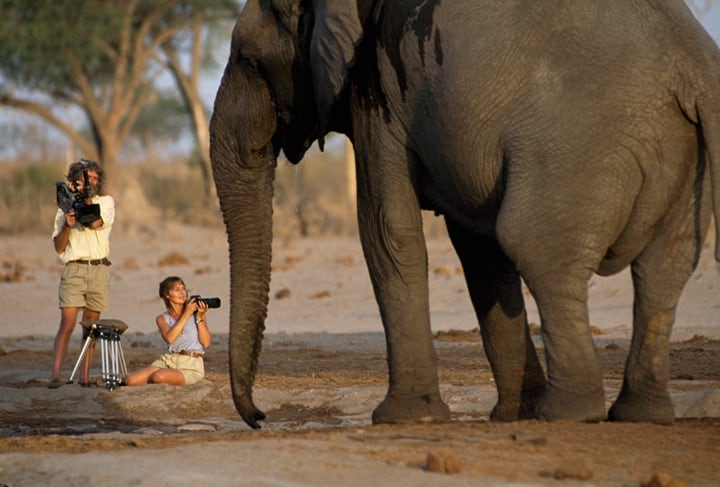
Tanzania offers subjects that are both recognisable and visually varied. Wildlife photographers work there for elephants, lions, chimpanzees, flamingos and the annual movement of wildebeest and zebra across the Serengeti ecosystem. Travel photographers are drawn to Zanzibar’s stone towns, carved doors, markets and dhow harbours, which give the country a very different visual register from its savanna imagery.
The country also supports work that sits between nature documentary and portraiture. Photographers often use Tanzania to show animals in relation to habitat rather than as isolated specimens: chimpanzees in forested reserves, reptiles on volcanic rock, birds around lakes, or people and livestock moving across shared land. That mix of ecological abundance and human presence makes the country useful for stories about conservation, tourism, and land use.
What does Tanzania look like in practice?
On the ground, Tanzania is not one landscape but many. Coastal cities such as Dar es Salaam mix port infrastructure, colonial-era buildings and fast-growing suburbs. Inland, roads can move quickly from cultivated land to dry grassland, then into national parks where movement is shaped by tracks, rivers and migration routes. In the north, Kilimanjaro dominates the skyline; in the west, Lake Tanganyika and the western corridor open into a more remote, less familiar East African geography.
That variety affects how the country is represented. A Tanzania photograph might center on a single acacia against open sky, a crowded market street, a fishing boat on the Indian Ocean, or a close animal portrait made with long lenses and careful distance. The common thread is often texture: dust, heat, stone, woven materials, water, hide, and vegetation rendered under strong equatorial light.
Frequently Asked Questions
Is Tanzania the same as Zanzibar?
No. Tanzania is the sovereign state; Zanzibar is a semi-autonomous part of it made up of several islands, including Unguja and Pemba. Zanzibar has its own local government and a distinct historical identity shaped by Indian Ocean trade, Islam, and coastal Swahili culture.
What is Tanzania best known for?
Tanzania is best known for wildlife, safari landscapes, Mount Kilimanjaro, and Zanzibar’s historic coast. It is also known for Serengeti migration scenes, which have become one of the most widely circulated images of African nature.
What languages are used in Tanzania?
Swahili is the main national language and the strongest shared public language across the country. English is widely used in official and educational settings, and many Tanzanians also speak regional and community languages at home and in local life.
At a glance
- Address
- Tanzania
- Coordinates
- -6.307, 34.854
Articles mentioning Tanzania