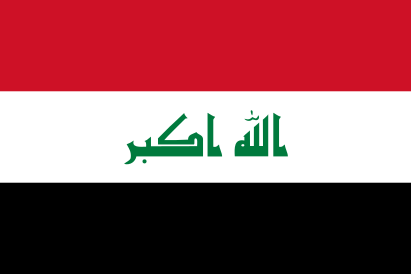
Iraq is a country in Western Asia built around the lower valleys of the Tigris and Euphrates rivers, the core of ancient Mesopotamia. Its modern borders place it between Syria, Turkey, Iran, Jordan, Saudi Arabia, and Kuwait, with a short Persian Gulf coastline in the south. The country matters not only as a contemporary state, but as one of the most important historic landscapes in the history of cities, writing, trade, and craft.
- Modern Iraq covers much of ancient Mesopotamia, including the fertile alluvial plain between the Tigris and Euphrates.
- Its geography ranges from river plains to the Zagros foothills and the edges of the Syrian Desert.
- Baghdad, the capital, became a major center of scholarship, trade, and making in the Islamic world.
- Iraq’s visual culture often carries references to cuneiform, cylinder seals, ziggurats, textiles, metalwork, and ceramic traditions from deep antiquity.
- War, displacement, and reconstruction have shaped how Iraqi artists and makers work, especially in the 20th and 21st centuries.
Why Iraq matters in visual culture
Iraq occupies a foundational place in the history of making because Mesopotamia was one of the earliest urban civilizations. Clay tablets, stamp and cylinder seals, glazed bricks, carved reliefs, and metal objects from the region helped establish early systems of record-keeping and visual display. The material conditions of the land mattered: river silt made mudbrick and clay abundant, while long-distance trade brought in stone, timber, copper, and other goods that were scarce locally. That combination of river plain and exchange network shaped both architecture and ornament.
For later artists and designers, Iraq has remained a reference point for antiquity, survival, and continuity. Contemporary work often draws on Sumerian, Babylonian, and Abbasid forms without treating them as museum relics. The result can be direct quotation, as in cuneiform-inspired marks or Mesopotamian figures, or subtler reuse of forms such as arches, calligraphic structure, geometric pattern, and hand-built clay surfaces.
What does Iraq look like?
As a place, Iraq is often described through contrasts. The south is shaped by broad river plains and marshlands; the north rises toward hills and mountains; the west opens into desert. Those landscapes influence how buildings sit in the land, how light falls on surfaces, and what materials are close at hand. Mudbrick, baked brick, reed, plaster, stone, and metal all have a visible history there, especially in older architecture and craft.
In cities such as Baghdad, Basra, Mosul, and Erbil, the visual field mixes the old and the damaged, the repaired and the new. Historic mosques, markets, and domestic architecture coexist with modern roads, concrete construction, and the marks of conflict. This layered condition has made Iraq a powerful setting in photography and art: the place itself often reads as an archive of different periods rather than a single image.
How has Iraqi craft and art developed?
Iraqi craft traditions extend from ancient ceramics and seal carving to Islamic-era manuscript work, metalwork, wood carving, and textile production. The Abbasid period, when Baghdad was a major imperial capital, brought extraordinary development in book arts, scientific illustration, architectural ornament, and glazed ceramics. Makers worked across patronage systems tied to courts, religious institutions, merchants, and local markets, so the objects that survive often show both technical precision and practical use.
In the modern period, Iraqi artists have often worked under unstable political conditions, censorship, war, and exile. That pressure has not erased craft; it has changed where and how it appears. Sculptors, photographers, printmakers, and installation artists frequently use found materials, damaged objects, domestic debris, and references to traditional motifs. In that sense, Iraq is not only a historical source for visual culture but an active site where memory, loss, and repair become part of the making process.
Why does Iraq appear so often in contemporary art?
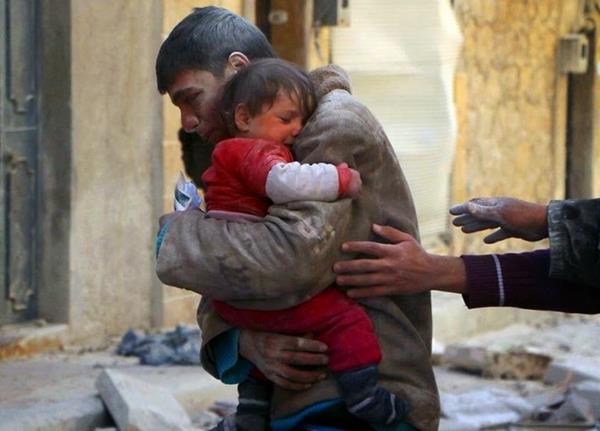
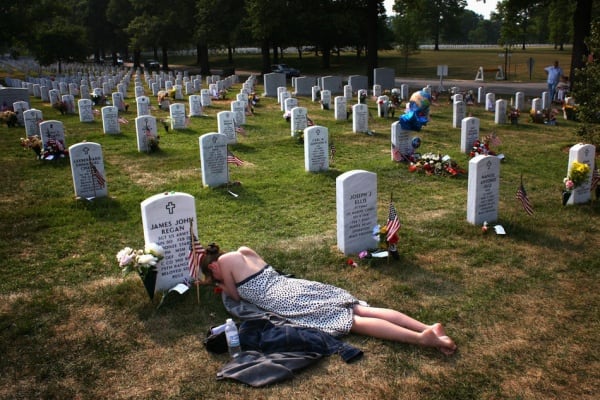
Iraq appears repeatedly in contemporary art and photography because it carries dense historical associations and strong present-day realities. Ancient Mesopotamia gives artists a deep visual vocabulary, while recent decades of war, sanctions, invasion, occupation, and displacement have made the country central to discussions of trauma, resilience, and identity. Those themes are not abstract: they are tied to destroyed buildings, refugee life, military imagery, and the uneven reconstruction of cities and institutions.
At the same time, Iraqi artists have pushed against the reduction of the country to conflict alone. Works by Iraqi and Iraq-linked makers often use humor, tenderness, ornament, and absurdity alongside grief. Clay, bronze, textile, paper, photography, and mixed media all appear as ways to reconnect the present to older forms of making without turning history into decoration.
Frequently Asked Questions
Is Iraq the same as Mesopotamia?
No. Mesopotamia is the historical region associated with the lands between the Tigris and Euphrates rivers, while Iraq is the modern nation-state that covers much of that territory. The overlap is large, but not complete, because Mesopotamia also extended into parts of neighboring countries. In art and archaeology, the term Mesopotamia usually refers to the older cultural region rather than the modern political state.
What materials are most associated with Iraq?
Clay is the most important historical material because it supported tablets, seals, bricks, and ceramics. Reed, mudbrick, plaster, stone, wood, metal, and textile materials also play major roles, though their use changes by region and period. In contemporary art, artists often reuse found materials, construction debris, and mixed media to respond to the country’s recent history.
Why is Baghdad so important?
Baghdad became a major center of administration, trade, scholarship, and artistic production under the Abbasids. Its workshops and libraries helped shape book arts, science, calligraphy, and decorative design across a wide region. Even after periods of decline and damage, the city remains one of the country’s main cultural reference points.
At a glance
- Address
- Iraq
- Coordinates
- 33.333332, 44.433334
Articles mentioning Iraq