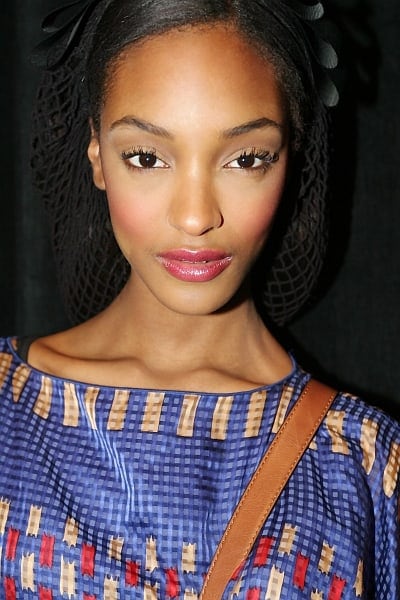
Jourdan Dunn is a British fashion model whose career helped draw attention to the racial imbalance of the high-fashion runway and editorial world. Discovered while shopping in Primark in Hammersmith in 2006, she signed with Storm Model Management in London and quickly moved from street-cast newcomer to one of the most visible faces in fashion. Her breakthrough came in 2008, when she became the first Black model to walk a Prada runway in more than a decade.
- British model discovered in London retail fashion retail.
- Signed to Storm Model Management and built an international runway and campaign career.
- Known for a landmark Prada show that signaled a slow shift in casting at elite fashion houses.
- Frequently cited in discussions about the underrepresentation of Black models in fashion.
How Jourdan Dunn entered fashion
Dunn’s entry into modelling came through the familiar fashion industry route of scouting rather than formal training. Being discovered in a Primark store in Hammersmith placed her in the tradition of British “street” discoveries, where agencies search public spaces for new faces with commercial and editorial potential. Storm Model Management, a London agency with a strong record of developing young talent, signed her soon after.
That kind of beginning matters because it shows how fashion talent often gets identified before it is fully shaped. A model’s work starts with presence, proportions and adaptability, but it is refined by agencies, castings, fittings and repeated runway use. Dunn’s early ascent was fast enough to make her a recognisable figure before many viewers knew her name.
Why was her Prada runway debut important?
In 2008, Dunn walked for Prada, becoming the first Black model to appear on the brand’s runway in more than ten years. Prada sits near the top of the luxury-fashion hierarchy, so a casting decision there carries symbolic weight beyond a single show. The moment was widely discussed because it highlighted how rare Black faces remained on major catwalks, even in an industry that claims to trade in novelty and change.
The importance of the appearance was not only personal. It pointed to a broader casting culture in which Black models were frequently excluded from high-profile shows, especially at the most influential houses. Dunn’s runway presence did not solve that problem, but it became a reference point in later conversations about representation, access and who gets placed at the center of fashion imagery.
What does her work look like in practice?
Dunn’s work spans runway shows, advertising campaigns and editorial shoots, the three core formats that build a model’s profile. On the runway, she performs garment movement, pace and posture; in campaigns, she becomes a stable image that can anchor a brand season after season; in editorial work, she adapts to a photographer’s concept, styling direction and often more experimental visual language. Her career has included international fashion weeks and commercial campaigns for labels seeking a model with strong recognisability.
Models like Dunn are part of the production process of fashion images, not just their surface. Their job is to carry cut, fabric, silhouette and attitude in a way that lets designers, stylists and photographers present a collection or product line. In that sense, her work is inseparable from the clothes, the lighting, the casting and the editorial intent behind the image.
What did she change in fashion discourse?
Dunn became part of a larger shift in the public language of fashion, where representation could no longer be treated as a side issue. Her visibility helped make the lack of Black models harder to ignore, especially when major shows or campaigns were publicly tracked and compared across seasons. She was not the only model raising that issue, but she was one of the names most often associated with it in mainstream fashion coverage.
That visibility matters because the modelling industry often normalizes its own exclusions through habit. When a model like Dunn appears repeatedly at the highest levels, it changes the visual expectation of what a luxury brand can look like. It also gives critics, editors and readers a concrete example when discussing how casting decisions shape culture.
Frequently Asked Questions
How was Jourdan Dunn discovered?
She was discovered in a Primark store in Hammersmith, London, in 2006. That kind of scouting is common in modelling, where agencies look for striking faces in everyday settings. Soon after, she signed with Storm Model Management in London.
Why is her Prada show remembered?
Her Prada runway appearance in 2008 was notable because she became the first Black model to walk for the brand in more than a decade. Prada’s shows have major influence, so the casting carried symbolic force. The moment was discussed as evidence of the fashion industry’s slow progress on racial inclusion.
What kind of model work has she done?
She has worked across runway, advertising campaigns and editorial fashion photography. Those roles require different skills: movement and pacing on the catwalk, still-image impact in campaigns, and adaptability in styled shoots. Her career reflects the standard working range of a top fashion model.
Articles mentioning Jourdan Dunn