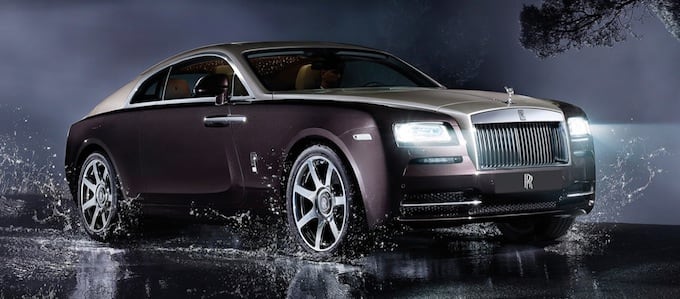
Rolls-Royce Limited was the British engineering company that, in the early twentieth century, built a reputation for precision machinery and luxury automobiles before its business was split into separate successor companies. The name is most closely associated with the refined motor cars it produced from 1906 onward, as well as with high-grade engineering work in aero engines, marine equipment, and industrial power systems. It became a shorthand for quiet performance, careful finish, and expensive mechanical excellence.
- Founded from the partnership of Charles Rolls and Henry Royce in 1904.
- Best known for prewar and mid-century luxury cars built to exacting standards.
- Also produced aero engines and other engineered machinery.
- The company’s later history leads to distinct successors, including Rolls-Royce plc and Rolls-Royce Motor Cars.
Where did Rolls-Royce Limited come from?
Rolls-Royce Limited grew out of a meeting between two very different figures: Charles Rolls, a car dealer and motoring promoter, and Henry Royce, an engineer and meticulous maker of small machinery and cars. Their partnership began in 1904 and quickly turned into a company that aimed at technical consistency rather than mass production. Royce’s workshop culture shaped the firm’s identity: careful machining, hand finishing, and repeated testing mattered more than speed.
The company’s early car designs established a pattern that lasted for decades. Rolls-Royce cars were expensive, restrained in style, and built with an emphasis on smooth running and durability. That approach helped the firm become a favourite among wealthy private owners, royalty, and institutions that wanted machines that seemed both advanced and dignified.
What made the cars distinctive?
Rolls-Royce automobiles were known less for flamboyance than for the feeling of controlled, nearly silent motion. Bodies were often supplied by outside coachbuilders, while the chassis and mechanical core came from Rolls-Royce. This separation allowed buyers to choose bespoke exterior forms while relying on the company’s engineering underneath. The result was a car that could be highly individual yet still carry a very clear mechanical signature.
In practice, a Rolls-Royce often meant a long bonnet, upright proportions, substantial chrome details, and a cabin trimmed in expensive materials such as leather, polished wood, and metal fittings. The famous “Spirit of Ecstasy” bonnet mascot, introduced in the 1910s, reinforced the image of graceful motion. Even when the styling changed over time, the brand remained linked to a deliberate, formal kind of luxury rather than fashion-led novelty.
Why did the engineering side matter so much?
Rolls-Royce Limited was not only a car company. Its engineering reputation grew sharply through aero engines, especially during the First and Second World Wars, when reliable powerplants mattered enormously. The company’s work in aviation helped cement its name in another field where precision and dependability were crucial. That broader engineering competence also fed back into the prestige of the cars.
This dual identity matters because it explains why “Rolls-Royce” became more than a badge on a radiator. The brand stood for a whole industrial method: controlled tolerances, robust components, and an ability to make complicated machinery behave with ease. In design culture, that combination has often been admired as a model of restrained luxury—engineering presented without visible strain.
How does Rolls-Royce appear in design culture?
Rolls-Royce Limited appears frequently in discussions of luxury styling because it offers a clear contrast with louder, more aggressive automotive design. A Rolls-Royce is usually read as formal, stately, and ceremonial, with surfaces that avoid visual clutter. Contemporary concept cars and custom builds still borrow that language when they want to suggest wealth, authority, or old-world refinement.
The company’s name also carries strong symbolic weight in product design outside the car industry. It is used as a reference point for workmanship, finish, and pricing at the very top of a market. When another object is described as “Rolls-Royce-like,” the comparison usually means overbuilt quality, careful materials, and an expectation of permanence.
What happened to the original company?
Rolls-Royce Limited did not remain a single unchanged business. Its later corporate history led to separations that left different successor companies handling different parts of the legacy. That is why modern references often distinguish between Rolls-Royce plc, which is associated with aero engines and industrial technology, and Rolls-Royce Motor Cars, which builds luxury automobiles.
For historical purposes, though, Rolls-Royce Limited remains the original company that set the standard. Its importance lies in the way it fused luxury branding with serious engineering, and in how that fusion shaped expectations for elite motor cars across the twentieth century.
Frequently Asked Questions
Is Rolls-Royce Limited the same as Rolls-Royce Motor Cars?
No. Rolls-Royce Limited was the original company, but its business was later divided and restructured. Rolls-Royce Motor Cars is a later successor focused on luxury automobiles.
Why are Rolls-Royce cars so often associated with coachbuilding?
Early Rolls-Royce customers commonly bought the chassis and engine from the company, then commissioned a separate coachbuilder for the body. That practice made the cars both technically standardized and visually bespoke. It also allowed the brand to remain closely tied to craftsmanship rather than factory uniformity.
What does the name Rolls-Royce mean in visual culture?
It usually signals refinement, expense, and careful engineering. Designers and writers use it as a benchmark when they want to describe something as exceptionally well made. The phrase carries more than brand recognition; it suggests a whole aesthetic of restraint and precision.
At a glance
- Founded
- March 15, 1906
- Address
- London, United Kingdom
Articles mentioning Rolls-Royce Limited