
South America is a continent in the Western Hemisphere, joined to North America at the narrow land bridge of Panama and bordered by the Pacific Ocean to the west and the Atlantic Ocean to the east. It contains 12 sovereign states, several overseas territories, and a huge range of climates and landscapes, from the Andes and Amazon Basin to high-altitude plateaus, dry deserts, temperate coasts, and tropical islands.
Stories from South America
37 stories




About South America
- It is one of the two continents that make up the Americas.
- Most of its landmass lies in the Southern Hemisphere.
- The Andes, Amazon, and Patagonia shape its geography and visual identity.
- Its cultures reflect Indigenous, European, African, and Asian histories.
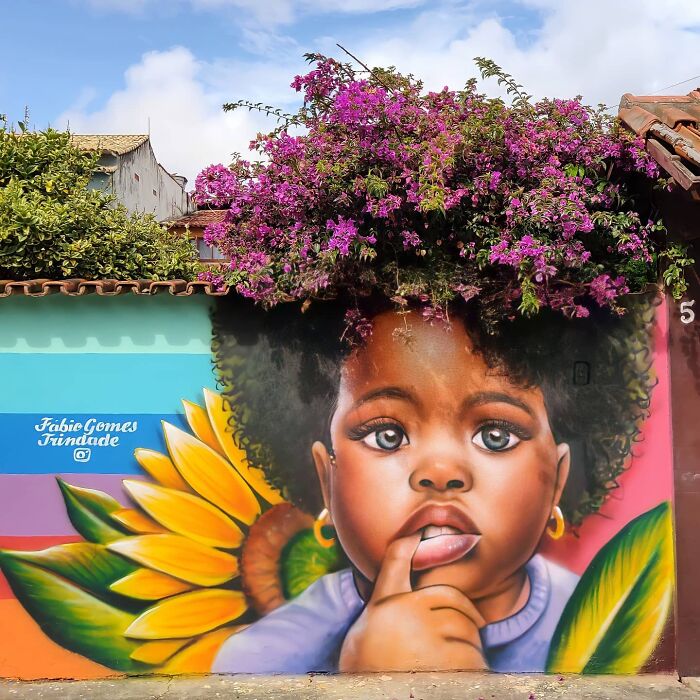
- It has long been central to timber, textiles, ceramics, street art, and design rooted in local materials.
Read the full overviewWhat defines South America?, Why does South America matter in art and design?, What does it look like in practice?, How is South America usually described?
What defines South America?
South America is not a single cultural unit, but a vast geographic frame in which many national, linguistic, and ecological systems overlap. Spanish and Portuguese dominate much of the continent, yet hundreds of Indigenous languages are still spoken, and Afro-descendant and migrant communities have deeply shaped its cities, music, craft, and food. Its borders are political, but its materials and climate zones often cross them: Amazon hardwoods, Andean wool, volcanic stone, clay, and tropical fibers all circulate through art and building practices.
In design and visual culture, the continent matters because place strongly affects form. Architecture often responds to seismic risk, heavy rainfall, extreme heat, or thin mountain air. Artists and makers frequently work with found matter, plant fibers, recycled furniture, mineral pigments, and local timber because these materials are available, affordable, and culturally resonant. That practical relationship between environment and making gives South American work a distinct material intelligence.
Why does South America matter in art and design?
South America has been a site of influential modern and contemporary experimentation, especially where artists and architects have worked against imported models and toward vernacular solutions. Brazilian modernism, Andean textile traditions, Colombian experimental furniture, Argentine conceptual art, Chilean public sculpture, and Amazonian craft practices all show different ways of turning local conditions into form. These practices are not isolated from global design history; they often challenge it by treating repair, reuse, and climate adaptation as primary design problems.
The continent also matters because its resources have been extracted at enormous scale. Timber, rubber, minerals, coffee, cacao, and plant-based dyes have all moved through colonial and industrial systems that shaped cities and museums as much as farms and forests. Contemporary makers often respond to that history by reusing waste, honoring traditional techniques, or working with materials that carry ecological and political meaning.
What does it look like in practice?
In practice, South American making can be highly local. A street mural in Bogotá may use the city wall as a public surface for social commentary. A sculpture in Brazil may be built from burned, broken, or discarded furniture. A building in the Andes may combine concrete with timber, stone, or earth to handle climate and structure together. Textile work in the Altiplano can rely on alpaca or sheep wool, natural dyes, and weaving methods passed through generations.
The continent’s visual culture also appears in everyday objects: ceramic vessels, woven baskets, carved wood, woven hammocks, reed boats, and simple joinery made from native species. Even where contemporary artists use industrial materials such as resin, steel, or fiberglass, the work often stays tied to local landscapes, weather, and memory. That link between material and place is one of the clearest ways South America shows up in FreeYork articles.
How is South America usually described?
Geographers usually describe South America as a continent, though it is sometimes called a subcontinent of the Americas. Its common divisions include the Andes along the west, the Amazon Basin across the north and center, the dry Pacific coast, the grasslands of the pampas, and the far southern regions of Patagonia and Tierra del Fuego. These regions are not just map labels; they also correspond to different building traditions, plant resources, and ways of working.
Because the continent spans the equator and extends far south, its climate range is unusually broad. That makes it a useful reference point for discussions of material choice. A timber tower in a humid city, an installation using tropical vegetation, or a desert landscape project in the Atacama all belong to the same continent but require very different technical responses.
Frequently Asked Questions
Is South America a continent or a subcontinent?
It is commonly described as a continent, especially in English-language geography. Some systems also treat it as a subcontinent of the Americas because North and South America are connected by land. Both descriptions are in use, but “continent” is the more familiar term in general reference.
What countries are in South America?
South America has 12 sovereign states: Argentina, Bolivia, Brazil, Chile, Colombia, Ecuador, Guyana, Paraguay, Peru, Suriname, Uruguay, and Venezuela. It also includes French Guiana, which is an overseas department of France. This mix of independent states and overseas territories is part of the continent’s political complexity.
Why do so many FreeYork articles mention South America in relation to materials and making?
The continent is rich in materials that shape visual culture, including timber, clay, stone, wool, plant fibers, and recycled industrial waste. It also has strong traditions of craft, architecture, and street art that respond directly to climate and local resources. For that reason, South America often appears in discussions of how objects, buildings, and artworks are made rather than only where they are located.