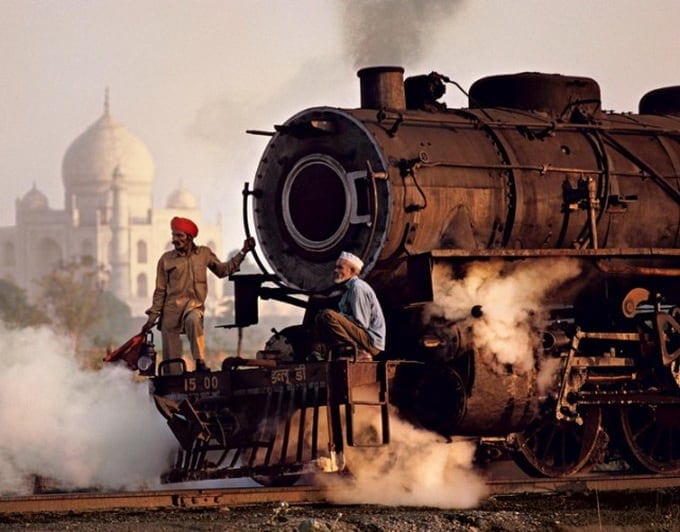
Steve McCurry is an American photojournalist known for color-saturated documentary photographs, especially Afghan Girl, the 1984 National Geographic portrait that became one of the most recognizable magazine images of the late 20th century.
| Born | February 24, 1950, in Philadelphia, Pennsylvania, USA |
|---|---|
| Field | Photojournalism and editorial photography |
| Known for | Human-interest images, portraiture, travel photography, and work from conflict zones |
| Signature image | Afghan Girl (1984) |
| Notable association | National Geographic |
Why McCurry matters
McCurry helped define a late-20th-century style of magazine photojournalism that combined documentary reporting with vivid color, strong composition, and close attention to faces. His pictures often hold a single subject at the center of the frame, but the background still carries geography, climate, and social context. That balance made his work travel widely beyond journalism into exhibitions, books, and visual culture more broadly.
His importance also comes from circulation. Afghan Girl did not remain a news photograph; it became a symbol of displacement, war, and global media itself. McCurry’s archive is often discussed through that one picture, but his wider body of work includes street scenes, temples, trains, workers, animals, and everyday rituals across Asia, the Middle East, and elsewhere.
How did he work?
McCurry built many of his best-known images with a patient, observational method. He often waited for a face, gesture, or color relationship to lock into place before making the frame. The result is less about quick reaction than about organizing a scene so that clothing, light, architecture, and expression all carry equal weight.
Technically, his work is closely associated with color film, saturated greens and reds, and a preference for natural light when possible. He frequently photographs people at close range, which gives his portraits directness and scale. In practice, that means a picture can feel intimate even when the subject comes from a political crisis, a remote village, or a crowded transit system.
What does his photography look like?
A McCurry photograph usually has a strong central subject, a clear palette, and a legible setting. Many images rely on vivid fabric, weathered surfaces, walls, trains, dust, smoke, or rain to set texture around the person. Faces often meet the camera directly, creating a confrontation that is calm rather than dramatic.
He is also known for pictures made in transit and at the edge of movement: train platforms, car windows, roadways, and stations. Even when subjects are still, the environments suggest travel, migration, or interruption. This gives the work a tension between portrait and report, as if the image is both a record of a person and a record of where that person stands in history.
Why has his work been debated?
McCurry’s popularity has also brought scrutiny. Some critics have questioned whether his photographs lean too far toward aesthetic beauty at the expense of journalistic detachment. Others have raised concerns about the editing, captioning, and later presentation of certain images within exhibitions and commercial products.
That debate matters because it sits at the center of photojournalism itself: how much style can a documentary image carry before it changes its claim to truth? McCurry’s career shows that a photograph can be both informational and highly composed, and that the line between reporting and visual authorship is often unstable.
Frequently Asked Questions
What is Steve McCurry best known for?
He is best known for Afghan Girl, a portrait of a young refugee published by National Geographic in 1985. The image became famous for the subject’s intense gaze and for its place in the visual history of magazine journalism. McCurry is also widely known for other travel and conflict-zone photographs made in strong color.
Is McCurry a documentary photographer or an artist?
He works as a photojournalist, so his images begin in documentary practice. At the same time, his careful framing, color choices, and use of portraiture give the work an artistic signature. That combination is a large part of why his pictures circulate in both news and gallery settings.
Why do magazines and exhibitions keep using his images?
His photographs are immediate: they read quickly and hold attention through expression, color, and composition. Editors and curators return to them because they communicate place and person at once. They also represent a recognizable era of print photography, when a single picture could become a global image.
Articles mentioning Steve McCurry