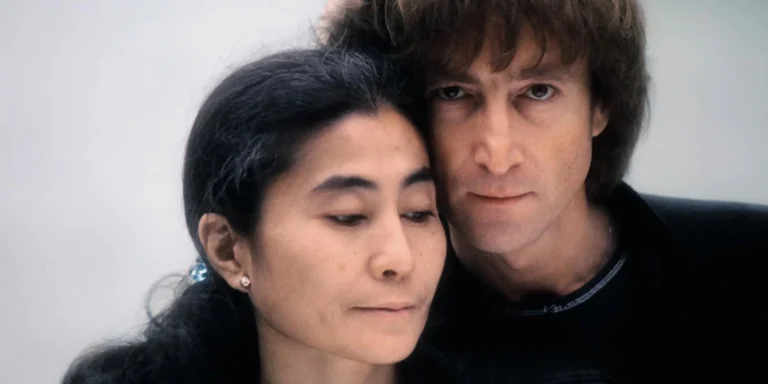
Yoko Ono is a Japanese artist, musician, filmmaker and activist whose work helped define postwar conceptual art and later linked avant-garde practice with popular music and political protest. She became widely known after her marriage to John Lennon, but her own career began long before that, in experimental galleries, performance pieces and anti-war actions. Ono’s practice often uses simple instructions, audience participation and direct public gestures to turn ideas about authorship, gender and peace into art.
- She emerged from the New York and Tokyo avant-garde scenes in the 1960s.
- Her early work used performance, text, instruction and installation rather than traditional objects.
- She helped shape the look and sound of Fluxus-era experimental art and music.
- Her later public image was tied to Lennon, but her artistic output remained independent and extensive.
- Her work often returns to feminism, grief, nonviolence and collective action.
Where did Yoko Ono come from?
Ono was born in Tokyo in 1933 and spent her early life between Japan and the United States. She studied briefly at Gakushuin University and later moved into the New York art world, where she found a receptive context for experimental work that crossed visual art, performance and composition. In the early 1960s, she showed work in lofts and small venues rather than conventional museums, which suited art made from language, gesture and participation.
That environment mattered. Ono’s work aligned with Fluxus, a loose network of artists who treated everyday actions, scores and events as art forms. She did not just paint or sculpt; she proposed situations. That shift helped make her a central figure in conceptual art, where the idea often matters more than the finished object.
What kind of art did she make?
Ono’s best-known early works use instructions and audience imagination. Instruction Paintings ask readers to picture or carry out an action, while Grapefruit, her 1964 book of event scores, collects short prompts such as a room full of light or a piece of music that exists only in memory. These works depend on language, not craft alone, and they turn the viewer into a participant. The result is spare, witty and deliberately open-ended.
She also worked in performance and installation. Cut Piece from 1964 is one of her most discussed works: Ono sat still while audience members cut away pieces of her clothing, making vulnerability, consent and spectatorship unavoidable. Later works, including peace projects and billboard campaigns, used similar clarity. The form changed, but the method stayed consistent: reduce the gesture to something simple, then make its social meaning impossible to ignore.
How did music change her public image?
Ono’s music career began in the same experimental spirit as her visual art. Her solo albums and collaborations with Lennon mixed screaming, drones, minimal melodic fragments and spoken word with political feeling. This is where many listeners first encountered her, though the music was often treated unfairly at the time because it challenged mainstream expectations of women’s voices and of what popular music could sound like.
Her songs and performances brought feminism into a wider commercial sphere. Tracks such as “Open Your Box,” “Sisters, O Sisters” and later work from the 1970s and beyond addressed gender roles, domestic power and public silence. Ono also used the studio as a site of experimentation, treating sound as material rather than as polished product. The rough edges are part of the point.
Why does she matter now?
Ono matters because she helped expand what art could be and who could define it. Her work sits at the intersection of conceptual art, performance, feminism and political activism, and it did so before those categories became common in mainstream culture. She showed that a sentence, a score or an invitation could carry as much force as a framed object.
She also matters as a maker whose reputation has often been filtered through celebrity. Her marriage to Lennon brought intense scrutiny, but it also created a platform for peace campaigns, anti-war actions and public artworks. For photographers, designers and editors, Ono remains visually distinctive: dark clothing, direct gaze, minimal staging, strong graphic text and a preference for concise forms that look as sharp as they sound.
Frequently Asked Questions
Was Yoko Ono only known because of John Lennon?
No. Ono had already built a serious career in New York’s avant-garde art scene before meeting Lennon, including influential performance and instruction-based works. The relationship made her globally famous, but it did not create her artistic practice. In many cases it obscured it.
What is Yoko Ono’s most famous artwork?
Cut Piece is usually the work most often discussed in histories of performance art. It is simple in setup but difficult in effect, because it makes the audience responsible for the unfolding action. Grapefruit is another key work, especially for understanding her use of language and participation.
Is Yoko Ono a visual artist, a musician, or an activist?
She is all three, and her work depends on those roles overlapping. Ono treats music, text, performance and activism as related tools rather than separate careers. That combination is what gives her work its force and its unusual place in postwar culture.
Articles mentioning Yoko Ono