Pakistan is a sovereign country in South Asia, stretching from the Arabian Sea to the high mountain chains of the Himalayas, Karakoram, and Hindu Kush. It is a large, populous state with a long history shaped by the Indus River system, multiple languages, Islamic political identity, and a mix of urban industry, agricultural production, and craft traditions.
| Type | Country |
|---|---|
| Region | South Asia |
| Capital | Islamabad |
| Largest city | Karachi |
| Official name | Islamic Republic of Pakistan |
| Population | More than 240 million |
| Founded | 1947, after the partition of British India |
Where Pakistan came from
Pakistan emerged in 1947 during the partition of British India, when the Muslim-majority regions of the northwest and east were separated into a new state. The idea came out of late-colonial politics, especially debates over representation, religion, and power under British rule. The country’s name is often explained as an acronym from regions associated with the movement—Punjab, Afghania, Kashmir, Sindh, and Baluchistan—though the name also carried a broader poetic and political meaning.
The new state inherited railways, ports, military structures, and administrative systems from the colonial period, but it also began life with immense displacement and violence. Millions of people crossed borders in one of the largest migrations of the 20th century. That origin still shapes Pakistan’s politics, cities, and collective memory.
What does Pakistan look like?
Pakistan’s geography is unusually varied. The north contains some of the world’s highest mountains, including peaks in Gilgit-Baltistan and the northern Karakoram range, while the south opens onto arid plains, river deltas, and the Arabian Sea. Much of the country’s agriculture depends on the Indus River basin, where irrigation canals support wheat, cotton, rice, sugarcane, and fruit production.
In visual terms, Pakistan often appears as a study in contrasts: mud-brick settlements in desert and rural regions, dense traffic and concrete apartment blocks in big cities, truck art and painted buses, carved woodwork, textile markets, brick kilns, and the geometric surfaces of mosques and shrines. Its landscape includes the Thar Desert, salt flats, monsoon-fed plains, and glacier-fed valleys, which explains why the country appears in photography not only as a political unit but also as a place of stark climate and ecological variation.
Why does Pakistan matter in visual culture?
Pakistan matters because it is a major site of making. Its textile sector is one of the country’s most visible industries, from cotton cultivation and spinning to embroidery, block printing, stitching, and garment production. Cities such as Lahore, Karachi, and Faisalabad anchor design, manufacturing, publishing, and film, while rural craft traditions continue in carpet weaving, ceramics, metalwork, leather goods, and wood carving.
The country also has a strong public visual language. Truck decoration, shrine ornament, miniature painting, political posters, wedding imagery, newspaper graphics, and commercial sign painting all help define how Pakistan is seen both internally and abroad. Some of that work is highly formal and courtly in origin, while other forms are improvisational, commercial, and street-based. Together they make Pakistan important to anyone studying how image, labor, and identity intersect.
How Pakistan is seen in practice
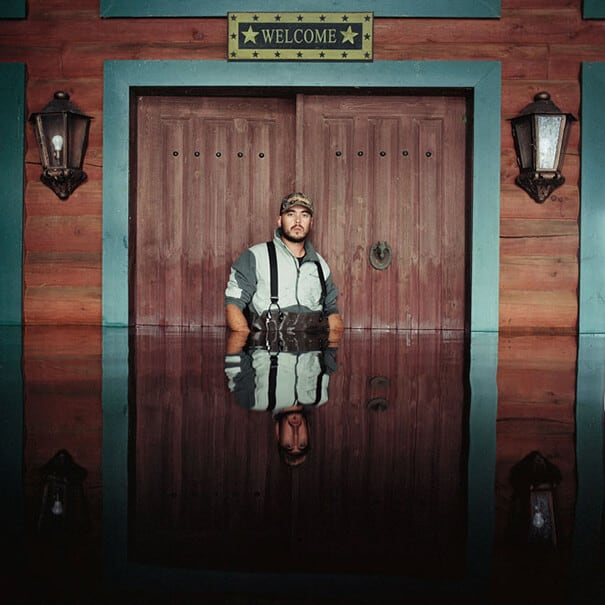
Pakistan is often represented through landscape photography, documentary work, and reportage focused on environment, conflict, migration, and urban growth. That can flatten the country into crisis, but it can also reveal how people adapt built environments to heat, flood, drought, and density. In design terms, the most interesting material culture often appears in ordinary settings: hand-painted signage, patterned bricks, embroidered dress, carved doors, screen-printed fabric, and transport surfaces turned into moving compositions.
The country’s built environment also matters. Mughal-era monuments in Lahore, Sufi shrines, colonial railway stations, and modernist civic buildings all sit beside expanding housing developments and informal settlements. Pakistan therefore reads as a place where historical architecture, industrial production, and everyday craft continue to shape the visual field at the same time.
Frequently Asked Questions
Is Pakistan mainly a desert country?
No. Pakistan includes desert regions, especially in Sindh and southern Punjab, but it also has fertile river plains, coastal zones, and some of the world’s tallest mountains. The Indus system supports large-scale agriculture across much of the country. Desert landscapes are only one part of a much larger geographic picture.
What makes Pakistani craft and design distinct?
Pakistani craft and design often combine practical use with dense surface decoration. Textile work, truck painting, pottery, embroidery, and wood carving all show a preference for pattern, color, and repeated geometry. Many of these forms are tied to regional and workshop traditions rather than a single national style.
Why does Pakistan appear so often in documentary photography?
Photographers are drawn to Pakistan because it offers strong visual contrasts: mountain terrain, large cities, religious architecture, rural labor, and climate vulnerability. Those conditions create images that can be dramatic without being staged. The challenge is to move beyond disaster framing and show how people live, work, and make culture there.
At a glance
- Address
- Pakistan
- Coordinates
- 33.666668, 73.166664
Articles mentioning Pakistan