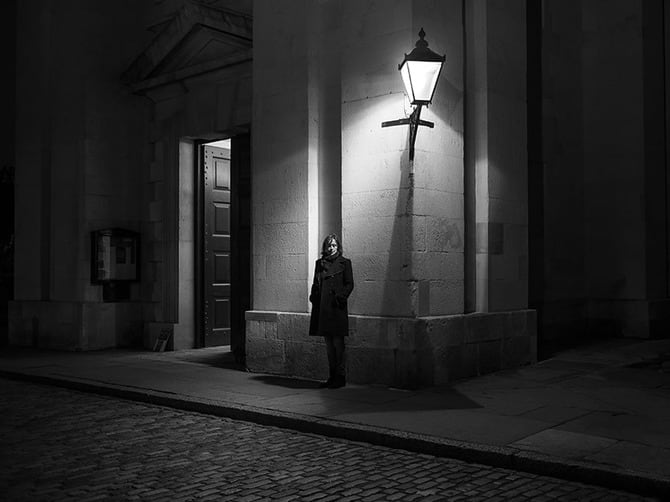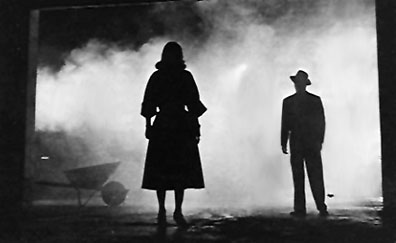
Film noir is a style of crime film marked by shadowy lighting, moral uncertainty, hard-edged dialogue, and plots driven by money, desire, betrayal, and fear. The term was coined by French critics after World War II to describe a cycle of Hollywood thrillers from the early 1940s through the late 1950s, though later films and other national cinemas adopted its look and mood.
- Film noir is a critical label, not a studio genre with fixed rules.
- It is most closely associated with American crime dramas from the 1940s and 1950s.
- Its visual language relies on low-key lighting, deep shadows, and strong contrast.
- Its stories often center on detectives, gangsters, damaged veterans, corrupt systems, and fatal attraction.
- German Expressionist cinema, wartime anxieties, and pulp fiction all helped shape it.
What makes a film noir?
Film noir usually looks and feels claustrophobic. Cinematographers use hard light, blinds, neon, smoke, wet streets, and cramped interiors to break faces and rooms into sharp blocks of light and dark. This visual style does not simply make a film look moody; it helps tell stories about secrecy, entrapment, and unstable identity. The black-and-white palette of classic noir made those contrasts especially forceful, though later color films could still qualify through their tone and structure.
The stories tend to move through flashbacks, voice-over narration, double-crosses, and plots where the hero is already compromised. A private eye may be hired to find the truth, but the truth rarely restores order. Instead, noir favors damaged characters, compromised institutions, and endings that feel earned but bleak. The look and the narrative work together: the image hides information while the story withholds certainty.
Where did film noir come from?
Film noir emerged from several streams at once. Hollywood studios produced crime films, melodramas, and war-influenced thrillers in the 1940s, while émigré filmmakers from Europe brought techniques shaped by German Expressionism: skewed angles, stylized shadow, and dramatic contrast. The wartime and postwar period also fed noir’s subject matter. Veterans returned home to social instability, cities grew more anonymous, and public confidence in institutions weakened.
French critics later grouped these films under the label film noir, literally “black film,” noticing a shared mood across pictures that studios had not marketed as a single movement. Because the term was applied after the fact, definitions remain flexible. Some scholars reserve it for a specific historical cycle; others use it more broadly for any film that borrows its visual code and fatalistic worldview.
Why does film noir still matter?
Film noir changed how crime stories could be told on screen. It replaced clean moral division with ambiguity and made style carry meaning. The shadow across a face, the half-lit office, the street reflected in rainwater: these became shorthand for hidden motives and social strain. That vocabulary still appears in advertising, photography, comics, fashion, and contemporary cinema because it reads instantly and carries a strong emotional charge.
It also matters as a record of mid-century anxieties. Noir’s plots often revolve around labor, migration, gender roles, urban life, and economic pressure. Its femme fatales, lonely investigators, crooked businessmen, and frightened clerks are not only types; they are figures shaped by a specific historical moment. Later directors kept returning to noir because its basic problem never went away: how to picture a world in which appearance cannot be trusted.
How is film noir made in practice?
Classic noir depends on craft. Directors and cinematographers build scenes with low-key lighting, practical sources such as lamps or streetlights, and compositions that trap the actor inside doorframes, venetian blinds, mirrors, and stair rails. Production design often favors offices, hotel rooms, alleys, bars, train stations, and other places where private and public life meet under pressure. Costume matters too: felt hats, trench coats, sharp suits, and evening dresses help place the body inside a world of concealment and display.
In writing, noir often uses voice-over, first-person confession, and dialogue that sounds clipped or transactional. In editing, it may shift across time through flashback or revelation. In performance, it asks for restraint rather than broad emotion. The result is not just a set of visual tricks but a complete system for making uncertainty visible.
Frequently Asked Questions
Is film noir a genre or a style?
It is best understood as both a critical style and a loose genre cluster. The term covers films that share visual and narrative traits, especially crime stories with a cynical outlook and a strong shadow-based look. Because the label came after the films themselves, scholars still debate its boundaries.
What are common film noir visual techniques?
Low-key lighting is the most recognizable technique, often paired with hard shadows, high contrast, and oblique camera angles. Cinematographers also use rain-slick streets, fog, blinds, mirrors, and tight framing to make spaces feel unstable or threatening. These choices turn ordinary urban settings into scenes of tension.
Why is German Expressionism linked to film noir?
German Expressionist cinema offered a model for using lighting and set design to externalize inner states. Many filmmakers who worked in Hollywood had seen or absorbed those films, and they carried that language into American crime pictures. The result was a style that made psychological pressure visible through shadow, distortion, and compositional stress.
Articles mentioning Film noir