Queensland is a state in northeast Australia, bordered by the Northern Territory, South Australia and New South Wales on the landward side and by the Coral Sea and Pacific Ocean to the east. It is Australia’s second-largest state by area and one of its most populous, with most residents concentrated along the coast, especially in the south-east. In design and visual culture, Queensland often appears as a place defined by climate, distance, and a strong outdoor life: bright light, tropical humidity in the north, subtropical cities farther south, and a landscape that stretches from reef and rainforest to desert edge.
- Type: Australian state
- Location: Northeast Australia
- Capital: Brisbane
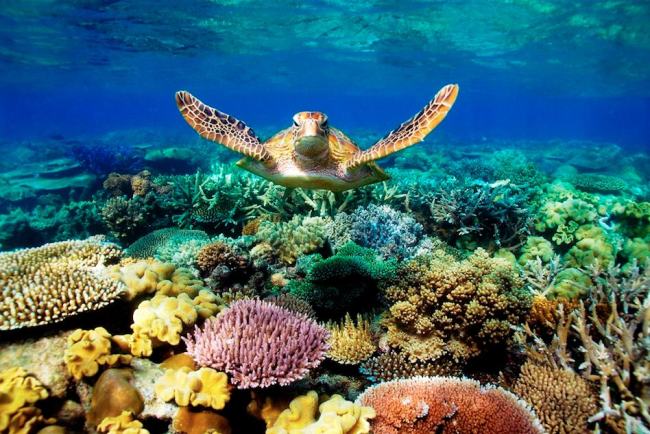
- Landscape: Coastal plains, tropical north, inland ranges, desert margins, and the Great Barrier Reef region
- Population pattern: Heavily coastal, with the south-east as the main urban centre
What makes Queensland distinct?
Queensland’s scale shapes how it is understood. A large share of the state sits outside the dense metropolitan core, so its image is split between major cities, regional centres, and remote country. That geography affects architecture, fashion, photography, and product design: materials have to stand up to heat, sun, salt air, and sudden storms, while many makers work across long distances and varied climates. Timber, metal, concrete, linen, and lightweight assemblies often suit this setting better than heavy, sealed, or delicate forms.
The state also carries a strong visual identity. Coastal brightness, tropical vegetation, and a horizon that can feel very open recur in photographs and editorial work set there. In practice, Queensland reads as a place where indoor and outdoor living blur, and where design often answers to weather as much as to style.
Where is Queensland and why does its geography matter?
Queensland occupies the north-eastern quadrant of Australia. Its eastern edge meets the Coral Sea and the Pacific Ocean, while its land borders run against the Northern Territory, South Australia, and New South Wales. That position gives the state a long coastline and a huge inland territory, from reef country and wet tropical zones in the far north to drier interior landscapes farther west.
This geography matters because it produces different kinds of making within one state. Coastal design has to resist corrosion and fading, and it often favours breezy layouts, deep shade, and materials that age well in salt and sun. Inland settings encourage more robust, transportable, and climate-conscious solutions. For photographers and stylists, Queensland offers strong natural light and a wide range of backdrops, from urban streets to beach edges, cane fields, dry plains, and rainforest margins.
How is Queensland seen in design and photography?
Queensland often appears in visual culture as both a setting and a climate. Its light is clear and direct, which can flatten colour or sharpen contrast depending on the hour and season. That makes it attractive to photographers looking for bold skin tones, crisp shadows, and a sense of openness. In editorial work, the state can signal leisure, escape, warmth, and a less compressed relationship to space than is common in denser southern cities.
In design, Queensland is associated with practical responses to place. Outdoor furniture, compact living solutions, and ventilated interiors all make sense there, especially in humid or hot conditions. Local and Australia-wide makers working in the state often think in terms of durability, portability, and climate control rather than ornament alone. The result is work that can look relaxed and casual, but usually rests on careful attention to materials and use.
Why does Queensland matter in Australian culture?
Queensland matters because it complicates the idea of an Australian centre. It is not just a holiday coastline or a tropical backdrop; it is a large state with major cities, remote communities, industry, agriculture, and a distinctive relationship to climate. Brisbane anchors a fast-growing urban culture, while the rest of the state includes places shaped by mining, tourism, farming, and long-distance travel. That mix gives Queensland a breadth that shows up in architecture, product design, fashion imagery, and documentary photography.
For FreeYork’s interests, Queensland is useful as a reference point for how place influences form. A table, chair, house, or image made for Queensland must reckon with weather, light, and lifestyle. Even when the state is used as a visual shorthand, it usually stands for something concrete: sun-washed surfaces, casual resilience, and an environment that demands design to work hard without looking overworked.
Frequently Asked Questions
Is Queensland a city or a state?
Queensland is a state, not a city. Brisbane is its capital and largest city. The state covers a vast area of northeast Australia, which is why it includes very different environments and settlements.
What is Queensland known for visually?
Queensland is often associated with bright natural light, coastal scenery, tropical vegetation, and outdoor living. In photography and editorial work, these conditions produce strong shadows, vivid colour, and a sense of openness. That visual identity can read as relaxed, warm, and expansive.
Why does Queensland matter to designers and makers?
Climate shapes materials, construction, and use, and Queensland places those pressures front and centre. Heat, humidity, sun, and salt air affect how furniture, buildings, textiles, and finishes perform over time. Designs that work there often prioritise durability, shade, ventilation, and ease of maintenance.
At a glance
- Address
- Australia
- Coordinates
- -23, 143
Articles mentioning Queensland